See It In Motion
Watch the Light Come to Life
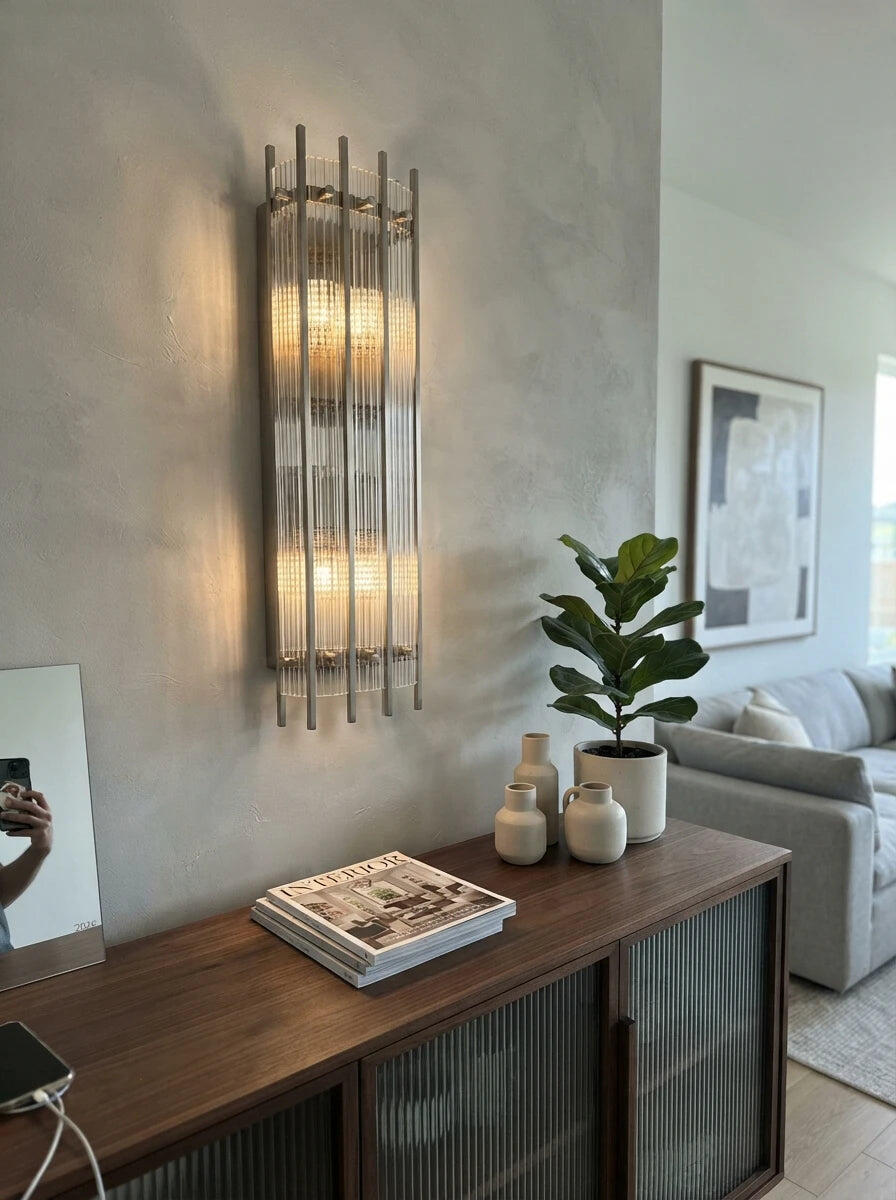
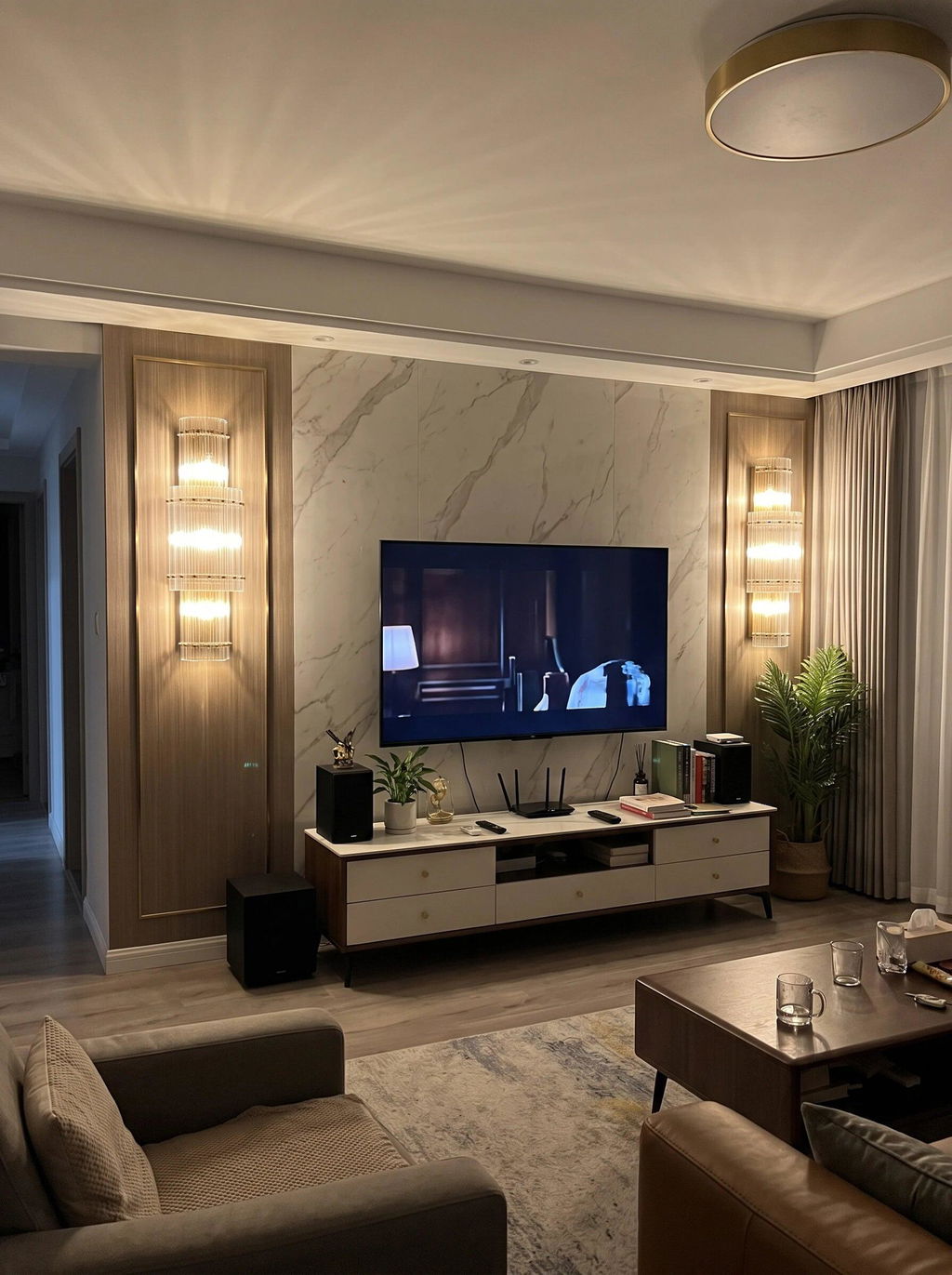
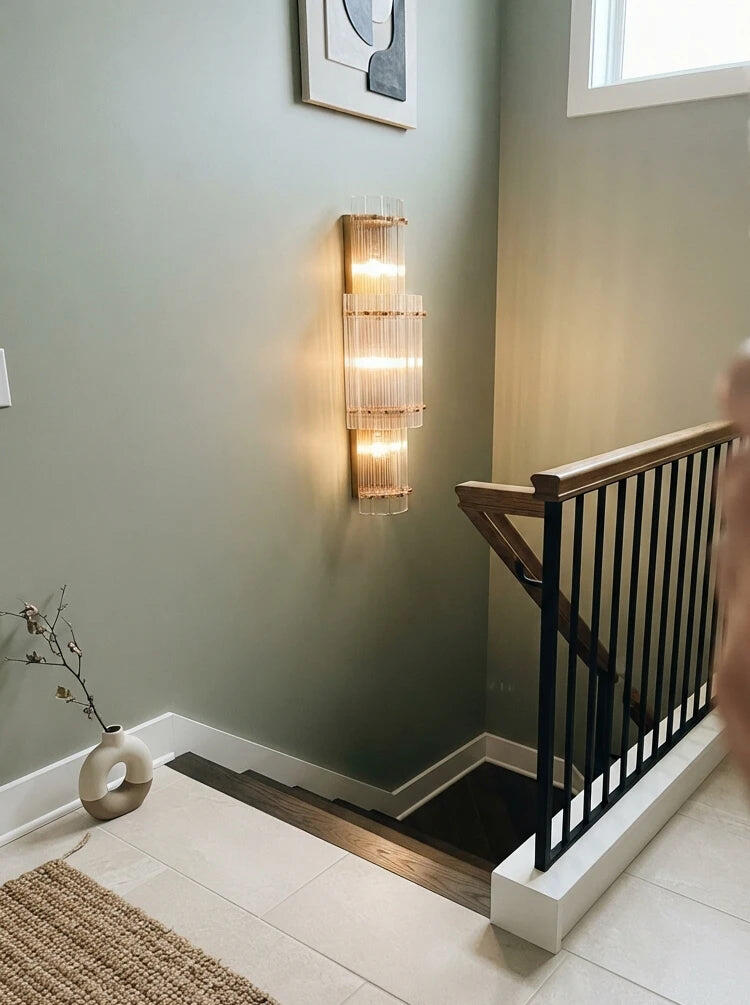
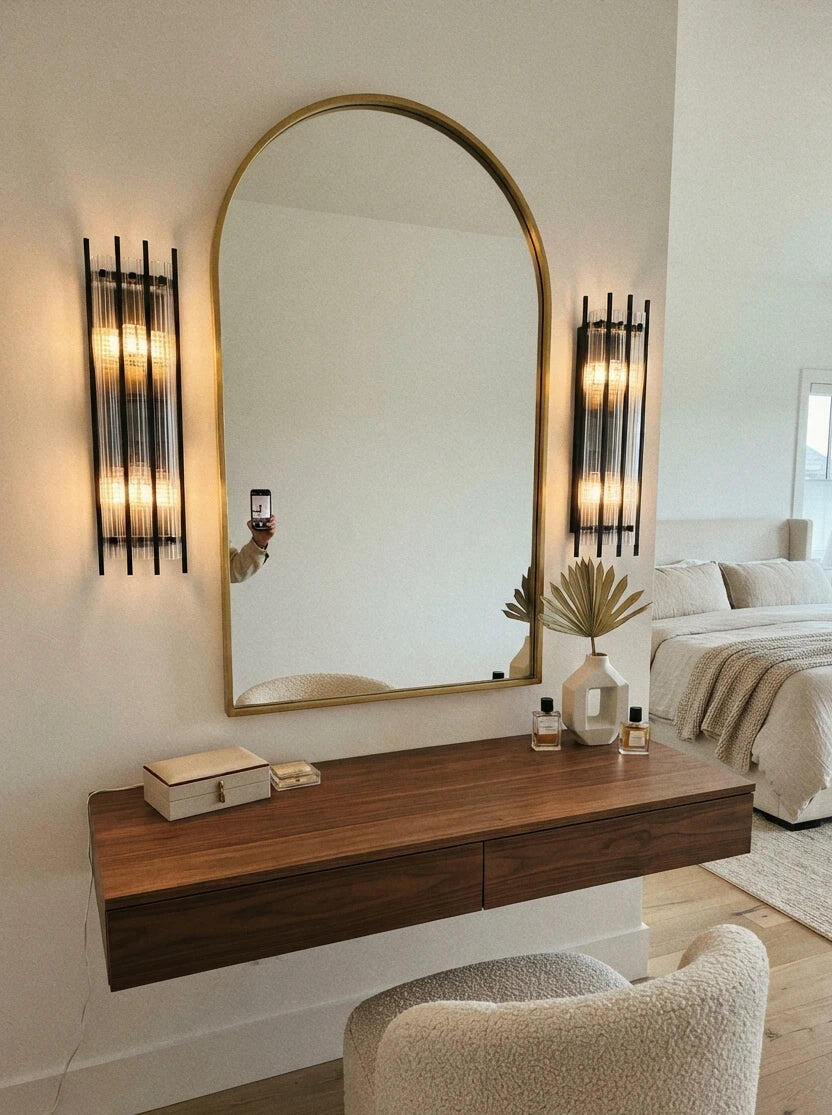
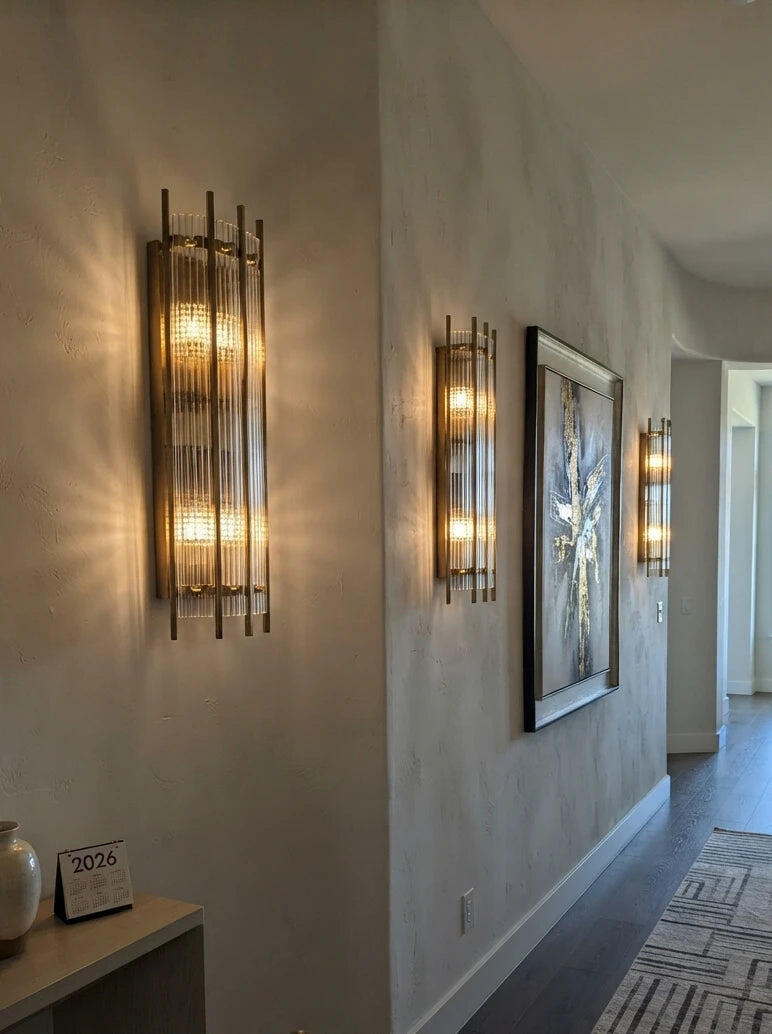
A flat panel of glass gives you a flat panel of light. Fluting changes that. Fluted Glass Rod Wall Sconce Each rib is a tiny lens, and a wall of them turns one bulb into dozens of narrow vertical lines — the light acquires a texture, a grain, the way late sun does through a shutter.
That is the whole idea behind this fluted glass wall sconce. so it works where a table lamp cannot: a narrow hallway, the wall beside a bed, either side of a bathroom mirror. The glass rods are held on a [brass-finish / nickel] frame, and the lamps sit behind them — which means from any normal angle you see lit glass rather than a bulb. Switched off it reads as a piece of ribbed architecture, closer to a fluted column than to a light fitting. Switched on, it stops being an object and becomes the warmest thing on the wall.
Buying a Pair?
Select the size marked (*2) — two together come at a better price than buying them separately.

- 1Loosen the knob. No tools.
- 2Swap the rod. The fixture stays on the wall.
- 3Tighten. Two minutes, good as new.
The Details
Good to Know
Choose a warm bulb
Bulbs are not included, and the one you pick changes the fixture more than the finish does. 2700K warm white makes the fluted glass glow amber. A cool or daylight bulb turns the same glass hard and blue — clean, but clinical.
About dimming
It depends entirely on the bulbs. To dim it, fit dimmable G9 bulbs in every socket — not just some, as mixing types causes flicker — and pair them with a compatible dimmer switch.
Which Width for Your Wall
Two sizes, both the same height. The only question is how much wall you are filling — so measure the wall, not the ceiling.
The safer choice in a corridor people walk through.

Three inches wider reads as noticeably more substantial.

Specifications & Installation
Specification Sheet
Materials, sizes, wattage and ratings — the full technical record.
View SpecificationsInstallation Guide
Mounting heights, clearances and wiring — written for US homes.
View InstallationLight With a Grain
One lamp. A hundred fine lines.
A flat pane of glass gives you a flat panel of light. Fluting changes that entirely. Every rib is a small lens — and a column of them takes a single lamp and draws it out into dozens of narrow vertical lines, the way late sun arrives through a shutter. The light stops being a quantity and becomes a texture.
That is the whole design. Rods stood side by side, each one held on its own fixing, repeating up the height of the wall. The repetition is the ornament — there is nothing applied on top of it, because there does not need to be. Look closely and you can see exactly how the piece is built; that legibility is not a compromise, it is the point.
Unlit, it reads as ribbed architecture — closer to a fluted column than to a light fitting, a piece of structure on a bare wall. Lit, the ribs catch and the whole column turns warm from the inside, while the lamps stay hidden behind the glass. Bright, with nothing to look into. You get the glow without ever meeting the source.
Why Fluted Glass
What ribbed glass rods do that a plain flat or frosted panel can't.
Common Questions
Will I see the bulb?
Can it go in a bathroom?
Is it glass or acrylic?
Gold, black or nickel?
What bulbs does it take?
How do I clean it?
What if a rod breaks?
The Complete Installation Guide
Not sure how to wire it, how high to hang it, or whether you need an electrician? Our full guide walks through every step for US homes.
Power Off First
Switch off at the breaker and confirm before you touch any wiring.
Check the Box
Make sure your junction box is standard, secure, and rated for the weight.
Match the Wires
Black to black, white to white, ground to ground — the US standard explained.
Set the Height
Mounting heights and clearances for sconces, pendants, and chandeliers.
Light the Rest of the Room
A sconce lights the wall. These two cover the other two heights — the ceiling above it and the corner beside it.


Alden Candle Ring Chandelier
Candle tapers standing upright on an open ring, so the light goes up to the ceiling instead of down into your eyes. Four to sixteen lights, round or linear. Bulbs included. Gold, black or nickel — the same three finishes as the sconce.

Umbrella 9602 Floor Lamp
A wide woven shade on a narrow base — ∅ 24.8″ × H 60.2″. The one piece here that needs no electrician: it plugs in. Natural, white or printed shade, with a US, UK, AU or EU plug.
Fluted Glass Rod Wall Sconce
The price includes tax, and free standard shipping within the U.S. is provided.

Free Shipping on all orders
Hassle-free return within 30 days
Payment Security
Pairs Well With
See It In Motion
Watch the Light Come to Life
A flat panel of glass gives you a flat panel of light. Fluting changes that. Fluted Glass Rod Wall Sconce Each rib is a tiny lens, and a wall of them turns one bulb into dozens of narrow vertical lines — the light acquires a texture, a grain, the way late sun does through a shutter.
That is the whole idea behind this fluted glass wall sconce. so it works where a table lamp cannot: a narrow hallway, the wall beside a bed, either side of a bathroom mirror. The glass rods are held on a [brass-finish / nickel] frame, and the lamps sit behind them — which means from any normal angle you see lit glass rather than a bulb. Switched off it reads as a piece of ribbed architecture, closer to a fluted column than to a light fitting. Switched on, it stops being an object and becomes the warmest thing on the wall.
Buying a Pair?
Select the size marked (*2) — two together come at a better price than buying them separately.
- 1Loosen the knob. No tools.
- 2Swap the rod. The fixture stays on the wall.
- 3Tighten. Two minutes, good as new.
The Details
Good to Know
Choose a warm bulb
Bulbs are not included, and the one you pick changes the fixture more than the finish does. 2700K warm white makes the fluted glass glow amber. A cool or daylight bulb turns the same glass hard and blue — clean, but clinical.
About dimming
It depends entirely on the bulbs. To dim it, fit dimmable G9 bulbs in every socket — not just some, as mixing types causes flicker — and pair them with a compatible dimmer switch.
Which Width for Your Wall
Two sizes, both the same height. The only question is how much wall you are filling — so measure the wall, not the ceiling.
The safer choice in a corridor people walk through.
Three inches wider reads as noticeably more substantial.
Specifications & Installation
Specification Sheet
Materials, sizes, wattage and ratings — the full technical record.
View SpecificationsInstallation Guide
Mounting heights, clearances and wiring — written for US homes.
View InstallationLight With a Grain
One lamp. A hundred fine lines.
A flat pane of glass gives you a flat panel of light. Fluting changes that entirely. Every rib is a small lens — and a column of them takes a single lamp and draws it out into dozens of narrow vertical lines, the way late sun arrives through a shutter. The light stops being a quantity and becomes a texture.
That is the whole design. Rods stood side by side, each one held on its own fixing, repeating up the height of the wall. The repetition is the ornament — there is nothing applied on top of it, because there does not need to be. Look closely and you can see exactly how the piece is built; that legibility is not a compromise, it is the point.
Unlit, it reads as ribbed architecture — closer to a fluted column than to a light fitting, a piece of structure on a bare wall. Lit, the ribs catch and the whole column turns warm from the inside, while the lamps stay hidden behind the glass. Bright, with nothing to look into. You get the glow without ever meeting the source.
Why Fluted Glass
What ribbed glass rods do that a plain flat or frosted panel can't.
Common Questions
Will I see the bulb?
Can it go in a bathroom?
Is it glass or acrylic?
Gold, black or nickel?
What bulbs does it take?
How do I clean it?
What if a rod breaks?
The Complete Installation Guide
Not sure how to wire it, how high to hang it, or whether you need an electrician? Our full guide walks through every step for US homes.
Power Off First
Switch off at the breaker and confirm before you touch any wiring.
Check the Box
Make sure your junction box is standard, secure, and rated for the weight.
Match the Wires
Black to black, white to white, ground to ground — the US standard explained.
Set the Height
Mounting heights and clearances for sconces, pendants, and chandeliers.
Light the Rest of the Room
A sconce lights the wall. These two cover the other two heights — the ceiling above it and the corner beside it.
Alden Candle Ring Chandelier
Candle tapers standing upright on an open ring, so the light goes up to the ceiling instead of down into your eyes. Four to sixteen lights, round or linear. Bulbs included. Gold, black or nickel — the same three finishes as the sconce.
Umbrella 9602 Floor Lamp
A wide woven shade on a narrow base — ∅ 24.8″ × H 60.2″. The one piece here that needs no electrician: it plugs in. Natural, white or printed shade, with a US, UK, AU or EU plug.