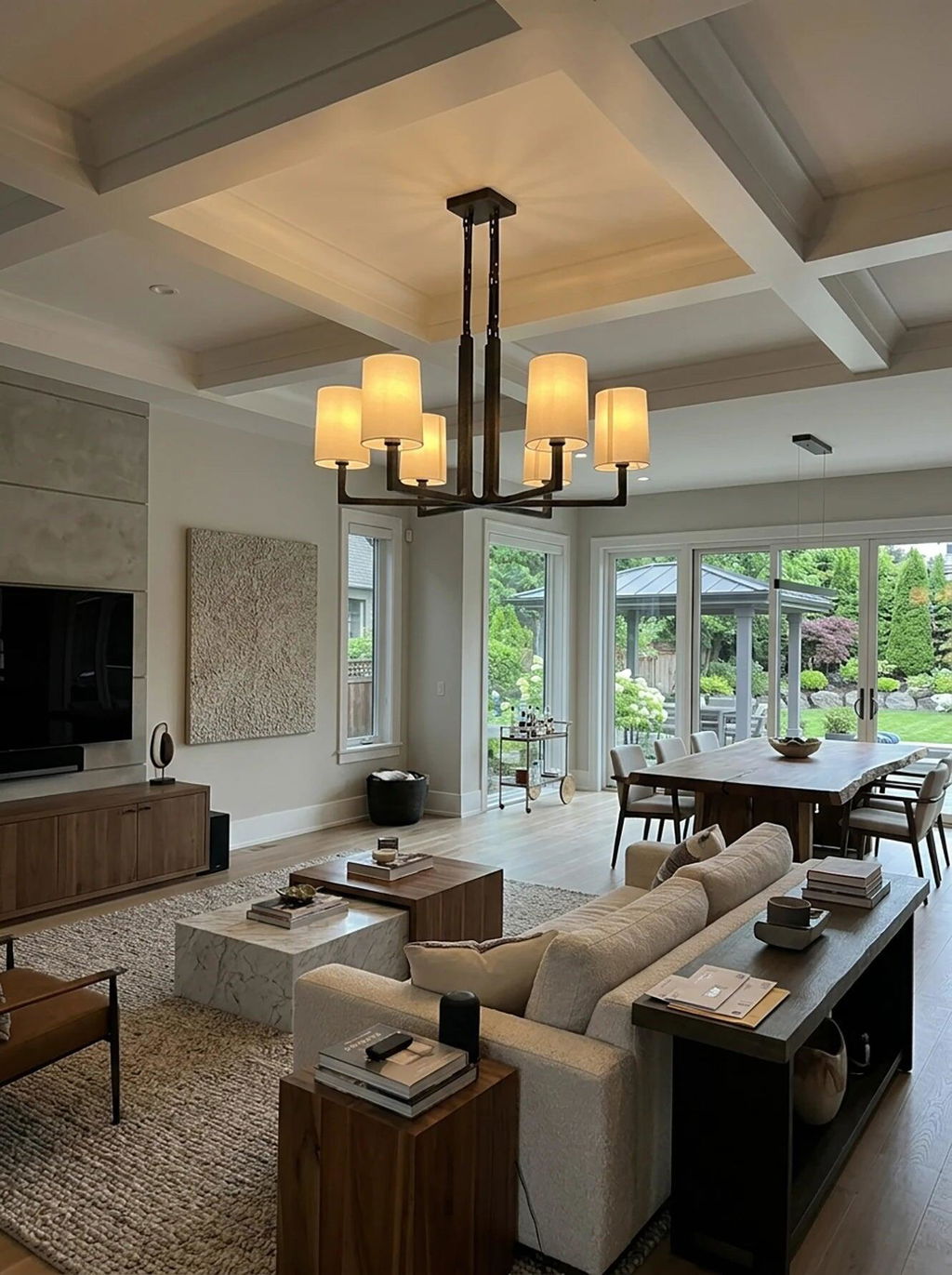
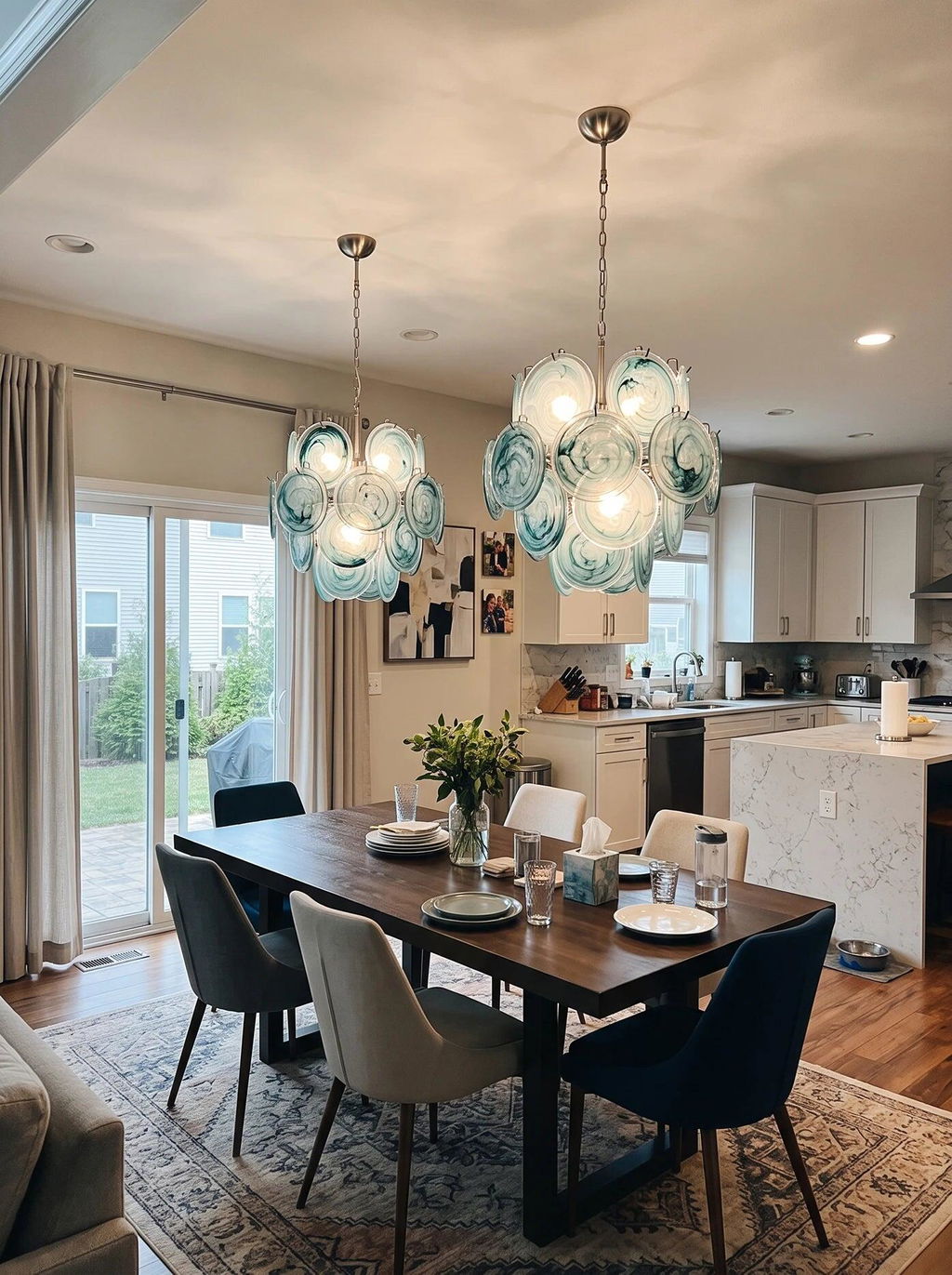
A new perspective
Light changes everything
Discover sculptural lighting designed to bring warmth, character, and atmosphere to every room.


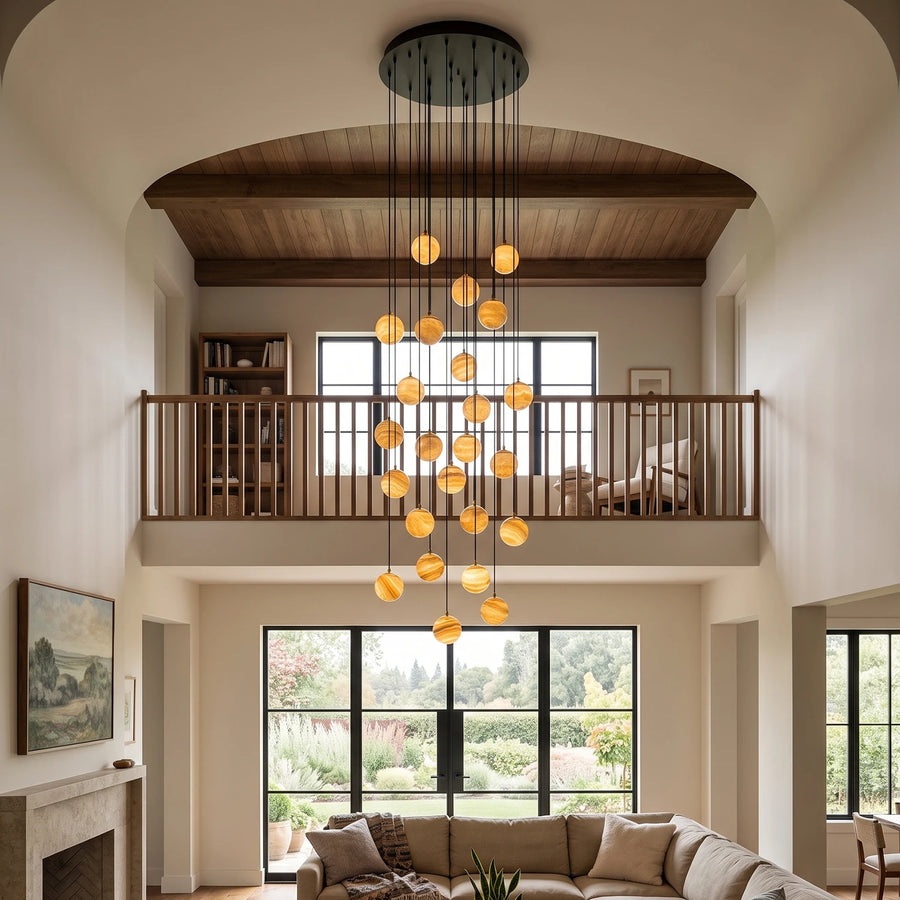
Ambrose Alabaster Globe Cascade Chandelier, Natural alabaster globes falling at staggered heights from a single canopy. Three for a bedside or a small landing. Thirty for a stairwell you look down through from the top floor.
Alabaster is translucent — light travels through the body of the stone rather than escaping around it, so each globe glows from the inside with its own veining showing across the surface. There is no filament visible from any angle, which is what makes a count of twenty-five or thirty liveable rather than dazzling. The cords are cut to length at installation, so how far the cascade falls and how the globes stagger is set in your room, not at our factory.
No two pieces of stone are ever the same
Alabaster is a natural stone, so every piece carries its own veining and subtle variation in color. The fixture you receive may therefore differ slightly from the images shown.

The included bulb does not support dimming. The fixture itself does not restrict dimming functionality—this depends on the bulb used. Brightness can be adjusted if a dimmable G9 bulb and a compatible dimmer switch are installed; however, if the standard bulb is used, dimming is not possible, regardless of the type of wall switch.
Every cord is cut to length at installation, so how far the globes fall and how they stagger is set in your room rather than at our factory.


Seven counts, four rooms. The count follows the height of the space, not its floor area — so start with the ceiling above you.
A 7.9″ canopy with a short fall — this is a light fitting, not a centrepiece. Over a bedside table or a console, hang the lowest globe 20–24″ above the surface so the tabletop stays usable. On a landing or a stair turn, keep it clear of anyone reaching over the rail.
Choosing between them: the 3 and the 5 share a canopy. The 5 is denser, not bigger.
An 11.8″ canopy and a longer fall — the first count with real presence. Over a table, hang the lowest globe 30–36″ above the top: low enough to be part of the table, high enough to see across. In an entry with a raised ceiling it does the job of a chandelier without filling the room.
Worth knowing: this is the largest count that still works in an ordinary room. Above it, you need a void.
Here the cascade starts being read from more than one floor at once — from the hall below, at eye level as you climb, and from the landing. Fill roughly two-thirds of the void, and keep the lowest globe 7 ft above the highest tread beneath it.
Choosing between them: both drop the same distance. The 16 has a wider canopy, so it fills across a broad stairwell rather than further down a narrow one.
A 23.6″ canopy and up to 13 ft of cord. At this scale the fixture is architecture rather than a light — it is seen from three floors within thirty seconds, and no two of them show the same thing.
Choosing between them: the 30 is the only version with graduated globes — four sizes in one cascade. From three floors up, thirty identical spheres flatten into a pattern; thirty different ones keep their distance. In the tallest voids that is the difference.
Not sure which is yours? Send us your ceiling height, the width of the void and a photograph looking up — support@vidirlighting.com. We will tell you which count fits, including when a smaller one is the right answer. (Please contact us if you require a different number of heads.)
Cut to length at installation — so these are maximums, not finished drops.
| 3 · 5 | 78.7″ · 200 cm | Single-storey ceiling |
| 7 | 98.4″ · 250 cm | Raised ceiling, 9–12 ft |
| 11 · 16 | 118.1″ · 300 cm | Two-storey stairwell |
| 25 · 30 | 157.5″ · 400 cm | Three-storey void |
Shorter is free, longer has to be ordered. Your electrician cuts each cord on site, so the shape of the cascade is decided in your room. (Please contact us if you require a longer suspension cable.)
Falling, rather than spreading.
Most multi-light fixtures spread sideways and fill a circle. This one falls. Every cord drops from a single flat canopy at a different length, so the globes occupy a column of air rather than a plane — which is why the large counts belong in a stairwell rather than over a table. You see the top globes from the landing, the middle ones at eye level as you climb, and the lowest from the hall below. No two floors give you the same fixture.
The globes are alabaster, and that is the decision everything else follows from. Stone this thin is translucent: light travels through the body of the material rather than escaping around its edges, so each globe glows from the inside with its own veining showing across the surface. There is no filament visible from any angle — which is not a detail at these counts. Thirty clear globes would put thirty bright points in a stairwell. Thirty stone ones put thirty soft ones.
What holds it all is deliberately quiet: a flat disc at the ceiling and a set of thin cords, cut to length in your room rather than at our factory. In gold the canopy warms the stone and disappears into a pale ceiling; in black the cords read as deliberate lines and the globes float against them. In a void where those cords are visible for two floors, that is a bigger decision than it sounds.
Which count, what the stone does, and what to check before an electrician arrives.
Match the count to the height of the void, not the floor area.
3–7 for a single-storey ceiling — a bedside, a landing, a dining table. 11–16 for a two-storey stairwell. 25 or 30 for three storeys and up. The test: if the lowest globe isn't visible from the bottom floor, the cascade stops halfway down the shaft and looks unfinished.
Fit dimmable G9 bulbs on a compatible dimmer and it dims properly. Worth deciding before you order: on the 30-globe version that is thirty bulbs to change on day one.
G9 — a small two-pin base that pushes in rather than screwing. Most people have never bought one, so if you order spares online, check the picture rather than just the wattage: a screw bulb of the same size will not fit.
They run hot for their size, so let them cool before changing one.
A dry soft cloth only. Never anything damp. Alabaster is porous — water, sprays and polish soak in and leave marks that do not come out.
Be realistic about access: a cascade in a stairwell needs a tower or a professional, about once a year. Worth planning for before you buy.
Replaced on its own cord — the rest of the cascade stays up, which matters most when the ceiling is three floors away. Photos within 24 hours if damaged in transit; spares held after that.
Indoor, dry rooms only — IP20, no water protection, and stone and damp are a bad pair regardless.
Not sure how to wire it, how high to hang it, or whether you need an electrician? Our full guide walks through every step for US homes.
Switch off at the breaker and confirm before you touch any wiring.
Make sure your junction box is standard, secure, and rated for the weight.
Black to black, white to white, ground to ground — the US standard explained.
Mounting heights and clearances for sconces, pendants, and chandeliers.
Not where the piece does. The counts on this page cover a bedside up to a three-storey stairwell. Past that we build to your ceiling — any count, any span, any shape the void asks for.


Ceiling height, the span you want covered, and a photograph looking up. A ceiling plan if you have one.
A wave, a straight run, a spiral, or a shape of your own. A rough sketch is enough — we will draw it properly.
Where the junction boxes are, what the ceiling will carry, and when it has to be on site.
Suitable for hotels, lobbies, restaurants, and private residences. We can provide a quote based on drawings or photographs.
support@vidirlighting.comThe price includes tax, and free standard shipping within the U.S. is provided.

Free Shipping on all orders
Returns accepted within 30 days
Payment Security
The configurations listed on this page are the ones we keep in regular production — they are not a limit. Our guide explains how to work out the count your room actually needs, the three ways the drops can be hung, and something most people never think to ask for.
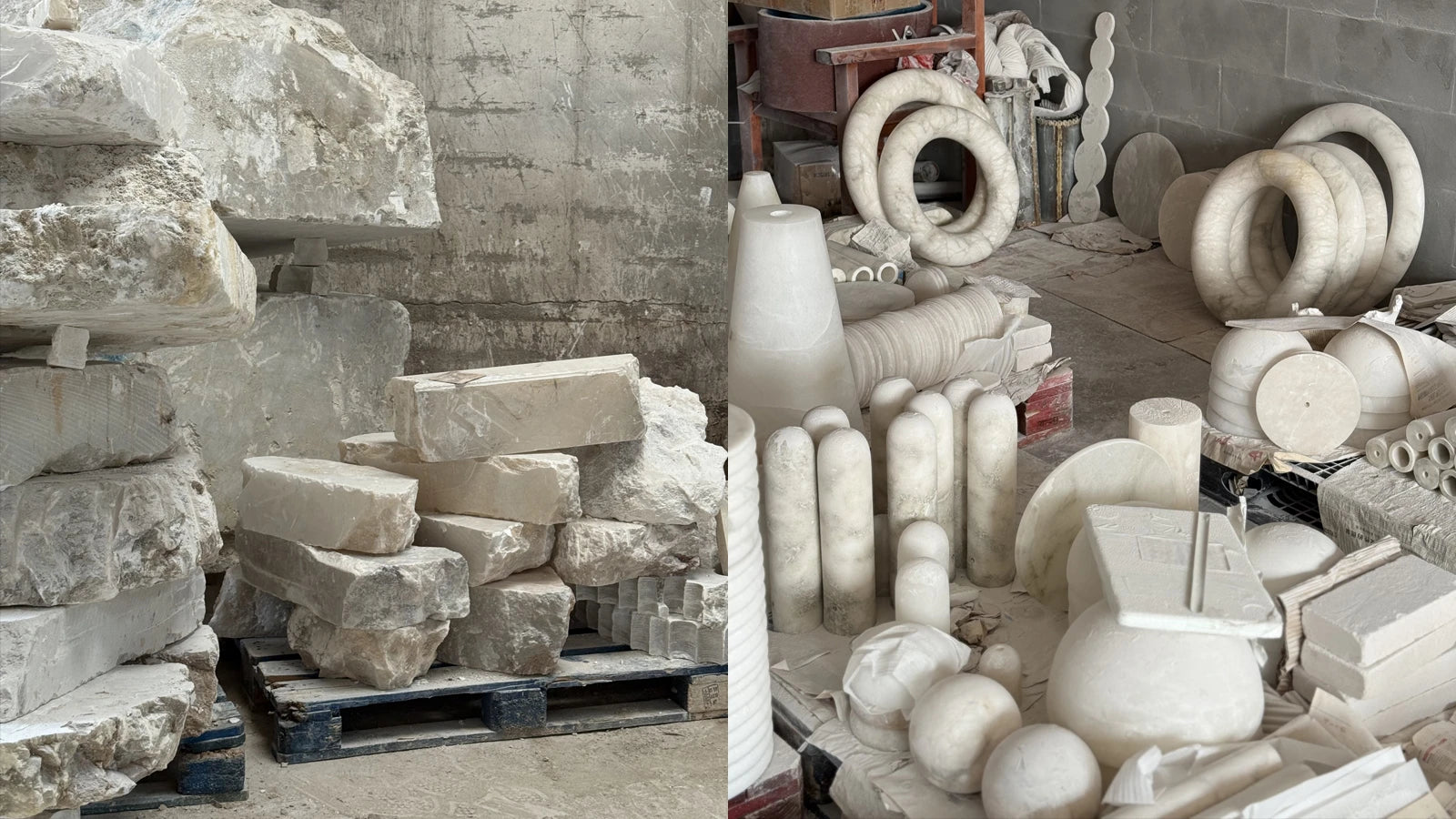
Natural stone lighting

The Vidir lighting edit
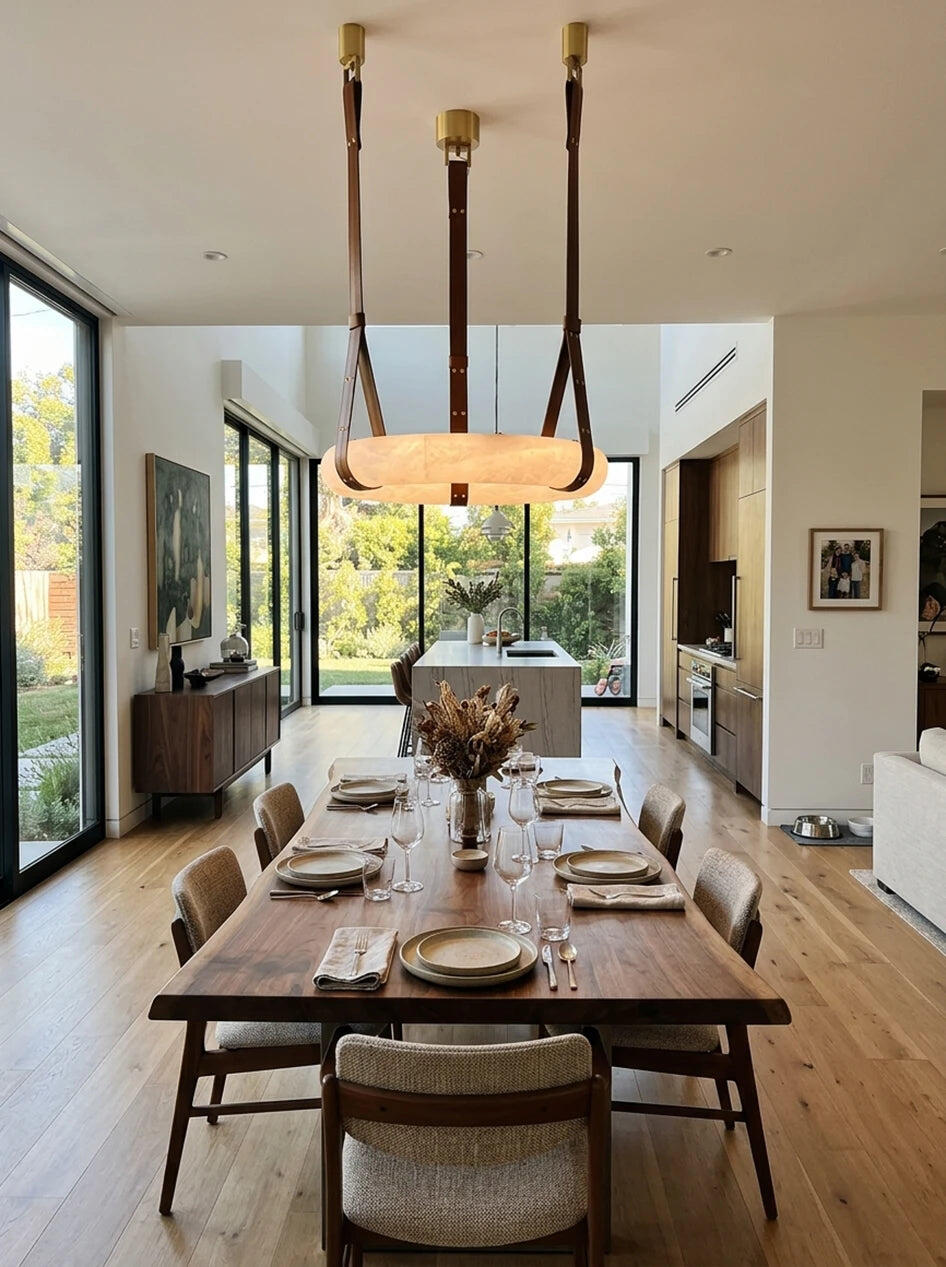
Most shades block light and let it out at the edges. Yet, this stone-textured lampshade manages to achieve exactly that.
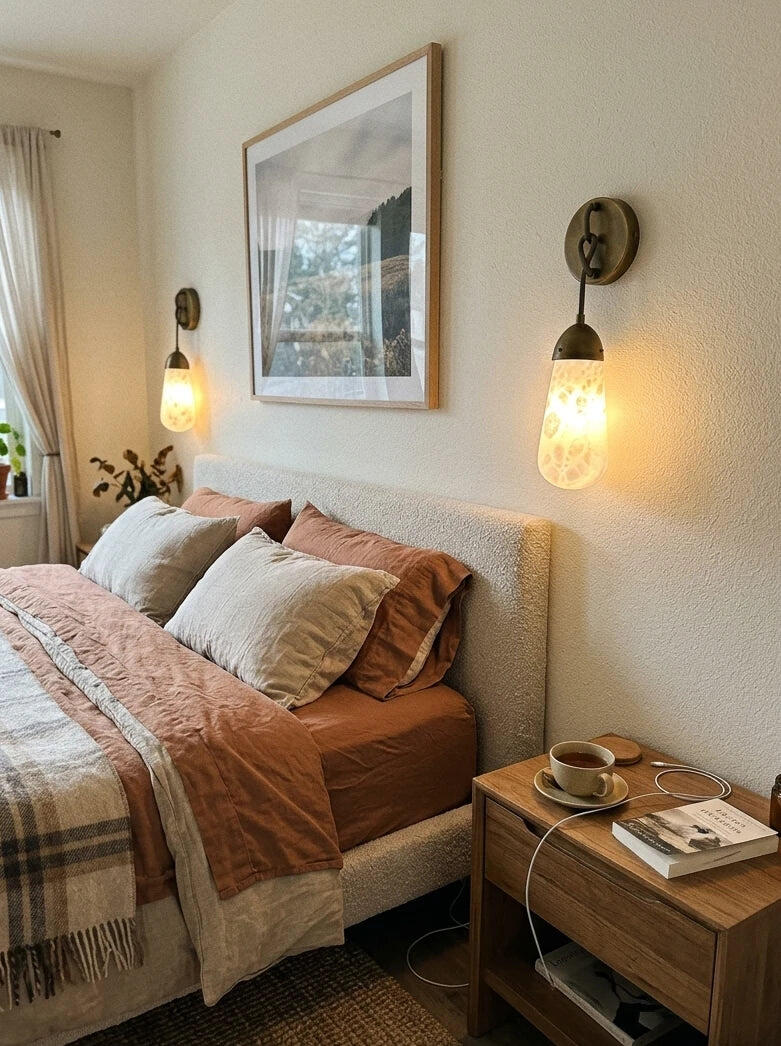
Alabaster is translucent. Switch it on and the whole shade lights up from within, veining and all, instead of glowing only where the bulb sits. There is no bright spot to look at, because the light source is the entire surface.
The veining was decided underground, long before anyone cut it. Every shade carries its own pattern and its own faint colour shift — so the piece that arrives is not the piece in the photograph, and that is the point.
Resin and acrylic imitations go amber and brittle within a few years of sitting next to a warm bulb. Stone does not age that way. The shade you unpack is the shade you will have in twenty years.
Designed for better living
Use warm white (2700K). The stone itself has an off-white, creamy tone; cool light passing through it makes it look grayish and dingy, whereas warm light brings out that honey-like hue seen in the photos.
Alabaster is a natural stone that absorbs water and cleaning agents, which can leave permanent stains. Disconnect the power, let the bulb cool down, and then wipe the fixture with a soft, dry cloth—do not use water or spray cleaners.
The density of the stone is far greater than that of a glass shade of the same size; ensure the ceiling's load-bearing capacity is sufficient for safety.

A new perspective
Discover sculptural lighting designed to bring warmth, character, and atmosphere to every room.
 Our product
Alabaster Cylindrical Chain Chandelier
Our product
Alabaster Cylindrical Chain Chandelier
Alabaster is translucent, so the light travels through the stone rather than escaping at the edges — the whole shade glows, veining and all. Every piece carries a pattern that was decided underground, which is why no two are alike.
Resin is cast in moulds, so the "veining" repeats from one shade to the next and the light passes through evenly with no depth to it. It also ages differently: sitting close to a warm bulb, resin tends to amber and grow brittle within a few years.
THE ART OF ALABASTER
The natural texture of alabaster brings a warm, mineral quality to the space. (Please contact us if you require a specific texture.)

A pure white texture reminiscent of fresh snow—warm, smooth, and refined.

Deep, inky patterns flow across a white base.

A dynamic pattern resembling a bolt of lightning streaking across the sky.

Fine, intricate cracks evoking the aesthetic beauty of a sheet of ice at the moment it shatters.

A pattern as light and airy as falling snowflakes, with every single flake unique.
Material · Method · Light
Every texture tells a story of natural light and patient craftsmanship.
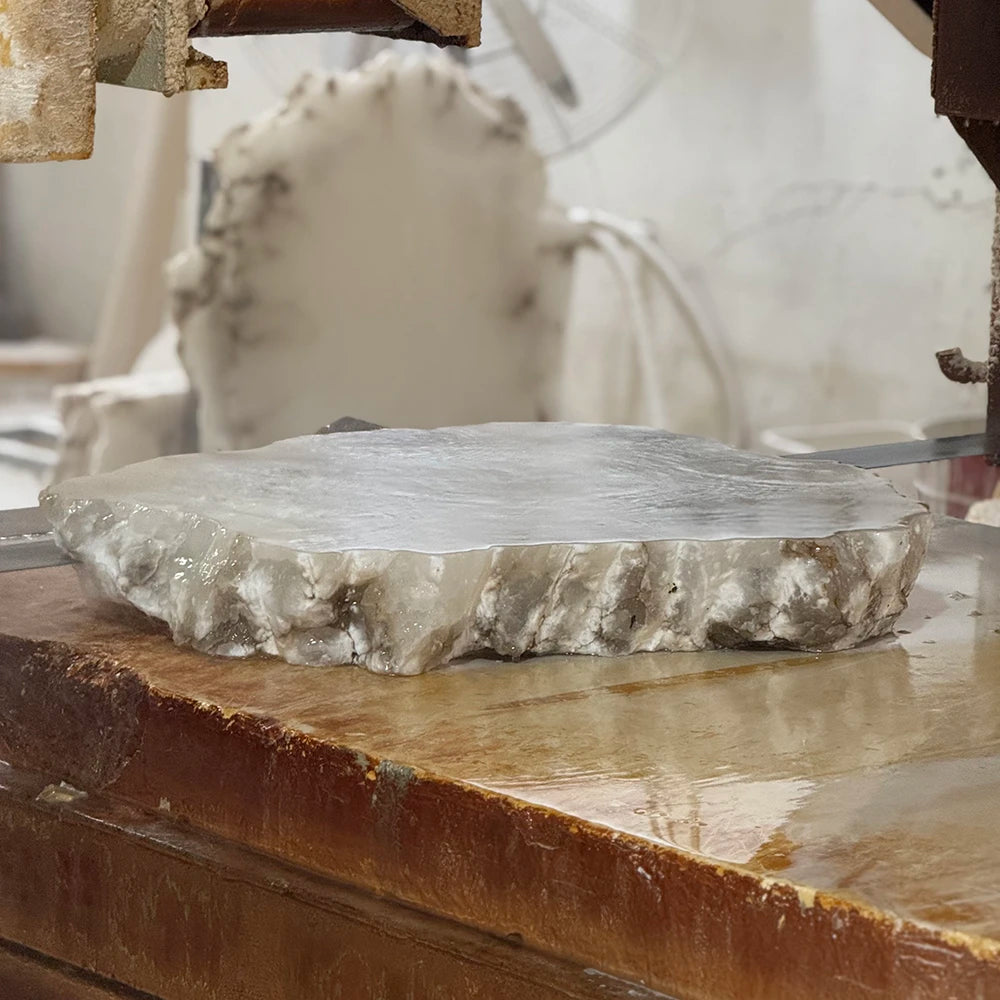
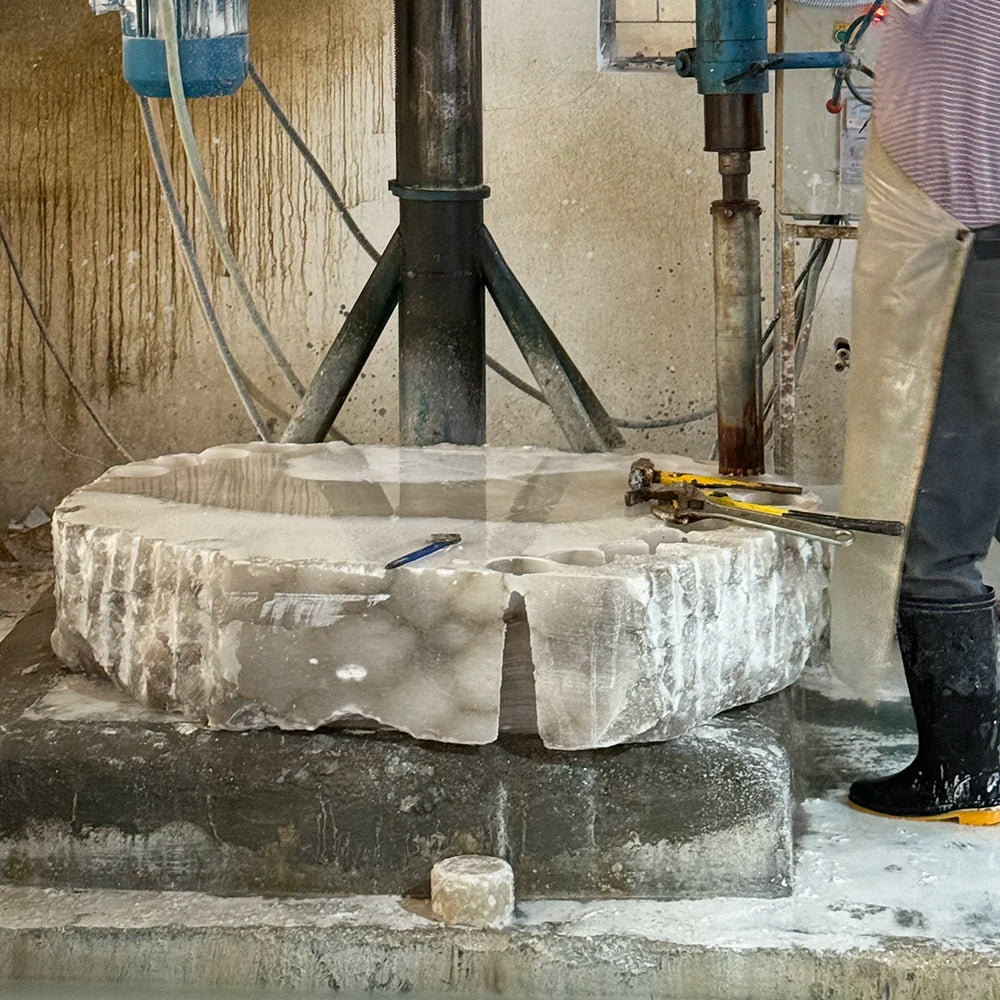
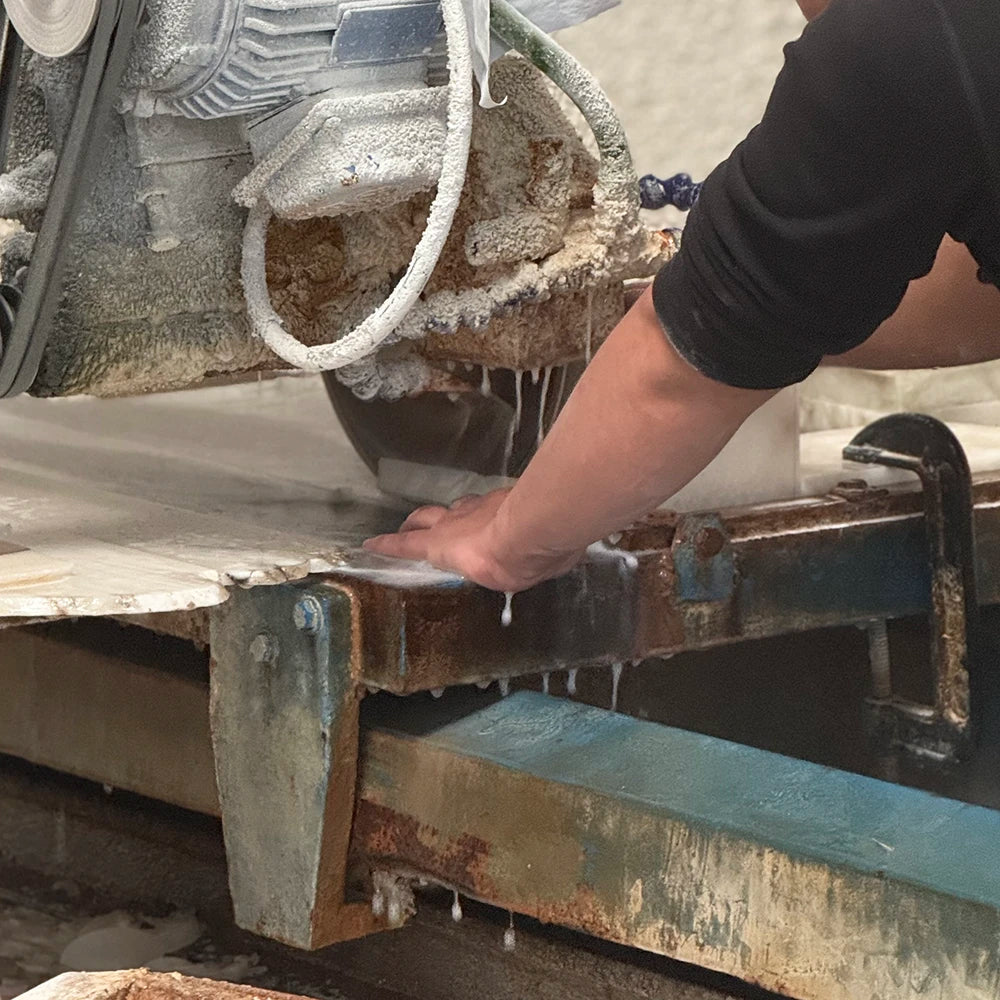
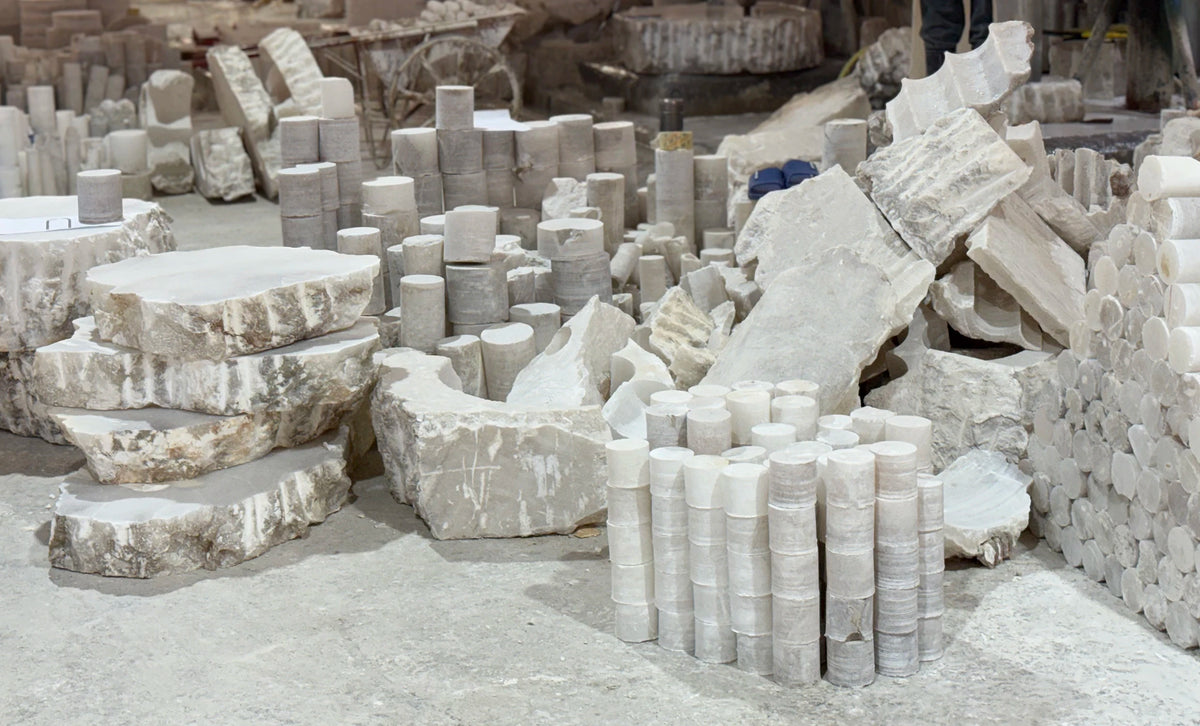
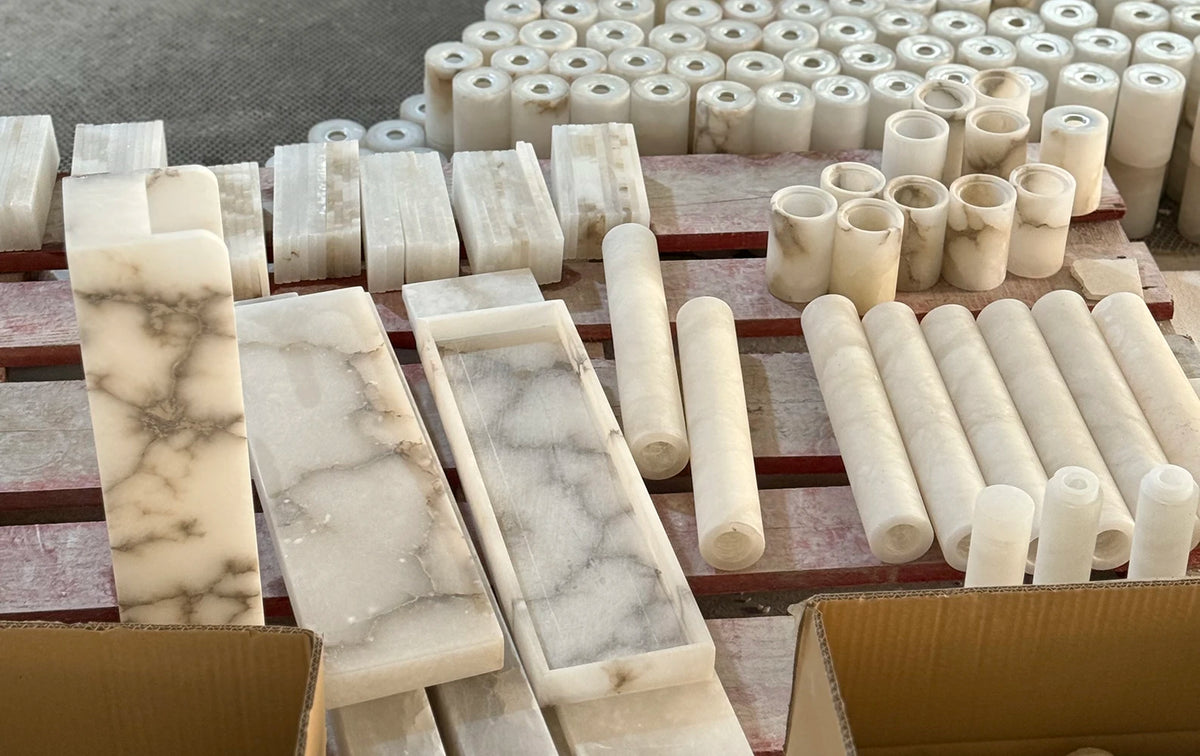
Crafted from select natural alabaster, preserving its unique veining.
Meticulously cut and shaped by artisans.
Repeatedly ground and polished for a smooth, refined texture.
Carefully assembled and quality-inspected.
Custom Stone Lighting

SHOP BY CATEGORY
Six major categories, one workshop — find the fixture that fits your room.


Vidir Lighting
10% off all lighting on orders over $100
Every order over $100 is 10% off, applied automatically at checkout. Leave your email to see new alabaster, travertine and glass pieces from our workshop first.
We never share your email. Unsubscribe any time.
You're subscribed
Thank you for joining
We'll send new arrivals and sale news your way. Your 10% off is applied automatically at checkout on orders over $100.
Shop all lighting