Designed for atmosphere
Light that changes the room
Statement lighting with sculptural form, considered materials, and an unmistakable presence.
Free standard shipping, all orders support 30-day returns
The Special Sale: a hand-picked edit for the darker months. Ends November 2


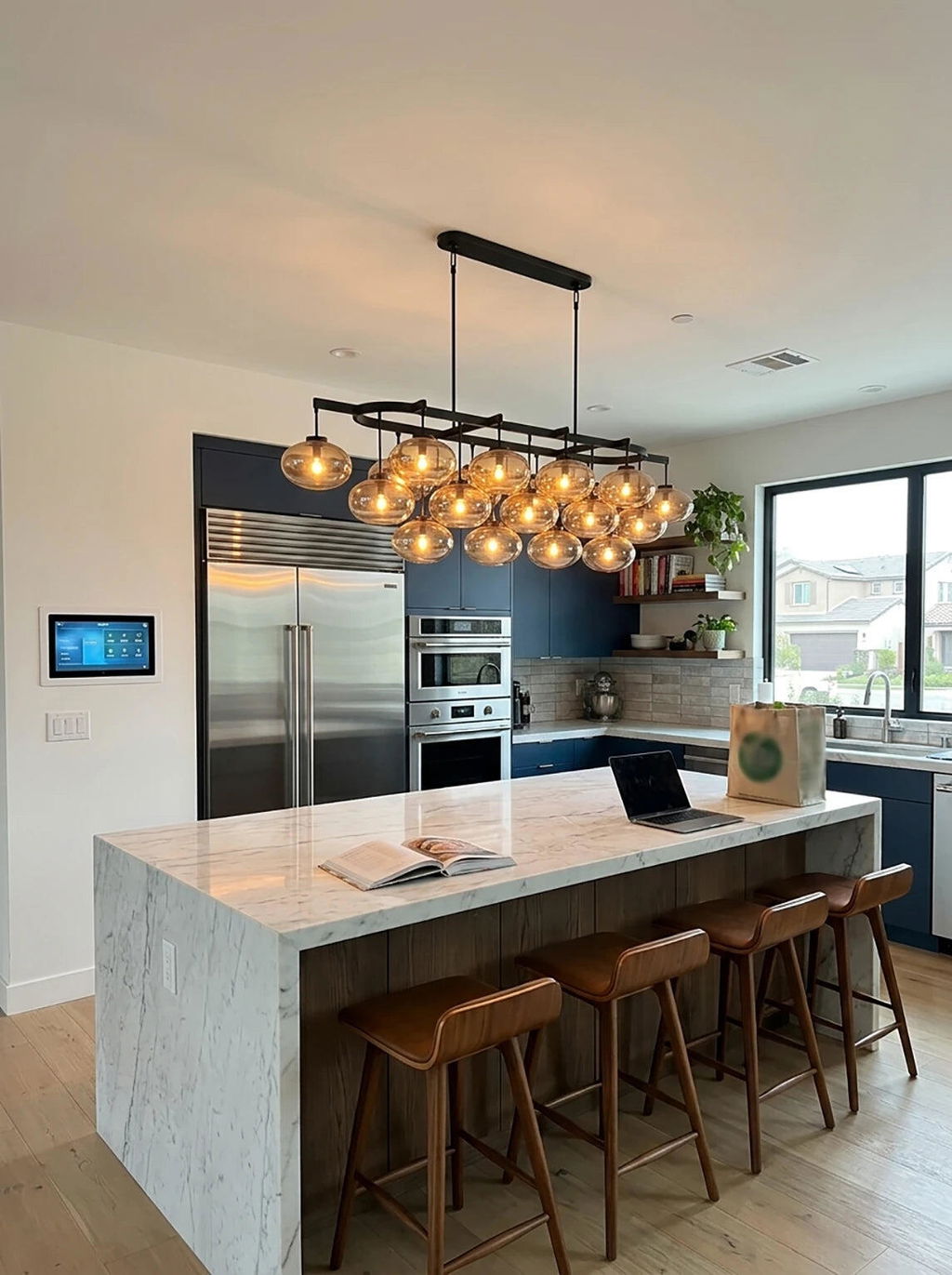
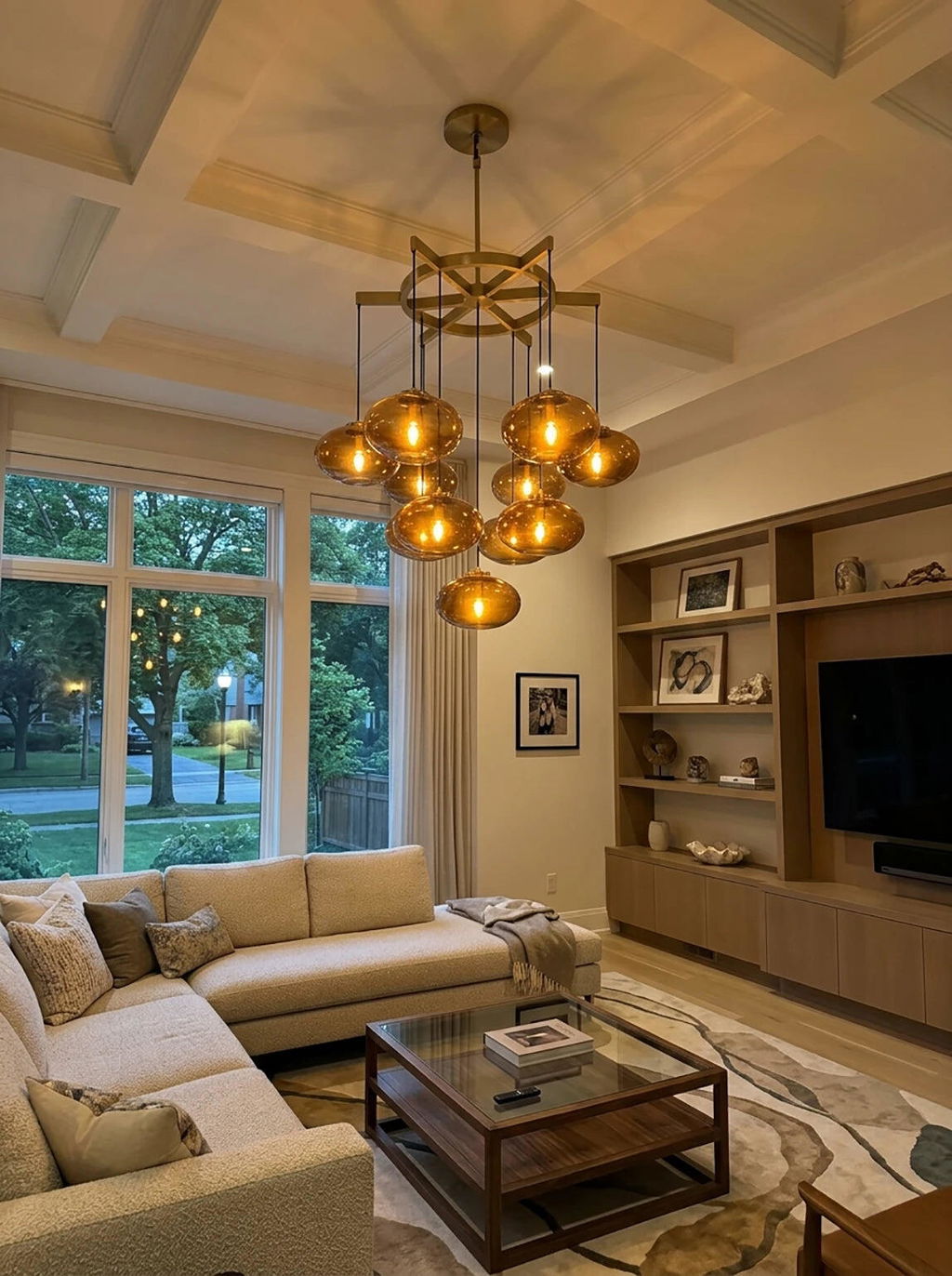
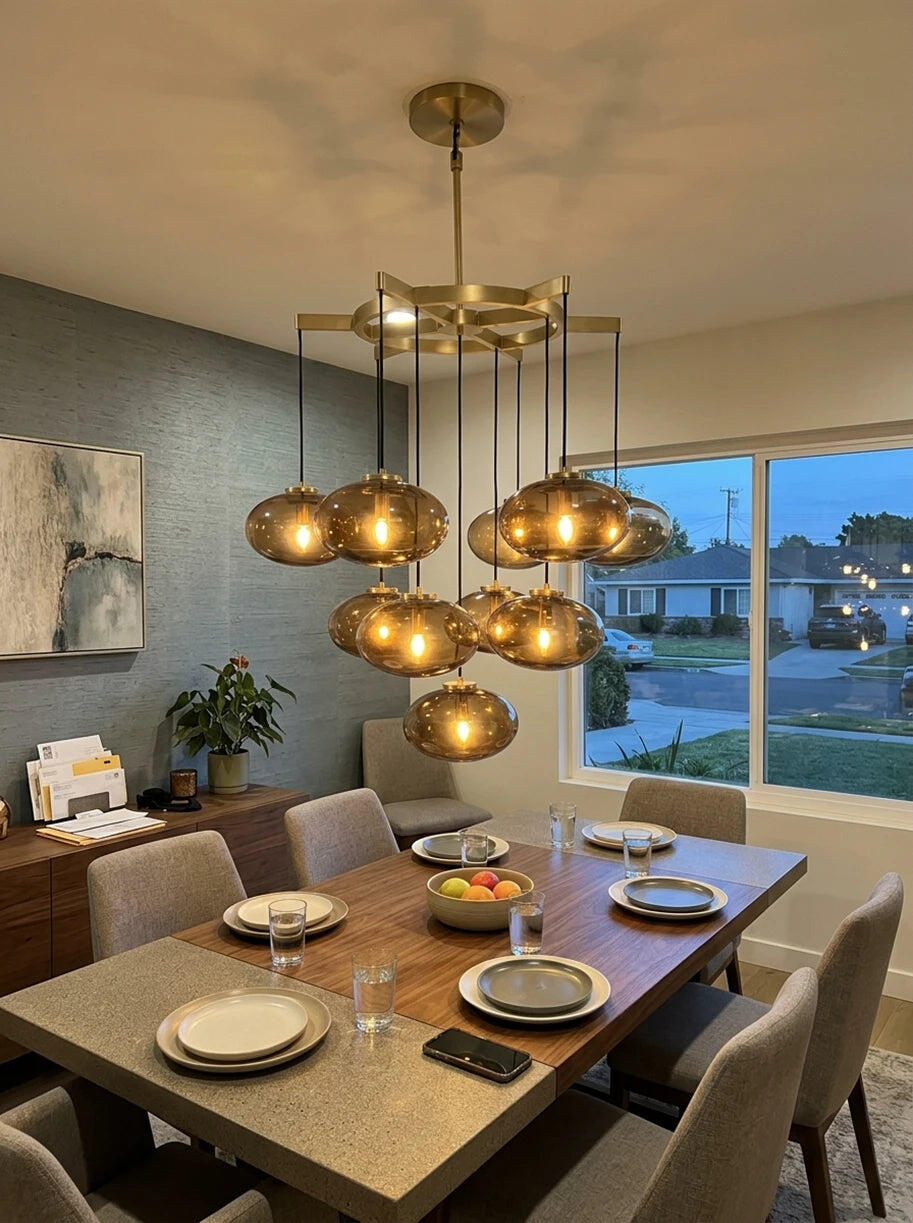
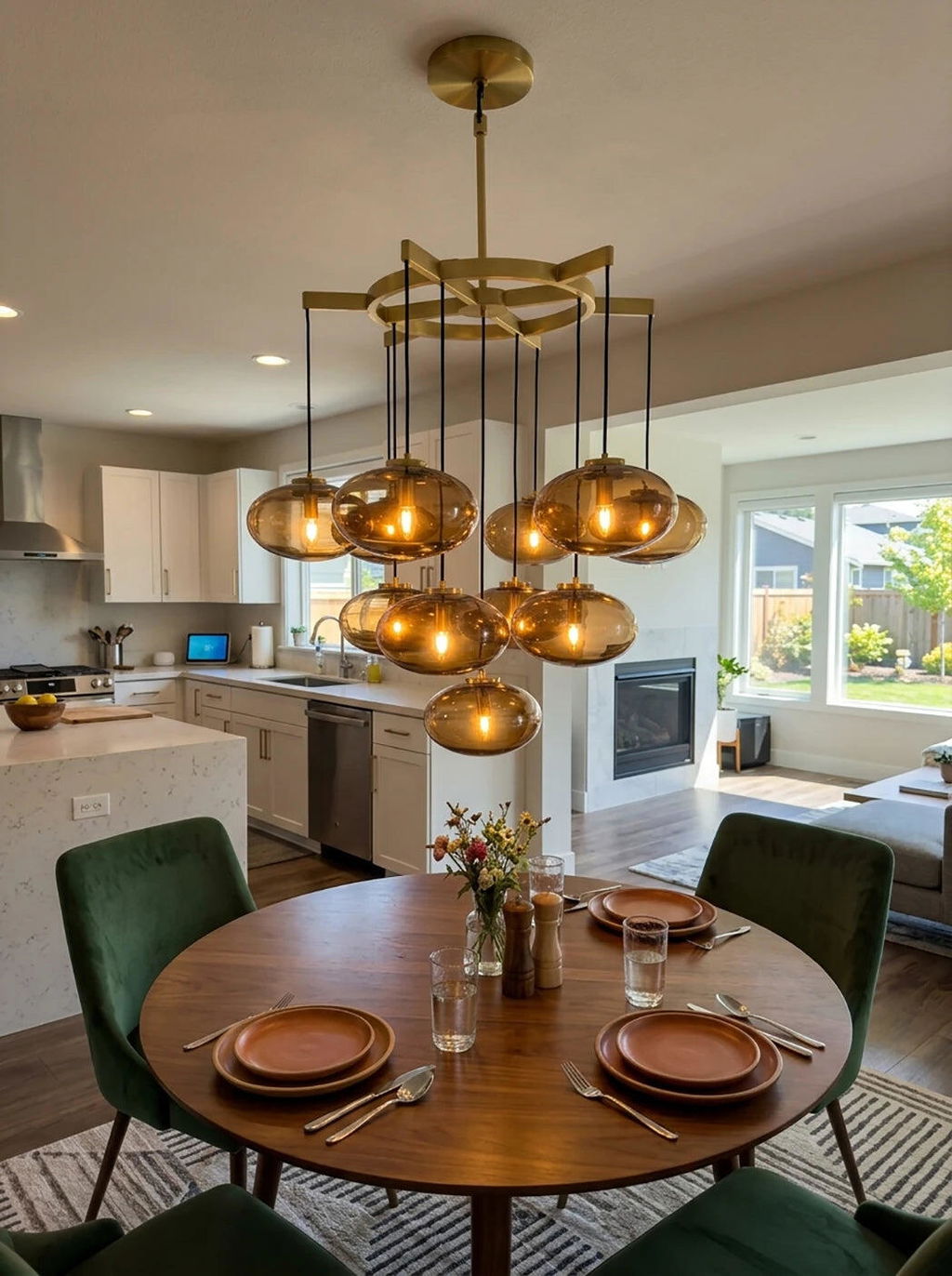
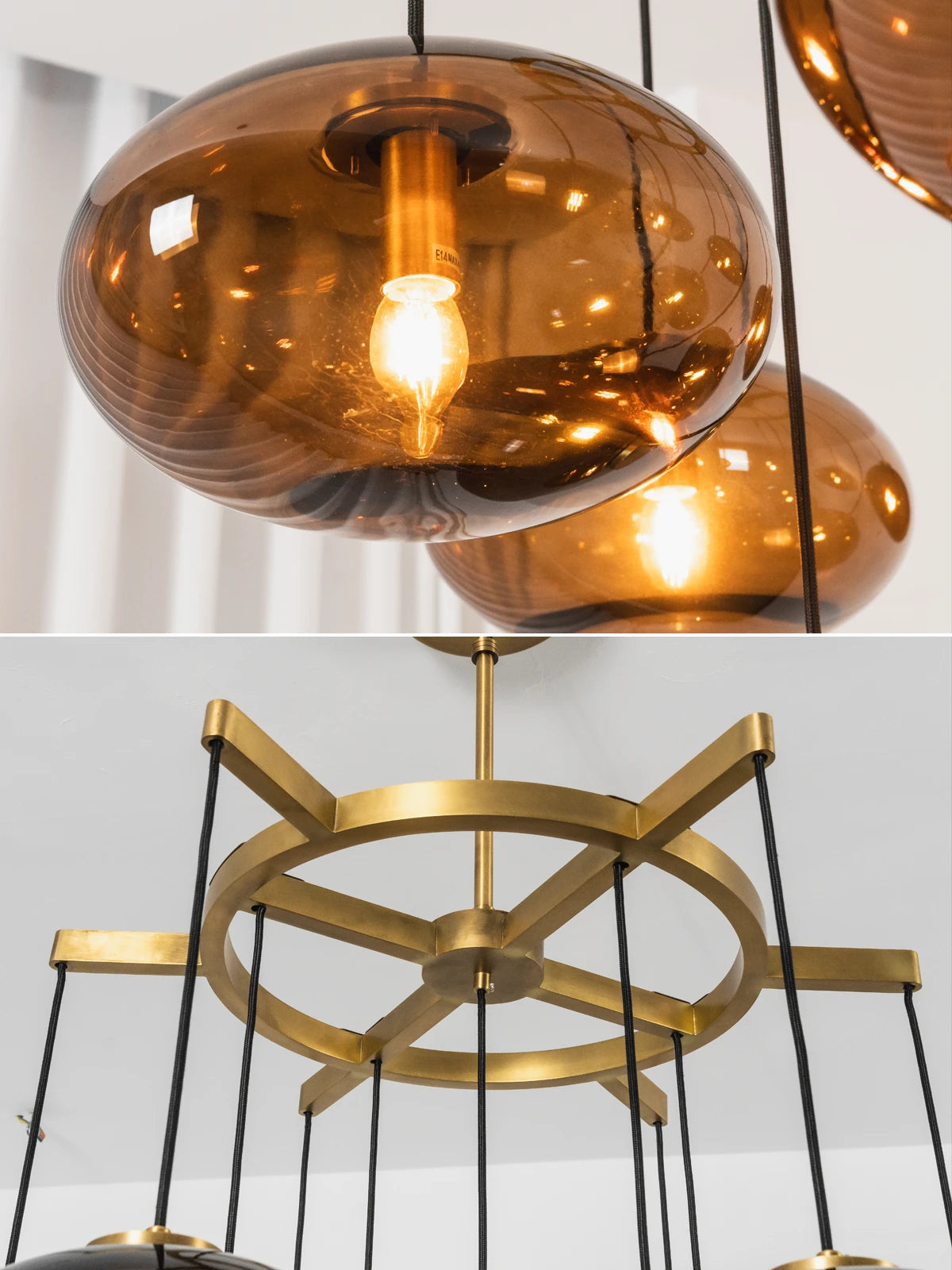
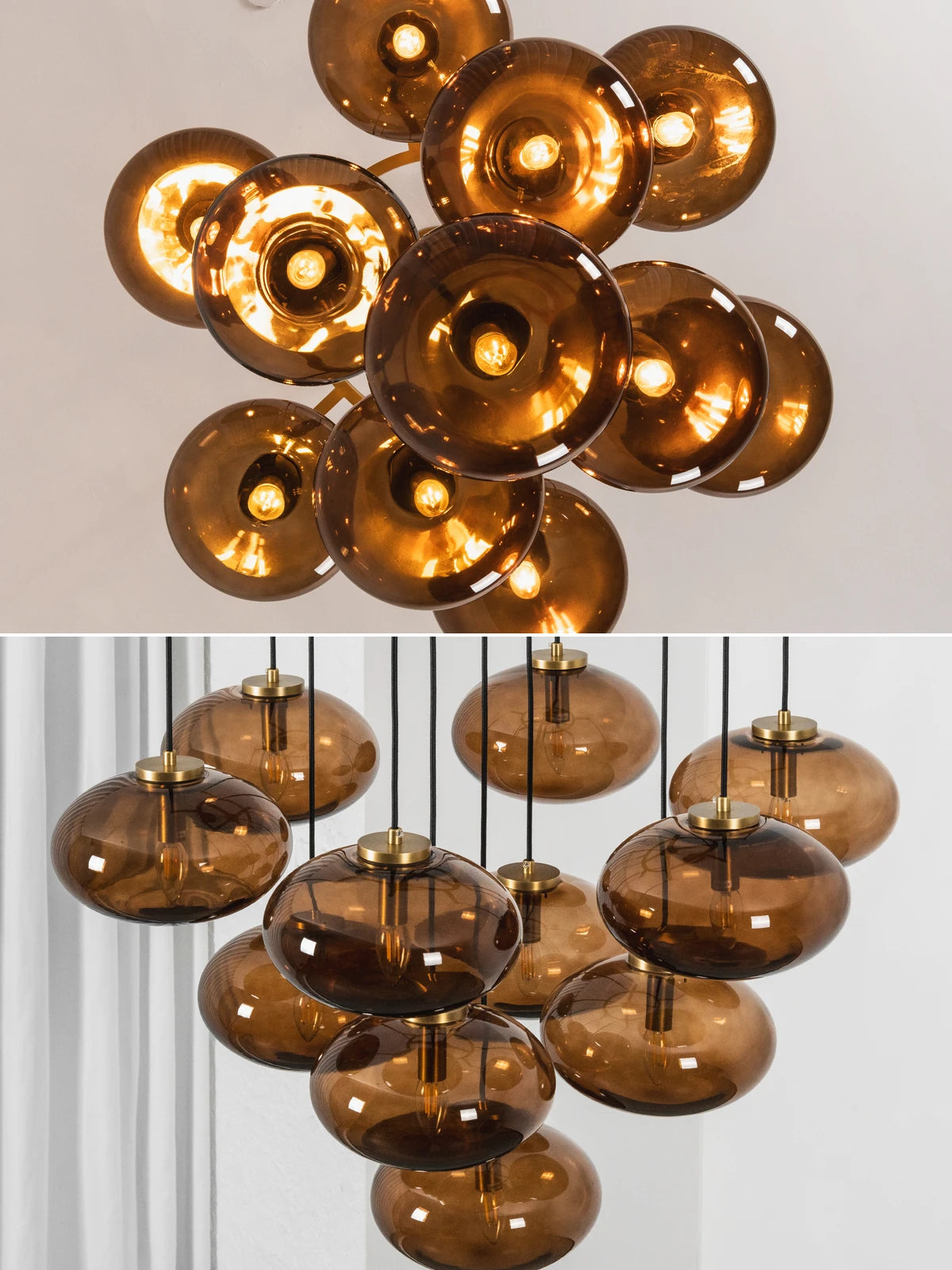
Most multi-light chandeliers line their shades up and hang them level. This Halden Smoked Glass Cluster Chandelier one deliberately doesn't. Eleven globes drop from a single brass-finish ring on black cords cut to different lengths, so the cluster fills space in three dimensions instead of drawing one flat line across the ceiling.
That matters more than it sounds. A level row reads the same from every seat at the table. A staggered cluster changes as you move around it — globes overlap, separate, and re-form depending on where you stand. It is the difference between a light fitting and something people look at. The effect is a room that feels lit by candlelight but is genuinely bright enough to eat and read under — the two things a dining room chandelier usually has to choose between.
It depends entirely on the bulbs. To dim it, fit dimmable E12 bulbs in every socket — not just some, as mixing types causes flicker — and pair them with a compatible dimmer switch.
Four sizes, from three feet across to six. These are large fixtures — measure the room before you choose, not the photograph.
The one that fits a normal dining room.

Four feet across — it becomes the room's centre.

Five feet across. Needs a void, not a room.

Six feet across and five deep. Plan access for installation.

Hung at different heights, on purpose.
Almost every multi-light chandelier lines its shades up and hangs them level. The result is a flat plane of light that presents exactly the same face from every chair at the table. This one is built the other way: each shade drops on its own cord, cut to its own length, so the group occupies three dimensions instead of one.
That single decision changes how the fixture behaves. Shades overlap, separate and re-form as you move around it — it is not the same object from the doorway as it is from your seat. And because the cords are cut during installation rather than fixed at our factory, how deep the cluster falls and how far it staggers is decided in your room, by you.
The glass does the other half of the work. It is tinted and transparent, not frosted, so a clear filament sits visible inside each shade and the tint takes the hard edge off it. What reaches the table is warm and even — enough light to eat and read by, with nothing anywhere to squint at. That balance is the thing a dining room fixture usually has to choose between.
What this does that a level multi-light chandelier can't.
Not sure how to wire it, how high to hang it, or whether you need an electrician? Our full guide walks through every step for US homes.
Switch off at the breaker and confirm before you touch any wiring.
Make sure your junction box is standard, secure, and rated for the weight.
Black to black, white to white, ground to ground — the US standard explained.
Mounting heights and clearances for sconces, pendants, and chandeliers.
A cluster suits a round table and a room seen from all sides. Long table? Bare wall? These two cover the other cases.


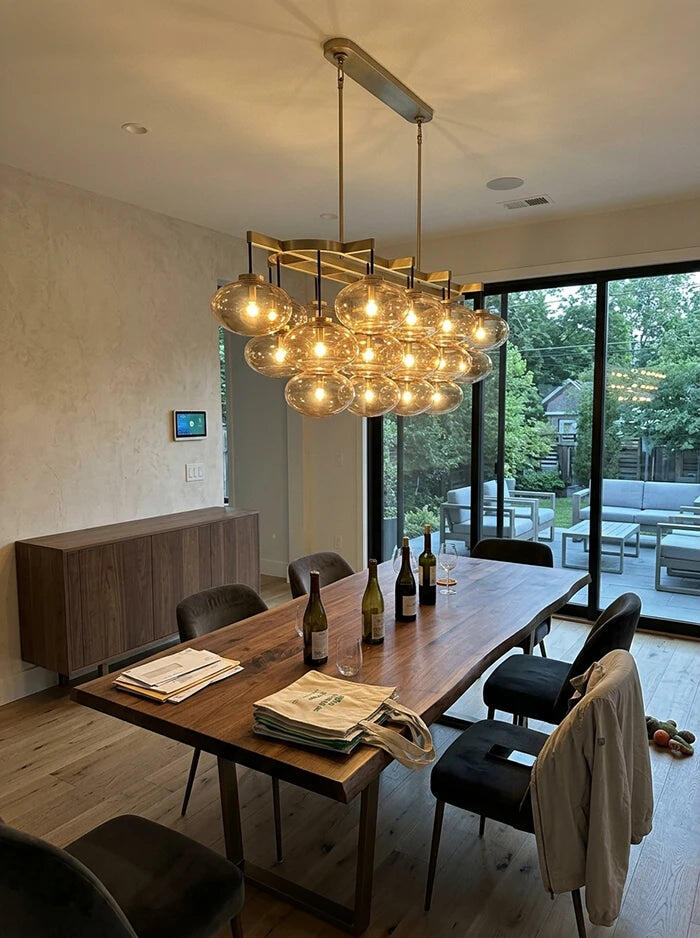
The linear answer. Glass orbs threaded onto a matte black bar rather than hung beneath it, alternating above and below the line. 70.9″ long — built for an 8–9 ft table or island, where a cluster would leave the ends dark. Clear glass, or a mixed row of red, amber and opal.

The wall layer. A tall column of ribbed glass rods that splits one lamp into dozens of fine vertical lines, with the bulb hidden behind them. Gold, black or nickel — and it goes where there is no ceiling box to hang from: a hallway, a landing, either side of a mirror.
The price includes tax, and free standard shipping within the U.S. is provided.

Free Shipping on all orders
Hassle-free return within 30 days
Payment Security
Most multi-light chandeliers line their shades up and hang them level. This Halden Smoked Glass Cluster Chandelier one deliberately doesn't. Eleven globes drop from a single brass-finish ring on black cords cut to different lengths, so the cluster fills space in three dimensions instead of drawing one flat line across the ceiling.
That matters more than it sounds. A level row reads the same from every seat at the table. A staggered cluster changes as you move around it — globes overlap, separate, and re-form depending on where you stand. It is the difference between a light fitting and something people look at. The effect is a room that feels lit by candlelight but is genuinely bright enough to eat and read under — the two things a dining room chandelier usually has to choose between.
It depends entirely on the bulbs. To dim it, fit dimmable E12 bulbs in every socket — not just some, as mixing types causes flicker — and pair them with a compatible dimmer switch.
Four sizes, from three feet across to six. These are large fixtures — measure the room before you choose, not the photograph.
The one that fits a normal dining room.
Four feet across — it becomes the room's centre.
Five feet across. Needs a void, not a room.
Six feet across and five deep. Plan access for installation.
Hung at different heights, on purpose.
Almost every multi-light chandelier lines its shades up and hangs them level. The result is a flat plane of light that presents exactly the same face from every chair at the table. This one is built the other way: each shade drops on its own cord, cut to its own length, so the group occupies three dimensions instead of one.
That single decision changes how the fixture behaves. Shades overlap, separate and re-form as you move around it — it is not the same object from the doorway as it is from your seat. And because the cords are cut during installation rather than fixed at our factory, how deep the cluster falls and how far it staggers is decided in your room, by you.
The glass does the other half of the work. It is tinted and transparent, not frosted, so a clear filament sits visible inside each shade and the tint takes the hard edge off it. What reaches the table is warm and even — enough light to eat and read by, with nothing anywhere to squint at. That balance is the thing a dining room fixture usually has to choose between.
What this does that a level multi-light chandelier can't.
Not sure how to wire it, how high to hang it, or whether you need an electrician? Our full guide walks through every step for US homes.
Switch off at the breaker and confirm before you touch any wiring.
Make sure your junction box is standard, secure, and rated for the weight.
Black to black, white to white, ground to ground — the US standard explained.
Mounting heights and clearances for sconces, pendants, and chandeliers.
A cluster suits a round table and a room seen from all sides. Long table? Bare wall? These two cover the other cases.
The linear answer. Glass orbs threaded onto a matte black bar rather than hung beneath it, alternating above and below the line. 70.9″ long — built for an 8–9 ft table or island, where a cluster would leave the ends dark. Clear glass, or a mixed row of red, amber and opal.
The wall layer. A tall column of ribbed glass rods that splits one lamp into dozens of fine vertical lines, with the bulb hidden behind them. Gold, black or nickel — and it goes where there is no ceiling box to hang from: a hallway, a landing, either side of a mirror.
Designed for atmosphere
Statement lighting with sculptural form, considered materials, and an unmistakable presence.
Designed with intention

Designed for the moments between
The Halloween sale
Applied automatically at checkout. No code needed.
Each one handles light differently once the room goes dim. Pick the glow first, then the shape.
 503 pieces
AlabasterLight passes through the stone and lifts its veining into view.Shop the series
503 pieces
AlabasterLight passes through the stone and lifts its veining into view.Shop the series
 36 pieces
Handmade glassShaped by hand, so each shade scatters light its own way.Shop the series
36 pieces
Handmade glassShaped by hand, so each shade scatters light its own way.Shop the series
 46 pieces
PaperMulberry paper shades that glow evenly, like a lantern.Shop the series
46 pieces
PaperMulberry paper shades that glow evenly, like a lantern.Shop the series
 27 pieces
ShellCapiz shell discs that catch and scatter light as they move.Shop the series
27 pieces
ShellCapiz shell discs that catch and scatter light as they move.Shop the series
 217 pieces
TravertinePorous and sculptural, it throws light down and keeps shadows deep.Shop the series
217 pieces
TravertinePorous and sculptural, it throws light down and keeps shadows deep.Shop the series
 23 pieces
MarblePolished stone whose veining softens under a warm bulb.Shop the series
23 pieces
MarblePolished stone whose veining softens under a warm bulb.Shop the series
 56 pieces
BrassSolid metal with a warm sheen that deepens in lamplight.Shop the series
56 pieces
BrassSolid metal with a warm sheen that deepens in lamplight.Shop the series
 31 pieces
CrystalCut crystal that breaks the light into small, bright sparks.Shop the series
31 pieces
CrystalCut crystal that breaks the light into small, bright sparks.Shop the series
The Halloween sale
Up to 20% off
$2,865.90$3,495.00with 18% off at checkout
Add $1,505 more to your order to reach 20% off.
Applied automatically at checkout. No code needed.