Unlock Savings: Get 10% Off Automatically on Every Order!

Free standard shipping, all orders support 30-day returns

Your cart

Your cart is empty

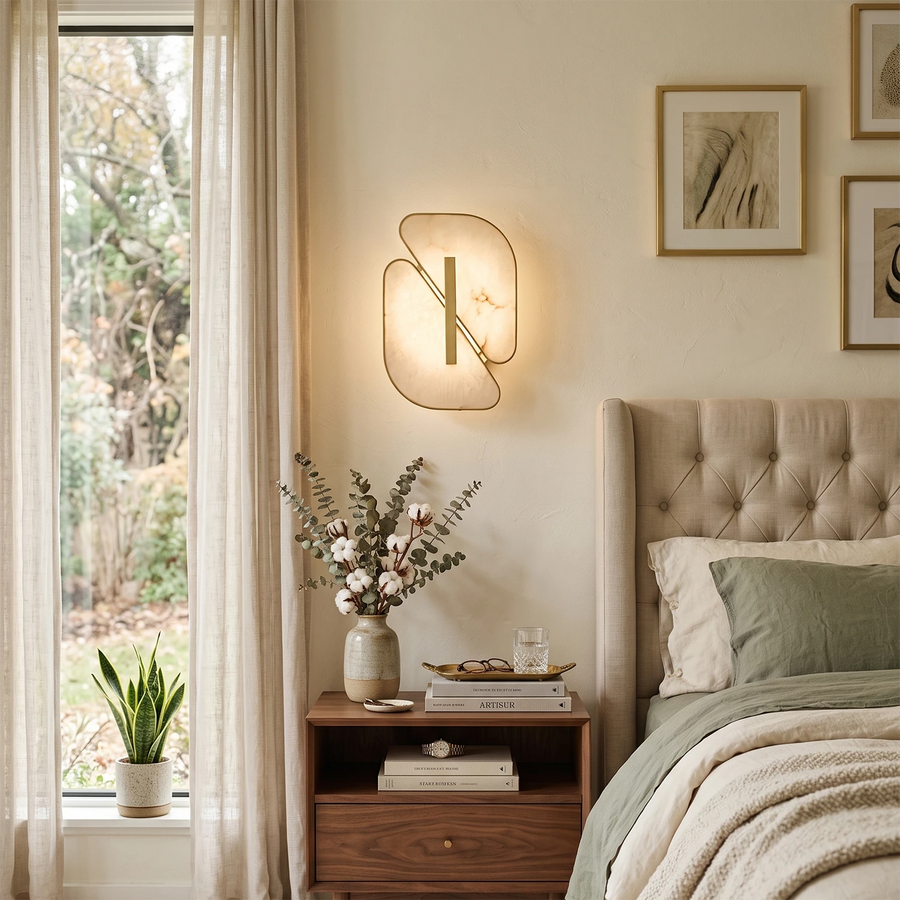
The Solveig Overlapping Alabaster Wall Sconce is two rounded stone panels set at an angle to each other, each outlined in a thin metal edge, held together by a single bar crossing where they meet. Neither panel is a full shape and neither is symmetrical — they read as two pebbles that happened to come to rest overlapping, which is exactly what the design is after. Where the upper panel laps over the lower one, a narrow line of light escapes along the seam.

Most wall sconces point light somewhere: down onto a corridor, up onto a ceiling. This one does something quieter. The alabaster glows from within while the light spills out around the panels and washes the wall behind, so the fixture reads as a lit object floating slightly off the surface rather than a lamp attached to it. 

Natural Alabaster

Naturally Unique Veining

No two pieces of stone are ever the same

Alabaster is a natural stone, so every piece carries its own veining and subtle variation in color. The fixture you receive may therefore differ slightly from the images shown.

An inherent characteristic of real stone — not a quality defect.
×2
Better Together

Buying a Pair?

Select the size marked (*2)two together come at a better price than buying them separately.

Specifications

The Details

Material Genuine Natural Alabaster Panels · MetalStone cut and polished; metal electroplated and finished.
Finish Gold · Black Alabaster: natural white in both. 
Light source Integrated LED Built in — no bulb to buy, fit, or replace.
Colour temperature Warm white 3000K
Power Max 40W
Voltage AC 110–240V
Control Wall switch — not dimmableSee the note below before you wire it.
Mounting Wall — hardwired
Environment Indoor only
Preparation time 5–10 days Made and inspected at our own workshop before dispatch.

Good to Know

This one does not dim — worth knowing before it goes up

The LED is built into the fixture, which means nothing to buy and nothing to replace — but it also means there is no bulb to swap for a dimmable one later. Fitting a dimmer switch will not work and can shorten the driver's life. It runs at one level, and that level is warm white 3000K. If dimming matters beside your bed, put it on its own switch rather than sharing a circuit with the ceiling light — that way you can drop to sconce-only in the evening.

Size & Placement

Small on Purpose — and Better in Pairs

One size, so the only decisions left are how high to hang it and how far apart. Both are simpler than they look.

Width 7.5″ 19 cm
Height 11″ 28 cm
This is a modest fixture, not a statement piece — about the size of a hardback book. On a wide empty wall a single sconce will look lost. It works hardest in pairs: either side of a bed, either side of a mirror, or repeated down a corridor.
Either Side of a BedBest use
36–40″ above the mattress to the centre of the fixture
ApartCentred on each nightstand, or 4–6″ out from the sides of the headboard
WhyThe glow sits just above shoulder height when you're sitting up — soft on the face, and it frees the nightstand of a lamp.

Put them on their own switch. This fixture doesn't dim.

Beside a MirrorBest use
60–66″ from the floor to the centre of the fixture
Apart36–40″ apart, one either side — wider than the mirror, not on top of it
WhyLight from both sides at face height is the most flattering arrangement there is. A single sconce above a mirror casts shadows downward.

Powder rooms only — no showers or steam.

Along a Hallway
60–66″ from the floor to the centre of the fixture
Apart8–10 ft between fixtures — the pools of light should touch, not overlap
WhyA corridor lit from the walls rather than overhead feels longer and calmer, and there's no glare when you walk toward it.

Check the projection before committing in a narrow hall.

Up a Stairwell
60–66″ above each tread measured from the step below each one
ApartEvery 4–6 steps, each one the same height above its own tread so the line follows the rake
WhyFixtures set at a constant height above the stairs climb with them. Set at a constant height from the floor, they look like a mistake.

Mark them all before drilling anything.

The design

Two Stones That Came to Rest Overlapping

Not arranged. Just where they landed.

Pick up two pebbles from a riverbed and set them down. They will not line up. One will lie across the other at whatever angle it happened to fall, and the shape they make together will be asymmetric, unrepeatable, and somehow more convincing than anything you could have arranged deliberately. That accident is the whole design.

Solveig is two panels of alabaster, each cut as a soft irregular shape, set at an angle to one another and overlapping where they meet. Neither is symmetrical. Neither is a complete form on its own. A single metal bar crosses the join and holds them together — the only straight line in the piece, and the only thing that admits this was made rather than found.

What the overlap does to the light is the reason it exists. Where the upper panel laps the lower one, a narrow line of light escapes along the seam — the one hard edge of brightness on an otherwise soft object. Everything else spills out around the panels and washes the wall behind, so the sconce reads as a lit thing hovering slightly off the surface rather than a lamp fixed to it. The wall does half the work.

And because both panels are cut from quarried stone, the two halves of your sconce will not match each other — different veining, one usually a shade warmer than the other when lit. Which returns the piece to where it started: two stones that happened to end up together, and no other pair quite like them.

— Found, then wired —
Questions, Answered

Common Questions

How bright it is, where to hang it, and why the two stone panels don't match.

Is it bright enough to read by?

No — and it isn't meant to be. This sconce spreads light rather than aiming it. The stone glows, light washes the wall behind, and the room softens. What you don't get is a beam pointed at a book.

So it's for atmosphere: a hallway you pass through, a landing, the wall beside a bed. If you also want to read in bed, pair it with a table lamp or a directional reading light. Asking one soft sconce to do both jobs is how people end up disappointed with it.

Can I dim it?

No. The LED is built into the fixture, so there's nothing to buy and nothing to replace — but there's also no bulb to swap for a dimmable one later. Fitting a dimmer switch won't work and can shorten the driver's life.

There is a way around it. Put the sconces on their own switch rather than sharing a circuit with the ceiling light. Then "sconces only" becomes your low setting in the evening — which is how most people use a fixture like this anyway.

How high should I hang it?

Measure to the centre of the fixture, not to the mounting plate — that's the mistake behind most sconces hung too high.

Beside a bed: 36–40″ above the mattress. Beside a mirror: 60–66″ from the floor, one either side, 36–40″ apart. Along a hallway: 60–66″ from the floor, 8–10 ft between fixtures. Up a stairwell: 60–66″ above each tread, so the line climbs with the stairs.

Does the wall colour matter?

More than you'd think. Light escapes around the panels and washes the surface behind, which is half of what makes this piece work — it's why the sconce looks like it's floating slightly off the wall rather than stuck to it.

A pale, smooth wall returns that light and the halo appears in full. A dark wall absorbs it, and heavy texture breaks it up. The sconce still glows either way, but on a dark wall the effect is quieter — worth knowing before you pick the spot.

Why don't the two stone panels match?

Because they're cut from real quarried stone, not moulded from resin. Each panel has its own veining, and one is usually a shade warmer than the other when lit.

If you buy a pair for either side of a bed, that difference shows between the two fixtures as well. That's what real stone does — a set that matched perfectly would have to be plastic.

What's the light line between the two panels?
Where the upper panel laps over the lower one, there's a gap — and light escapes through it in a narrow bright line. It's the one hard edge of light on an otherwise soft object, and it's deliberate: without it, the whole thing would read as a single flat glow.
Is there a bulb to replace?
No — the LED is built in, running at warm white 3000K. Nothing to source, nothing to match, and no odd one out if you own a pair. The honest trade-off is that at the end of its life it isn't a bulb change: contact us if one ever stops working and we'll advise on parts.
Should I buy one or two?

Two, in most cases. At 7.5″ wide this is a modest fixture — about the size of a hardback book — and a single sconce on a wide wall looks lost.

It works hardest in pairs: either side of a bed, either side of a mirror, or repeated along a corridor. A single one is right in a genuinely small space — a powder room, a narrow entry, a stair landing.

Is it hard to install?
It's a hardwired wall fixture and mounts to a standard wall box. Straightforward for a qualified electrician; not a job to improvise if there's no existing wiring at that spot. Cut the power at the breaker first and check with a voltage tester rather than trusting the switch. Mark the height before drilling — and if you're hanging a pair, mark both and stand back before either goes in.
How do I clean it?

A soft dry cloth on the stone panels. Keep water off them — alabaster is porous, absorbs it, and leaves a mark that won't buff out.

No sprays, no polish, nothing abrasive. The metal edge and bar can take a barely damp cloth followed by a dry one. Switch off and let it cool first. Once or twice a year is plenty.

Can I put it in a bathroom?
A powder room with no shower or bath is fine. A bathroom that gets steamy is not — this is an indoor dry-room fixture with no protection against water or steam, and alabaster is porous, so damp is bad for the stone as well as the wiring. Beside a vanity mirror in a dry room, it's one of the best uses for it.
Installation

The Complete Installation Guide

Not sure how to wire it, how high to hang it, or whether you need an electrician? Our full guide walks through every step for US homes.

01

Power Off First

Switch off at the breaker and confirm before you touch any wiring.

02

Check the Box

Make sure your junction box is standard, secure, and rated for the weight.

03

Match the Wires

Black to black, white to white, ground to ground — the US standard explained.

04

Set the Height

Mounting heights and clearances for sconces, pendants, and chandeliers.

Read the Full Installation Guide

Free guide · Written for US homes · Opens in a new tab

Solveig Overlapping Alabaster Wall Sconce

SKU: V-ALWL26081452-1
Regular price $375.00
Unit price
per 

The price includes tax, and free standard shipping within the U.S. is provided.

Availability
 
Tax & Shipping calculated at checkout.
With a brand-new lighting ambiance, let's usher in a hopeful 2026 10% Off All Lighting

Free Shipping on all orders

Hassle-free return within 30 days

Payment Security

✦ Complete the Look

Pairs Well With

The Solveig Overlapping Alabaster Wall Sconce is two rounded stone panels set at an angle to each other, each outlined in a thin metal edge, held together by a single bar crossing where they meet. Neither panel is a full shape and neither is symmetrical — they read as two pebbles that happened to come to rest overlapping, which is exactly what the design is after. Where the upper panel laps over the lower one, a narrow line of light escapes along the seam.

Most wall sconces point light somewhere: down onto a corridor, up onto a ceiling. This one does something quieter. The alabaster glows from within while the light spills out around the panels and washes the wall behind, so the fixture reads as a lit object floating slightly off the surface rather than a lamp attached to it. 

Natural Alabaster

Naturally Unique Veining

No two pieces of stone are ever the same

Alabaster is a natural stone, so every piece carries its own veining and subtle variation in color. The fixture you receive may therefore differ slightly from the images shown.

An inherent characteristic of real stone — not a quality defect.
×2
Better Together

Buying a Pair?

Select the size marked (*2)two together come at a better price than buying them separately.

Specifications

The Details

Material Genuine Natural Alabaster Panels · MetalStone cut and polished; metal electroplated and finished.
Finish Gold · Black Alabaster: natural white in both. 
Light source Integrated LED Built in — no bulb to buy, fit, or replace.
Colour temperature Warm white 3000K
Power Max 40W
Voltage AC 110–240V
Control Wall switch — not dimmableSee the note below before you wire it.
Mounting Wall — hardwired
Environment Indoor only
Preparation time 5–10 days Made and inspected at our own workshop before dispatch.

Good to Know

This one does not dim — worth knowing before it goes up

The LED is built into the fixture, which means nothing to buy and nothing to replace — but it also means there is no bulb to swap for a dimmable one later. Fitting a dimmer switch will not work and can shorten the driver's life. It runs at one level, and that level is warm white 3000K. If dimming matters beside your bed, put it on its own switch rather than sharing a circuit with the ceiling light — that way you can drop to sconce-only in the evening.

Size & Placement

Small on Purpose — and Better in Pairs

One size, so the only decisions left are how high to hang it and how far apart. Both are simpler than they look.

Width 7.5″ 19 cm
Height 11″ 28 cm
This is a modest fixture, not a statement piece — about the size of a hardback book. On a wide empty wall a single sconce will look lost. It works hardest in pairs: either side of a bed, either side of a mirror, or repeated down a corridor.
Either Side of a BedBest use
36–40″ above the mattress to the centre of the fixture
ApartCentred on each nightstand, or 4–6″ out from the sides of the headboard
WhyThe glow sits just above shoulder height when you're sitting up — soft on the face, and it frees the nightstand of a lamp.

Put them on their own switch. This fixture doesn't dim.

Beside a MirrorBest use
60–66″ from the floor to the centre of the fixture
Apart36–40″ apart, one either side — wider than the mirror, not on top of it
WhyLight from both sides at face height is the most flattering arrangement there is. A single sconce above a mirror casts shadows downward.

Powder rooms only — no showers or steam.

Along a Hallway
60–66″ from the floor to the centre of the fixture
Apart8–10 ft between fixtures — the pools of light should touch, not overlap
WhyA corridor lit from the walls rather than overhead feels longer and calmer, and there's no glare when you walk toward it.

Check the projection before committing in a narrow hall.

Up a Stairwell
60–66″ above each tread measured from the step below each one
ApartEvery 4–6 steps, each one the same height above its own tread so the line follows the rake
WhyFixtures set at a constant height above the stairs climb with them. Set at a constant height from the floor, they look like a mistake.

Mark them all before drilling anything.

The design

Two Stones That Came to Rest Overlapping

Not arranged. Just where they landed.

Pick up two pebbles from a riverbed and set them down. They will not line up. One will lie across the other at whatever angle it happened to fall, and the shape they make together will be asymmetric, unrepeatable, and somehow more convincing than anything you could have arranged deliberately. That accident is the whole design.

Solveig is two panels of alabaster, each cut as a soft irregular shape, set at an angle to one another and overlapping where they meet. Neither is symmetrical. Neither is a complete form on its own. A single metal bar crosses the join and holds them together — the only straight line in the piece, and the only thing that admits this was made rather than found.

What the overlap does to the light is the reason it exists. Where the upper panel laps the lower one, a narrow line of light escapes along the seam — the one hard edge of brightness on an otherwise soft object. Everything else spills out around the panels and washes the wall behind, so the sconce reads as a lit thing hovering slightly off the surface rather than a lamp fixed to it. The wall does half the work.

And because both panels are cut from quarried stone, the two halves of your sconce will not match each other — different veining, one usually a shade warmer than the other when lit. Which returns the piece to where it started: two stones that happened to end up together, and no other pair quite like them.

— Found, then wired —
Questions, Answered

Common Questions

How bright it is, where to hang it, and why the two stone panels don't match.

Is it bright enough to read by?

No — and it isn't meant to be. This sconce spreads light rather than aiming it. The stone glows, light washes the wall behind, and the room softens. What you don't get is a beam pointed at a book.

So it's for atmosphere: a hallway you pass through, a landing, the wall beside a bed. If you also want to read in bed, pair it with a table lamp or a directional reading light. Asking one soft sconce to do both jobs is how people end up disappointed with it.

Can I dim it?

No. The LED is built into the fixture, so there's nothing to buy and nothing to replace — but there's also no bulb to swap for a dimmable one later. Fitting a dimmer switch won't work and can shorten the driver's life.

There is a way around it. Put the sconces on their own switch rather than sharing a circuit with the ceiling light. Then "sconces only" becomes your low setting in the evening — which is how most people use a fixture like this anyway.

How high should I hang it?

Measure to the centre of the fixture, not to the mounting plate — that's the mistake behind most sconces hung too high.

Beside a bed: 36–40″ above the mattress. Beside a mirror: 60–66″ from the floor, one either side, 36–40″ apart. Along a hallway: 60–66″ from the floor, 8–10 ft between fixtures. Up a stairwell: 60–66″ above each tread, so the line climbs with the stairs.

Does the wall colour matter?

More than you'd think. Light escapes around the panels and washes the surface behind, which is half of what makes this piece work — it's why the sconce looks like it's floating slightly off the wall rather than stuck to it.

A pale, smooth wall returns that light and the halo appears in full. A dark wall absorbs it, and heavy texture breaks it up. The sconce still glows either way, but on a dark wall the effect is quieter — worth knowing before you pick the spot.

Why don't the two stone panels match?

Because they're cut from real quarried stone, not moulded from resin. Each panel has its own veining, and one is usually a shade warmer than the other when lit.

If you buy a pair for either side of a bed, that difference shows between the two fixtures as well. That's what real stone does — a set that matched perfectly would have to be plastic.

What's the light line between the two panels?
Where the upper panel laps over the lower one, there's a gap — and light escapes through it in a narrow bright line. It's the one hard edge of light on an otherwise soft object, and it's deliberate: without it, the whole thing would read as a single flat glow.
Is there a bulb to replace?
No — the LED is built in, running at warm white 3000K. Nothing to source, nothing to match, and no odd one out if you own a pair. The honest trade-off is that at the end of its life it isn't a bulb change: contact us if one ever stops working and we'll advise on parts.
Should I buy one or two?

Two, in most cases. At 7.5″ wide this is a modest fixture — about the size of a hardback book — and a single sconce on a wide wall looks lost.

It works hardest in pairs: either side of a bed, either side of a mirror, or repeated along a corridor. A single one is right in a genuinely small space — a powder room, a narrow entry, a stair landing.

Is it hard to install?
It's a hardwired wall fixture and mounts to a standard wall box. Straightforward for a qualified electrician; not a job to improvise if there's no existing wiring at that spot. Cut the power at the breaker first and check with a voltage tester rather than trusting the switch. Mark the height before drilling — and if you're hanging a pair, mark both and stand back before either goes in.
How do I clean it?

A soft dry cloth on the stone panels. Keep water off them — alabaster is porous, absorbs it, and leaves a mark that won't buff out.

No sprays, no polish, nothing abrasive. The metal edge and bar can take a barely damp cloth followed by a dry one. Switch off and let it cool first. Once or twice a year is plenty.

Can I put it in a bathroom?
A powder room with no shower or bath is fine. A bathroom that gets steamy is not — this is an indoor dry-room fixture with no protection against water or steam, and alabaster is porous, so damp is bad for the stone as well as the wiring. Beside a vanity mirror in a dry room, it's one of the best uses for it.
Installation

The Complete Installation Guide

Not sure how to wire it, how high to hang it, or whether you need an electrician? Our full guide walks through every step for US homes.

01

Power Off First

Switch off at the breaker and confirm before you touch any wiring.

02

Check the Box

Make sure your junction box is standard, secure, and rated for the weight.

03

Match the Wires

Black to black, white to white, ground to ground — the US standard explained.

04

Set the Height

Mounting heights and clearances for sconces, pendants, and chandeliers.

Read the Full Installation Guide

Free guide · Written for US homes · Opens in a new tab

Customer Reviews

Discover Our Collection -- When stone meets light

“A creation of nature, a vessel for light.”

Crafted from carefully selected natural alabaster, this piece preserves the stone’s most primal physical characteristics. As the stone is naturally formed, its internal mineral veining and depth of color vary from one piece to another. This unique “imperfection” is precisely what constitutes the most captivating charm of natural stone.

The Warmth of Artisanal Craftsmanship

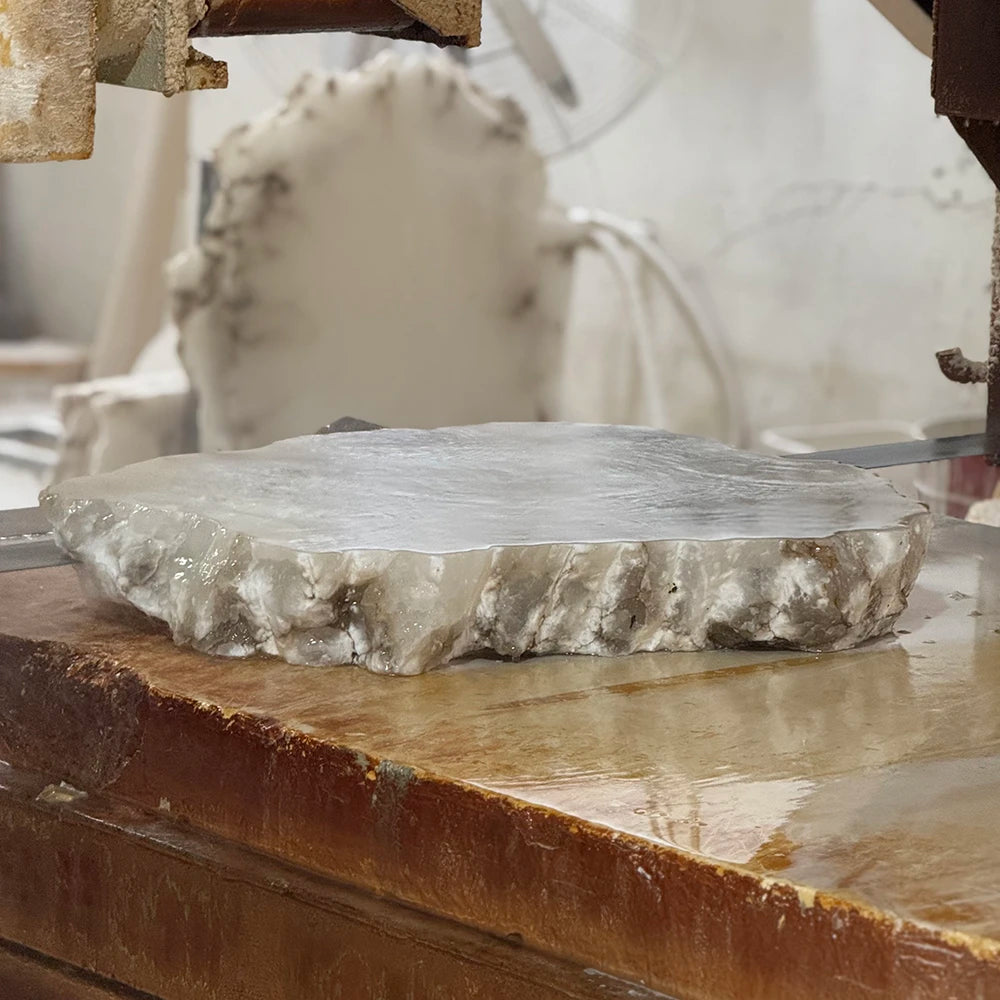
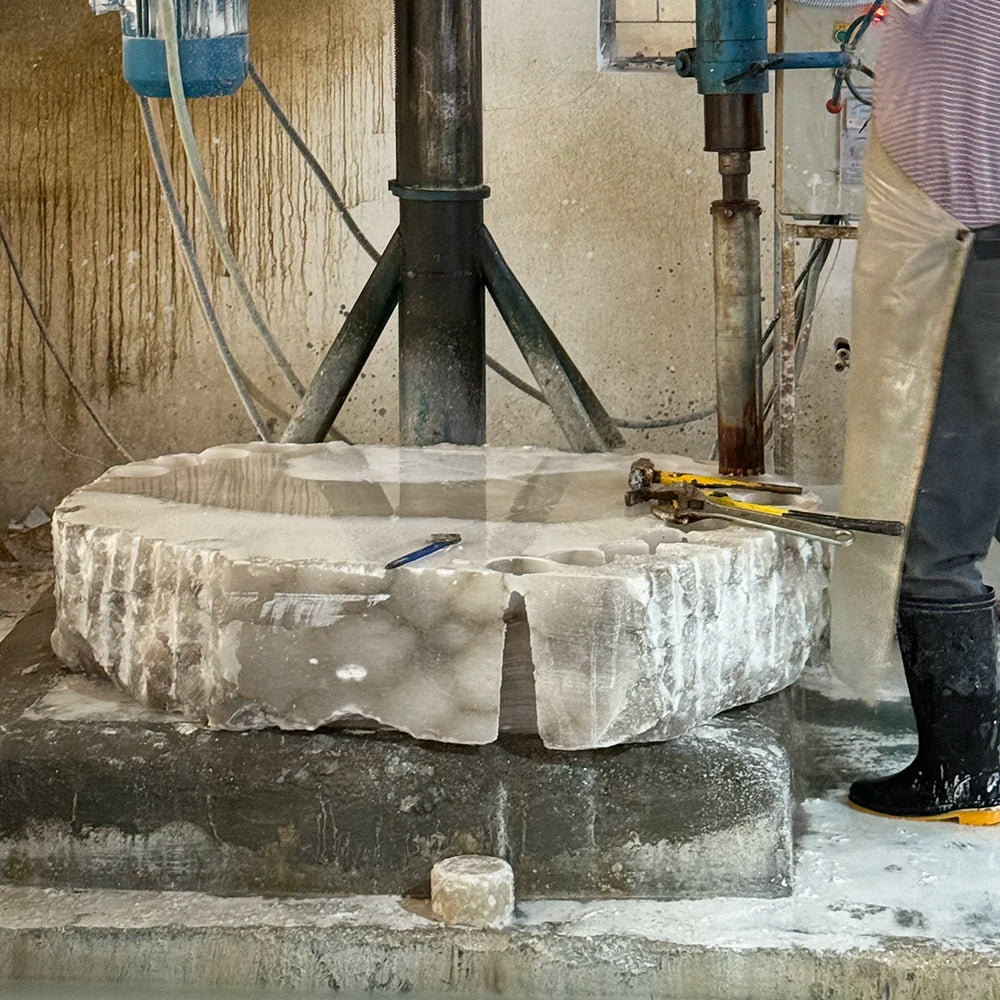
Transforming a raw, rugged block into a refined work of art requires the artisan to engage in a slow, meticulous process spanning multiple stages. Following the stone's natural grain, they refine and polish it with painstaking precision.Preserving that texture closest to nature.

Why Choose Our Premium Materials?

Compared to ordinary materials, our products offer significant advantages in terms of quality, durability, and aesthetics.

Recommended Choice

Our Premium Materials

  • 100% Natural Stone
  • Hand-polished, Smooth Surface
  • Soft light for comfortable lighting
  • Each Piece is Unique

💎 Enjoy a discount when you buy now!

ordinary materials

  • Mass-produced by machine; poor workmanship
  • Prone to breakage after six months
  • May contain harmful substances

The Language of Stone

Every texture tells a unique story.

01

Pure

Pure

A pure white texture reminiscent of fresh snow—warm, smooth, and refined.

02

Ink-Dyed

Ink-Dyed

Deep, inky patterns flow across a white base.

03

Lightning Pattern

Lightning Pattern

A dynamic pattern resembling a bolt of lightning streaking across the sky.

04

Ice-Crackle Pattern

Ice-Crackle Pattern

Fine, intricate cracks evoking the aesthetic beauty of a sheet of ice at the moment it shatters.

05

Snowflake Pattern

Snowflake Pattern

A pattern as light and airy as falling snowflakes, with every single flake unique.

The variations in the veining of natural alabaster are what make it so prized; each lighting fixture bears unique natural markings—not flaws, but artistic value bestowed by nature.

Stone Carving — Transforming Stone into Beautiful Lighting Fixtures

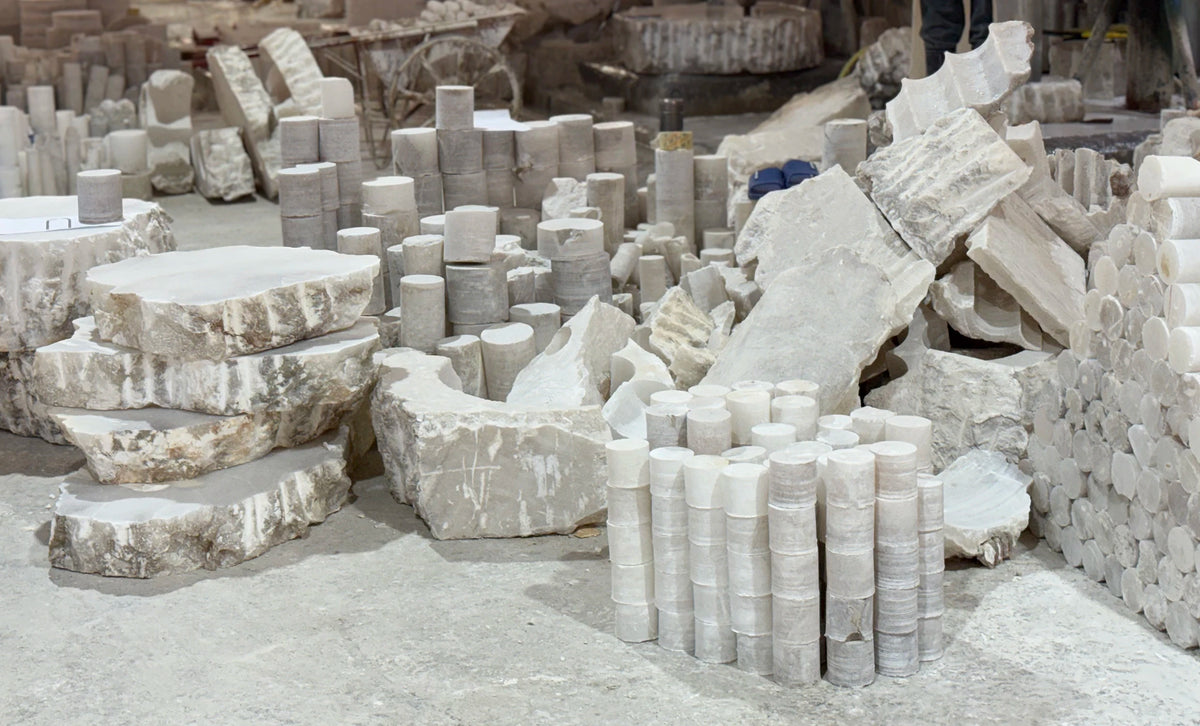
Stone Extraction

Extract and select high-quality materials from natural quarries.

Cutting and Carving

Expert craftsmen shape each piece with meticulous attention to detail and design.

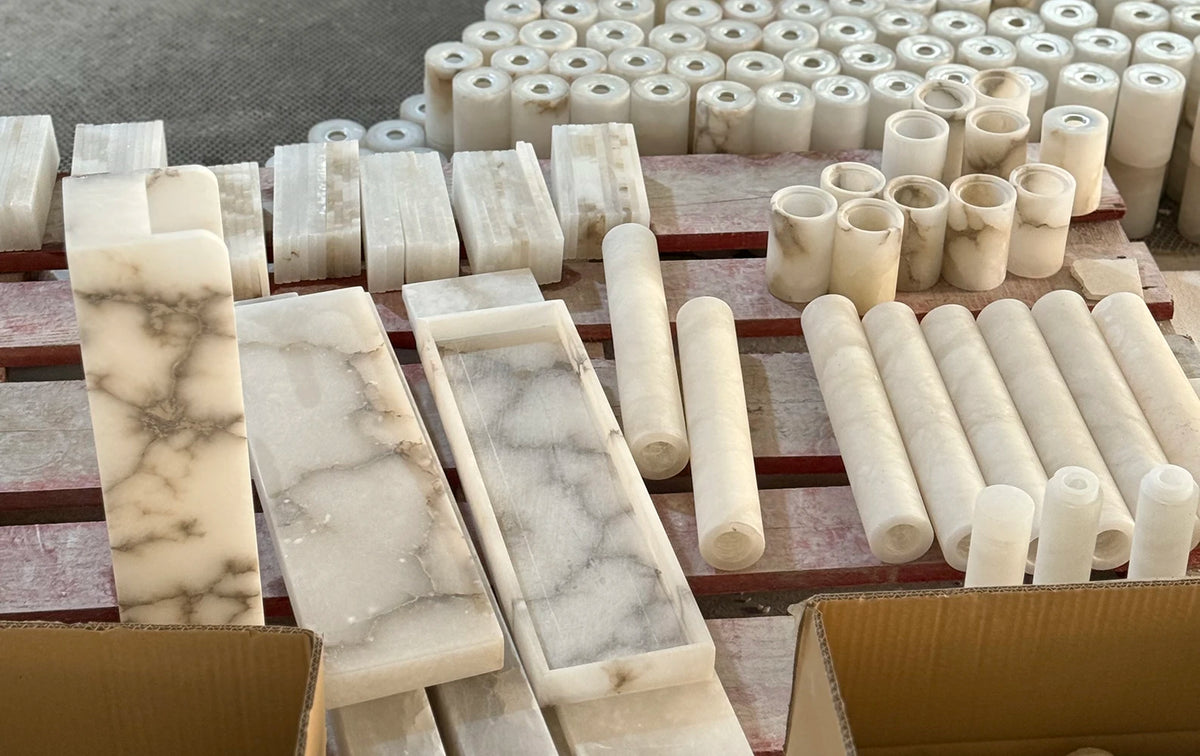
Grinding and Polishing

After multiple rounds of polishing, it gradually becomes extremely smooth, with a warm and jade-like feel.

Assembly and Inspection

Each model is meticulously curated, assembled, and tested.

EXPLORE OUR STORY

Discover our brand philosophy and product features through this video. We are dedicated to providing you with the highest quality products and service experience.

lEARN MORE

Exploring Natural Stone (Alabaster Lighting)

Discover Our Collections

Explore our curated selection of premium lighting designed to illuminate and inspire your space