Unlock Savings: Get 10% Off Automatically on Every Order!

Free standard shipping, all orders support 30-day returns

Your cart

Your cart is empty

Build Your Chandelier

Star-Shaped Glass Tube Chandelier

Glass Detail
Textured cast glass, single tronchi

⌀ 11″ × H 14.6″

8 glass pieces · 1 bulb

Amber

Tea Brown

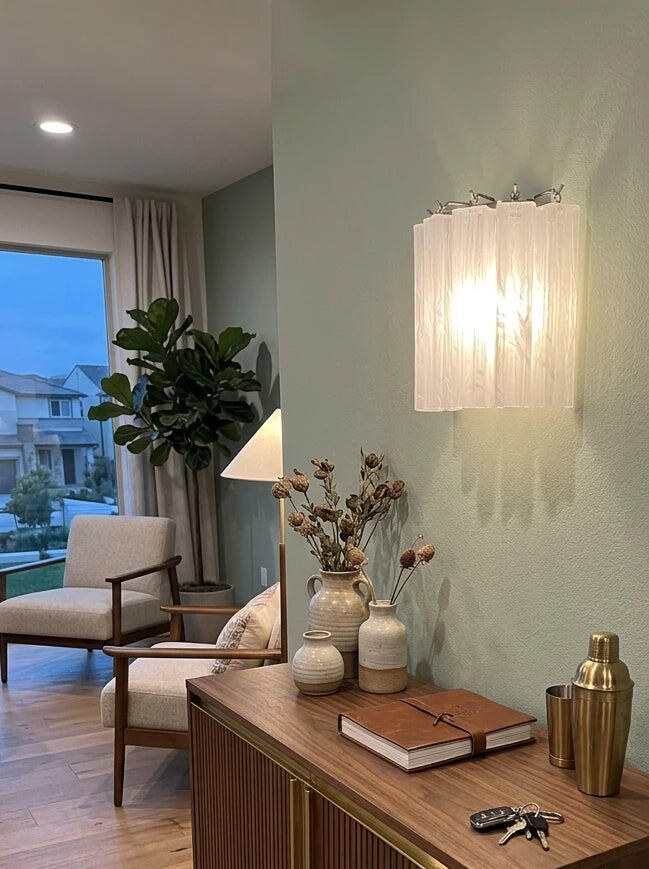
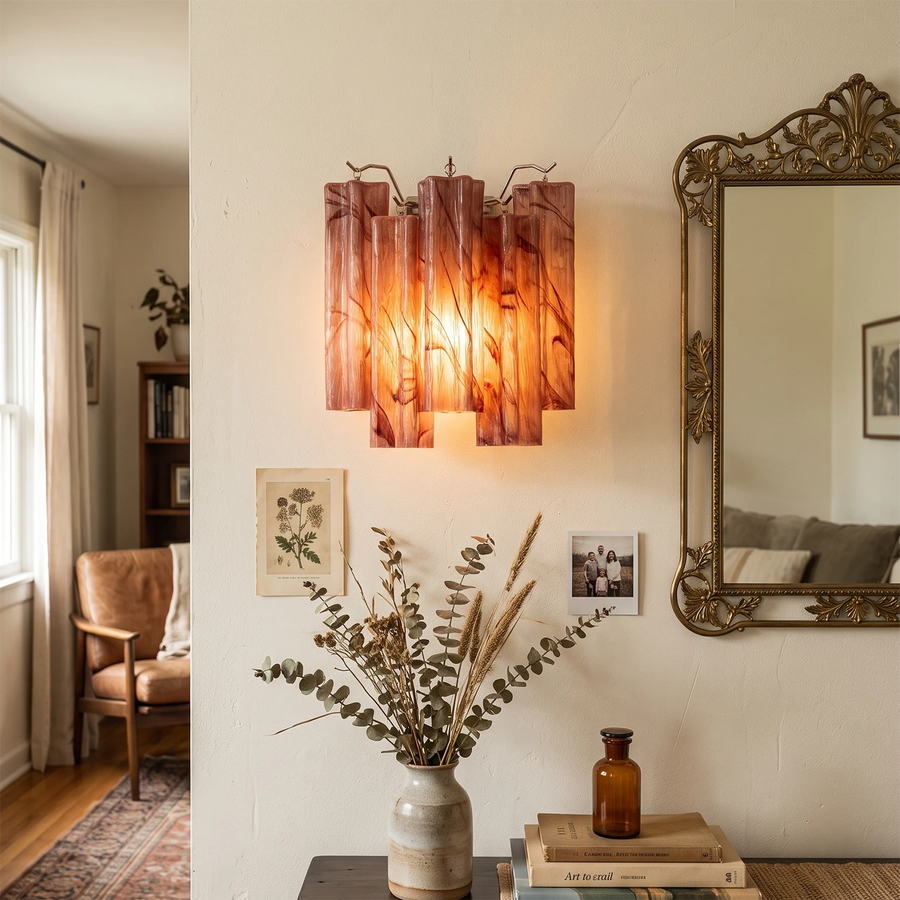
The Ondine Tiered Glass Tube Wall Sconce hangs two rows of slender glass tubes from a polished metal canopy, the lower row set slightly forward of the upper so the whole piece steps down the wall like water finding its way over a ledge. That single decision is what gives this glass tube wall sconce its movement — nothing is fixed into a frame, so the rows carry a little honest irregularity that a machined fixture never has.v

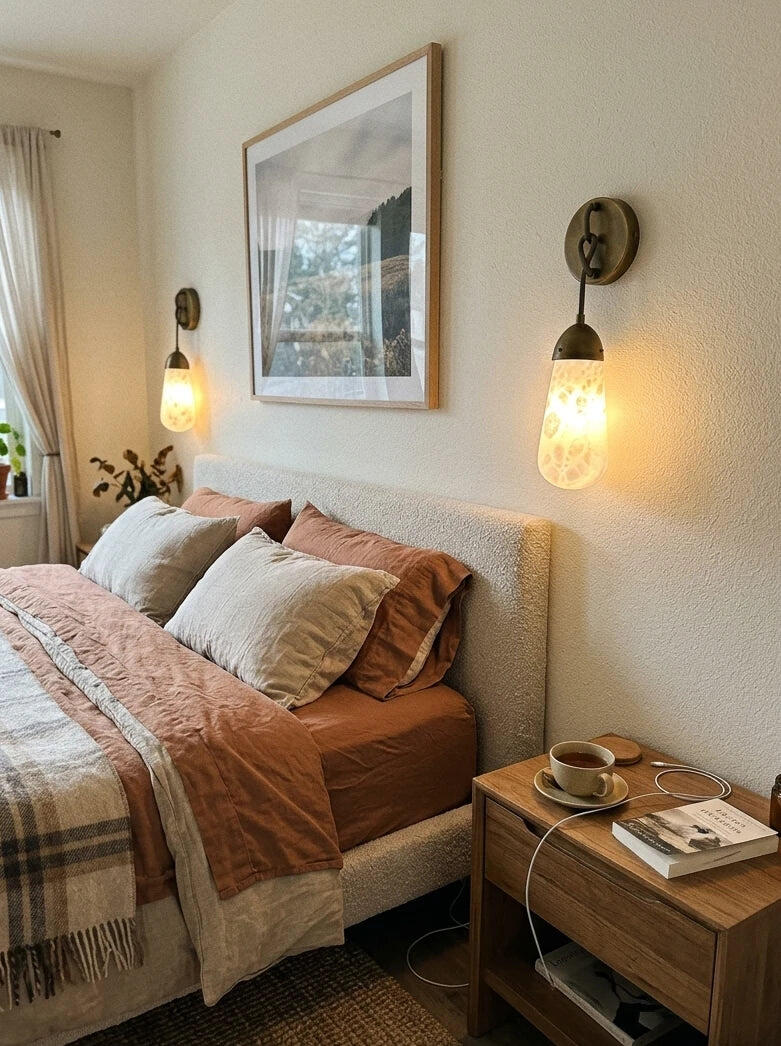
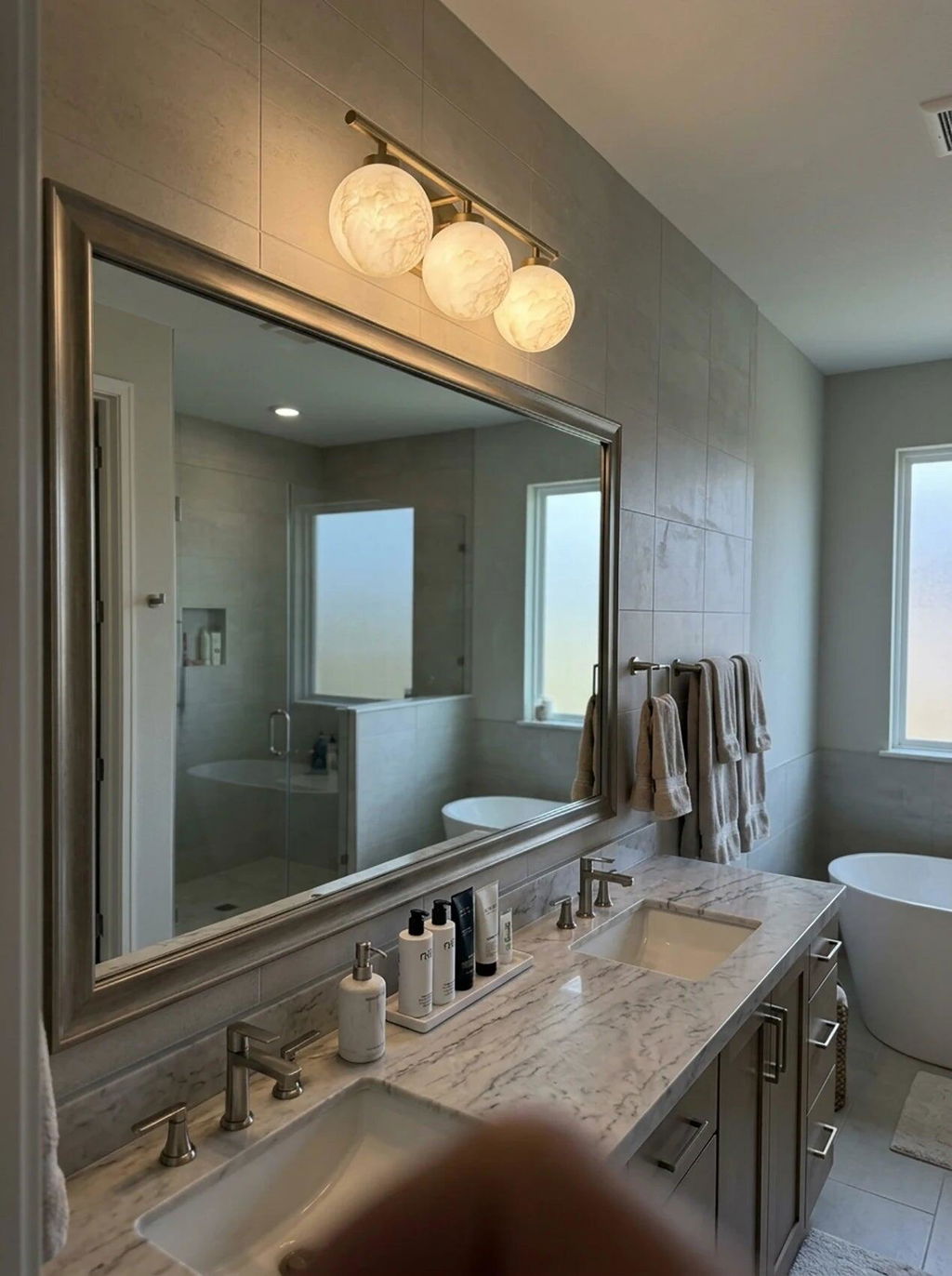
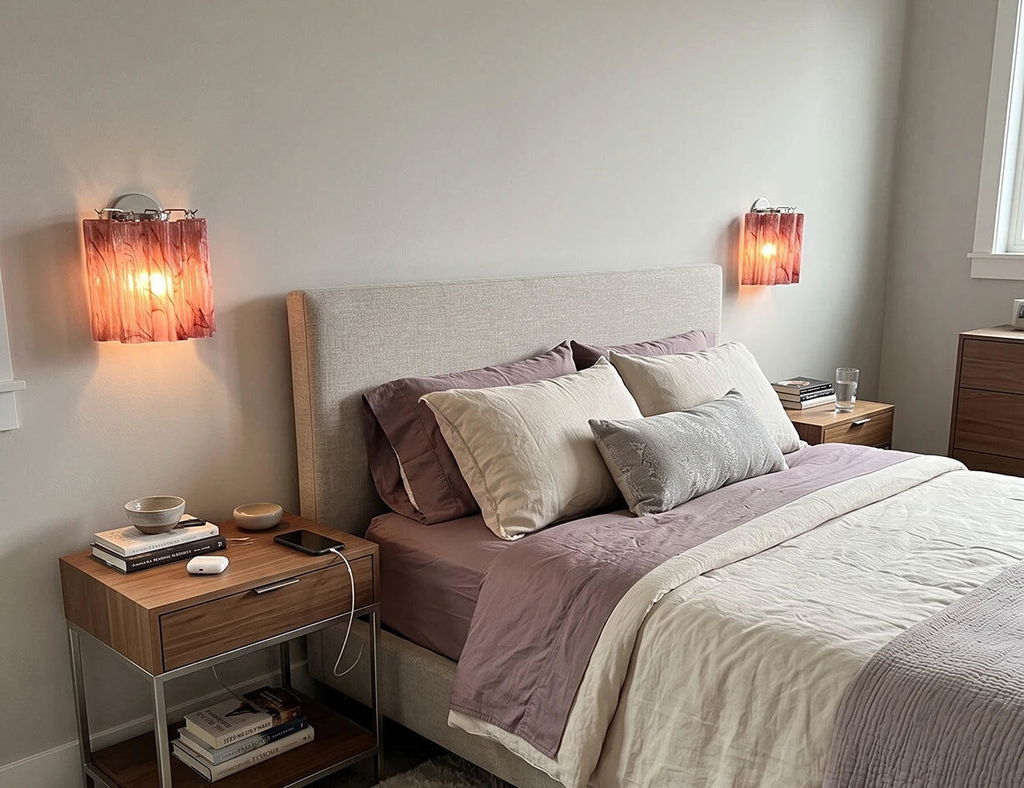
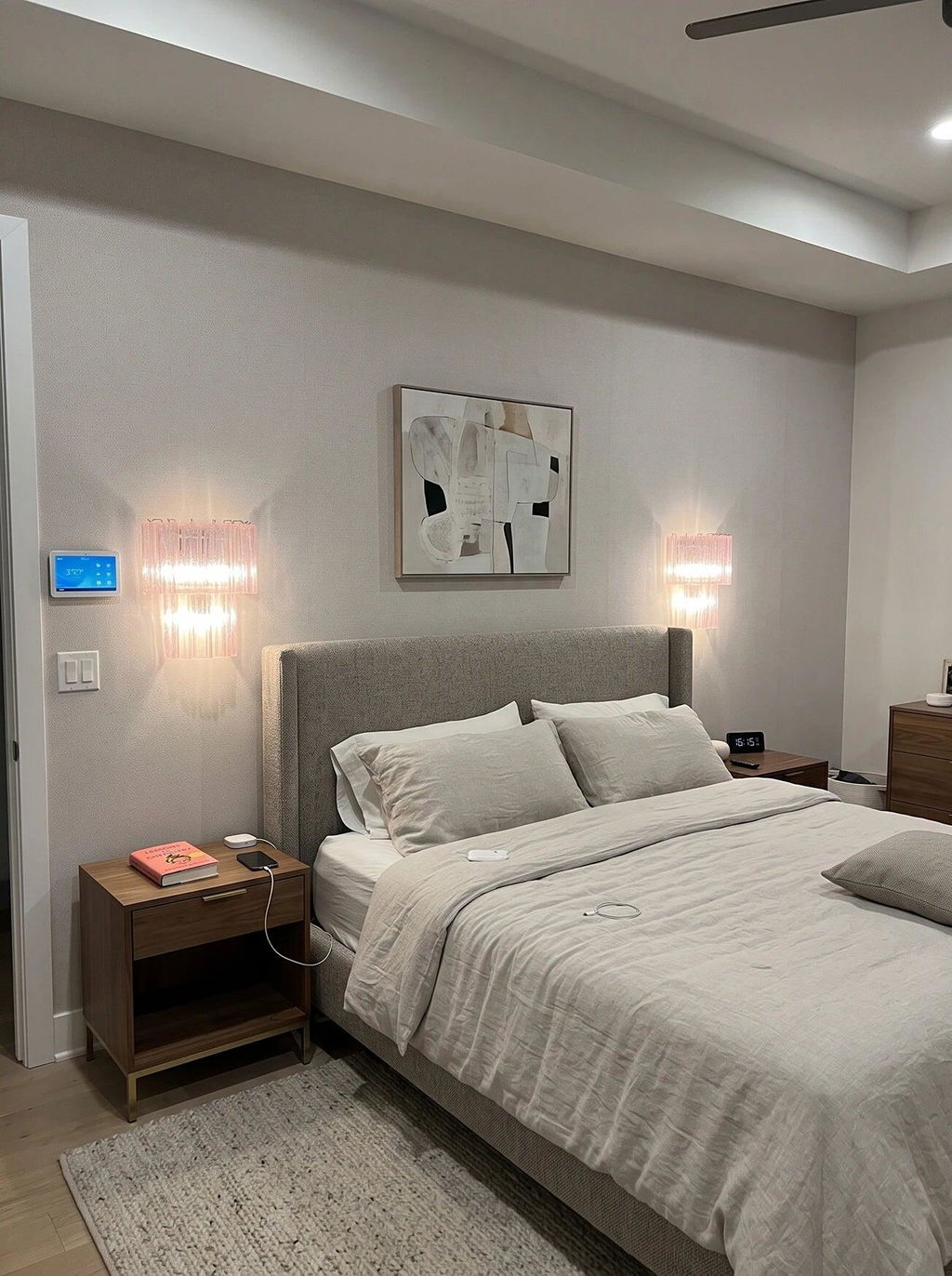
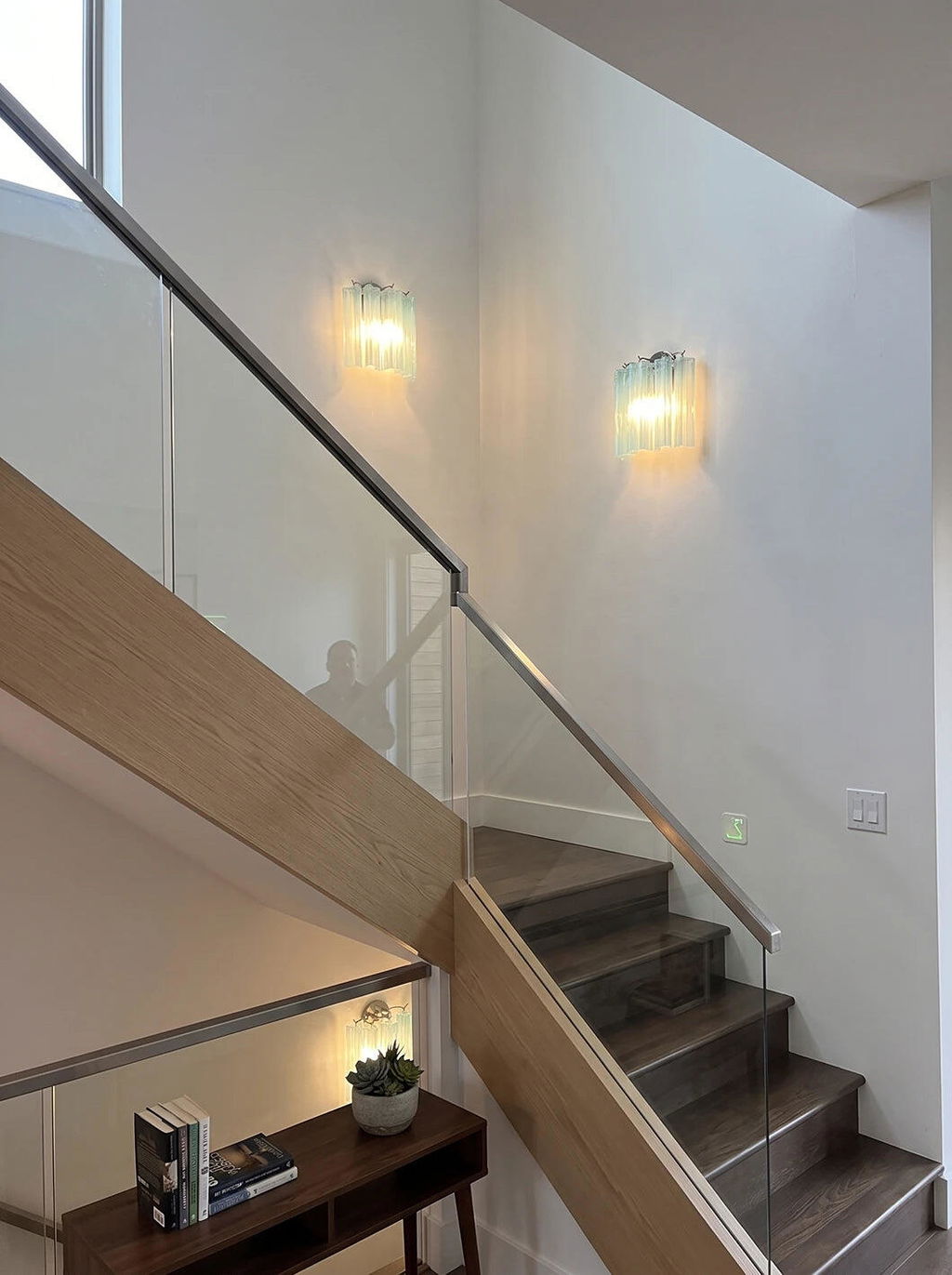
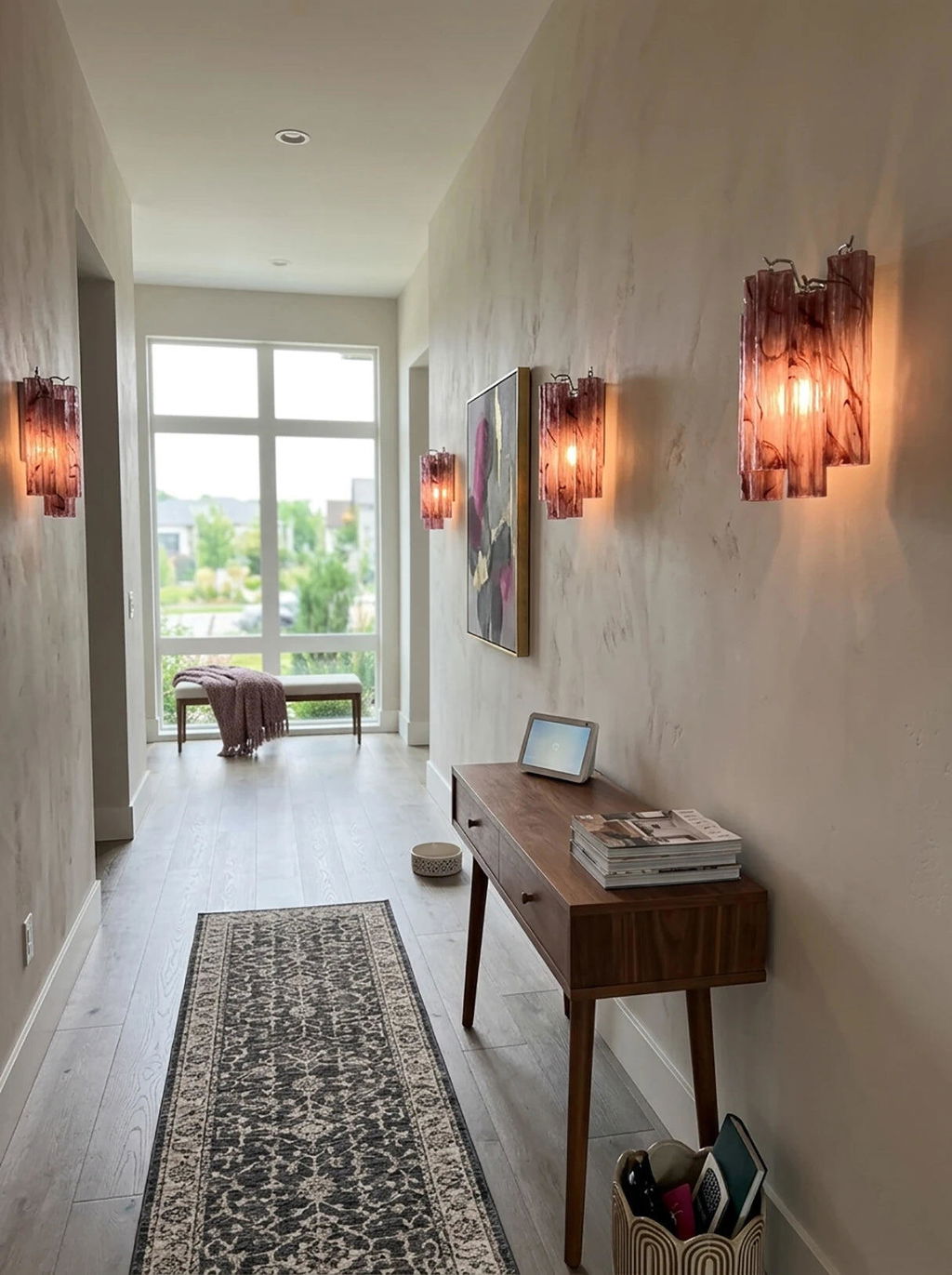
In blush pink it warms a room the way late afternoon does, which is why it belongs beside a bed or a dressing mirror. In clear it stays crisp and architectural, holding its own against stone, glass and black joinery. Mounted in pairs it becomes a bathroom vanity light that lights a face from both sides; run down a hallway at intervals, it turns a passage into a rhythm.

Handmade glass lighting fixtures shown in a range of colours — Vidirlighting custom glass palette Made to Order
Our Handmade Glass Colour Palette
Exclusive Customization

Make It Uniquely Yours

Love the design but need it tailored to your space? We offer comprehensive customization — dimensions, surface finishes, chain and wire lengths, and more. Every piece in our Handmade Glass Series can be built to your specification. Tell us your vision, and we'll take care of the rest.

Custom Size Glass | Lamp Body Colour Chain / Wire Length Tier Count
1

Share Your Idea

Message us online for an immediate response to your brief.

2

Expert Consultation

We advise on size, colour, and finish for your room.

3

We Craft It

Made to spec and inspected before it ships.

support@vidirlighting.com

What You See Is What You Get

Real Photo Hand-blown rippled glass tube panels for the Ondine wall sconce in red, white and blue colourways Rippled glass tubes in every colourway — up close
Real Photo Metal base plate, lamp socket and hanging hooks of the Ondine glass tube wall sconce Base plate, socket and hanging hooks, in detail

Described Honestly

Materials, sizes and finishes are listed exactly as they are — including where hand-blown glass varies from piece to piece.

Genuine Materials

Real hand-blown glass and metal hardware — never acrylic, never plated plastic. Photographed as it leaves our workshop, not rendered.

Safely Packed

Every tube is checked, individually wrapped in thick protective foam, and boxed separately from the metalwork to survive the journey.

Specifications

The Details

Material Metal Frame · Hand-Blown Fluted Glass Tubes Each tube is blown by hand and grooved along its length while the glass is still molten.
Finish Nickel
Glass colourways Transparent Pink Blue RedColour is worked into the molten glass.
Light source LED or Edison bulb E12 / E14 base. Warm white (2700K) recommended — cooler light flattens the glass.
Power Max 40W
Voltage AC 110–240V
Control Push-button switch Dimmable when fitted with a compatible dimmable bulb on a dimmer circuit.
Mounting Wall — hardwired to a junction box No cord or plug. All mounting hardware included; installation by a licensed electrician recommended.
Environment Indoor · dry and damp locations Suitable beside a bathroom mirror. Not rated for direct spray — do not install inside a shower or over a tub.
Preparation time 5–10 days Made and inspected at our own workshop before dispatch.

Good to Know

Mounting height, and buying in pairs

Set the centre of the fixture 60–66″ (152–168 cm) above the finished floor — about eye level standing, which keeps the bulb out of sightline. Beside a mirror, buy a pair and space them 36–40″ (90–100 cm) apart: light from both sides is what removes shadow from a face. Decide the height before the junction box is roughed in.

About dimming

Dimming depends on the bulb, not the fixture. Fit a dimmable E12/E14 bulb on a compatible dimmer and it will dim smoothly.

Want a different colour or size?

Glass tone, tube length, overall dimensions, metal finish and light count can all be specified. Because the glass is hand-blown from the start, a change of colour or size is a change of specification, not a special process. Send your dimensions and a photo of the wall and we will prepare a drawing for approval before anything is built.

Size Guide

Which Size for Your Wall

Five configurations, from a compact square that pairs either side of a mirror to a tall panel that carries a wall on its own. Mounting height is set on site.

Style APopular
W 10.6″ × H 10.6″ W 27 × H 27 cm
Best forBathroom vanity in pairs · powder room · hallway · bedside

Space a pair 36–40″ apart at a mirror.

Style B
W 10.6″ × H 10.6″ W 27 × H 27 cm
Best forSame footprint as Style A in a different glass arrangement · corridors · guest bath

Run one every 8–10 ft down a hallway.

Style C
W 10.6″ × H 10.6″ W 27 × H 27 cm
Best forSame footprint again · above a console · either side of a doorway · small landing

Single above a console, 6–8″ over the top.

Style D — Wide
W 17.3″ × H 18.9″ W 44 × H 48 cm
Best forA single fixture on a broad wall · large vanity · living room · above a headboard

Wants 40″+ of clear wall on either side.

Style E — Tall
W 11.8″ × H 23.6″ W 30 × H 60 cm
Best forFlanking a tall mirror · stairwell wall · narrow pier between windows · double-height entry

The vertical format suits ceilings over 9 ft.

Sizing Tip

Size a sconce to the wall or the mirror, not the room. Beside a mirror, the fixture should be roughly one quarter to one third of the mirror's height — which is why the 10.6″ square suits a standard vanity mirror and the 23.6″ tall format is made for a full-length one. On an open wall, leave at least twice the fixture's width of clear space on either side, or it will read crowded.

Two numbers do most of the work. Centre height 60–66″ above the finished floor keeps the light source out of a standing adult's sightline; drop to 58–60″ beside a bed or reading chair. Projection is what decides a hallway — measure your corridor before choosing, since anything deeper than about 6″ starts to catch shoulders in a passage under 36″ wide.

When you are between two options, size down for a corridor and up for a mirror. And decide the height before the junction box is roughed in — moving a box afterwards means patching the wall.

The Craft

Shaped by Breath & Fire, Not a Machine

Every ribbed glass tube is mouth-blown by hand — which is exactly why the light looks the way it does.

Hand-Blown Glass

Molten Glass, Shaped by Hand

Each ribbed tube begins as a glowing gather of molten glass on the end of a blowpipe. A glassmaker breathes it into shape by hand, turning and drawing the fluted ribs while the glass is still soft. It's slow, skilled work — and it leaves each piece with a life that machine-pressed glass simply can't have.

Ribs That Catch the Light

Blown by hand, the fluted ribs bend and scatter every beam, casting rippling patterns of light and shadow across your walls — a texture flat glass can't reproduce.

Depth & Clarity

Hand-blown glass carries a substantial, thick-walled clarity with real depth — it refracts a soft glow even in daylight, never the thin, hollow look of acrylic.

Made, Not Manufactured

Every ribbed tube is the trace of a maker's hand and breath — an artisan piece, not a molded copy stamped out by the thousand.

The design

The Beauty Is in the Repetition

One tube is an object. Together, they are a light.

The began with the opposite question to most lighting design. Not what shape should this be, but what happens if you make the same thing by hand, over and over? A single glass tube is unremarkable — a cylinder, cut square at both ends, about as plain as glass gets. Hang a row of them and something else appears entirely. The design isn't in any one piece. It's in the arrangement.

That is also what decides how the light behaves. A tube with parallel walls acts like a short lens: it takes light in at the top and carries it down its own length, so you never get one soft glowing shade. You get a row of separate luminous columns held in formation, with a bright line drawn along every cut edge — closer in feeling to a constellation than to a lamp.

A machine would give you a grid; a hand gives you a rhythm — the same note played forty times and never quite identically. Stand close and you can see every difference. Stand back and they resolve into one warm, even wall of light.

— Repetition, never repeated. —
Why this sconce

Built from Many Parts, Read as One Light

A row of hand-blown glass tubes, each hung on its own ring — and what that construction does once the light is on.

01

Hung Tube by Tube, Not Fixed in a Frame

Every tube suspends from its own small ring along the canopy — nothing is glued or clamped into a housing. That single construction choice is why the row hangs with a little natural give instead of standing rigid like a box, and it is also why a single damaged tube can be replaced on its own rather than the whole fixture.

02

Glass That Lights Along Its Length

A tube with parallel walls behaves like a short lens: it takes light in at the top and carries it down its own bore. So instead of one flat glowing panel you get a row of separate luminous columns, with a bright line drawn along every cut edge. The bulb stays out of sight from any normal viewing angle, and there is no hotspot anywhere on the piece.

03

Hand-Blown Glass, Nickel-Finish Hardware

Each tube is blown by hand and grooved while the glass is still molten, so the texture sits in the material rather than on it — nothing to scratch off, nothing to fade. Colour is worked into the glass the same way, which is why it will not yellow or wash out the way a coated or printed finish does. The canopy, arms and rings are polished nickel-finish metal: cool, even, and easy to wipe clean.

— Hand-blown glass tubes, hung on polished nickel —

Materials

Why Hand-Blown Glass

Glass is not one material. What breath and hand tools give you, a steel mould cannot.

Hand-Blown Glass Pressed Glass / Acrylic
The light Each tube carries light down its own length, so the fixture reads as a row of separate glowing columns with no hotspot One flat diffused panel, or a bare bright source with visible glare through thin acrylic
Switched off Grooved glass catches daylight along every ridge — it still reads as an object on the wall Reads flat and empty; acrylic looks like plastic in daylight, however good it looks lit
The colour Worked into the molten glass, so it deepens where the wall runs thick and thins toward the ends Sprayed or filmed onto the surface — flat, even, and able to chip or peel at an edge
The texture Grooves formed while the glass is still soft — the texture is the material itself Embossed or printed after the fact, which can scuff off with cleaning
Construct
ion
Every tube hangs on its own ring — a single damaged tube is replaced on its own Sealed into one moulded housing; damage usually means replacing the whole fixture
Over time Glass will not yellow, cloud or off-gas; the colour is as permanent as the material Acrylic yellows and scratches with age and heat; surface tints fade
In the hand Cool, smooth, with real weight to each tube Lightweight and hollow-feeling
Questions, Answered

Common Questions

Is the glass really hand-blown?
Yes. Every tube is gathered molten, inflated by breath and shaped by hand — never pressed cold from a die, and never acrylic. The grooves are formed while the glass is still soft, and the colour is worked into the molten batch rather than applied to a finished surface.
Why aren't the tubes identical to each other?
Because a hand cannot repeat itself to the millimetre, and it is not meant to. Wall thickness wanders, groove depth varies, and colour pools deeper where the glass runs thick. Silhouette, dimensions, finish and colour family stay consistent; individual tubes do not. Stand close and you see every difference; stand back and they resolve into one even wall of light.
Will it be too bright or glary?
No. The bulb sits behind the tubes and stays out of sight from any normal viewing angle. Light enters each tube at the top and travels down its length, so what reaches the room is a set of soft luminous columns rather than a single hard source. There is no hotspot anywhere on the piece — comfortable to stand beside and to look at directly.
Can I use it in a bathroom?
Beside a vanity mirror is one of the best places for it. Install in a dry or damp location, away from direct water spray — alongside a mirror, above a console, or on a general bathroom wall. Do not install inside a shower enclosure or directly over a tub, which require a fixture rated for wet locations. Good ventilation and a licensed electrician making the connection are what matter most.
Will the colour fade or the texture wear off?
Neither. The colour is in the glass, not on it, and the grooves are formed in the material rather than embossed onto a finished surface — so there is nothing to scratch off and nothing to fade. Glass also will not yellow or cloud with heat and age the way acrylic does.
How do I clean it?
A soft dry cloth for dust, barely damp for fingerprints, wiping down the length of each tube rather than across it. Avoid abrasive pads, solvents and household glass sprays containing ammonia — grooved surfaces trap residue. Always switch off and let the bulbs cool completely first.
Installation

The Complete Installation Guide

Not sure how to wire it, how high to hang it, or whether you need an electrician? Our full guide walks through every step for US homes.

01

Power Off First

Switch off at the breaker and confirm before you touch any wiring.

02

Check the Box

Make sure your junction box is standard, secure, and rated for the weight.

03

Match the Wires

Black to black, white to white, ground to ground — the US standard explained.

04

Set the Height

Mounting heights and clearances for sconces, pendants, and chandeliers.

Read the Full Installation Guide

Free guide · Written for US homes · Opens in a new tab

Ondine Tiered Glass Tube Wall Sconce

SKU: V-GLWL2607271-1
Regular price $265.00
Unit price
per 

The price includes tax, and free standard shipping within the U.S. is provided.

Availability
 
Tax & Shipping calculated at checkout.
With a brand-new lighting ambiance, let's usher in a hopeful 2026 10% Off All Lighting

Free Shipping on all orders

Hassle-free return within 30 days

Payment Security

Build Your Chandelier

Star-Shaped Glass Tube Chandelier

Glass Detail
Textured cast glass, single tronchi

⌀ 11″ × H 14.6″

8 glass pieces · 1 bulb

Amber

Tea Brown

The Ondine Tiered Glass Tube Wall Sconce hangs two rows of slender glass tubes from a polished metal canopy, the lower row set slightly forward of the upper so the whole piece steps down the wall like water finding its way over a ledge. That single decision is what gives this glass tube wall sconce its movement — nothing is fixed into a frame, so the rows carry a little honest irregularity that a machined fixture never has.v

In blush pink it warms a room the way late afternoon does, which is why it belongs beside a bed or a dressing mirror. In clear it stays crisp and architectural, holding its own against stone, glass and black joinery. Mounted in pairs it becomes a bathroom vanity light that lights a face from both sides; run down a hallway at intervals, it turns a passage into a rhythm.

Handmade glass lighting fixtures shown in a range of colours — Vidirlighting custom glass palette Made to Order
Our Handmade Glass Colour Palette
Exclusive Customization

Make It Uniquely Yours

Love the design but need it tailored to your space? We offer comprehensive customization — dimensions, surface finishes, chain and wire lengths, and more. Every piece in our Handmade Glass Series can be built to your specification. Tell us your vision, and we'll take care of the rest.

Custom Size Glass | Lamp Body Colour Chain / Wire Length Tier Count
1

Share Your Idea

Message us online for an immediate response to your brief.

2

Expert Consultation

We advise on size, colour, and finish for your room.

3

We Craft It

Made to spec and inspected before it ships.

support@vidirlighting.com

What You See Is What You Get

Real Photo Hand-blown rippled glass tube panels for the Ondine wall sconce in red, white and blue colourways Rippled glass tubes in every colourway — up close
Real Photo Metal base plate, lamp socket and hanging hooks of the Ondine glass tube wall sconce Base plate, socket and hanging hooks, in detail

Described Honestly

Materials, sizes and finishes are listed exactly as they are — including where hand-blown glass varies from piece to piece.

Genuine Materials

Real hand-blown glass and metal hardware — never acrylic, never plated plastic. Photographed as it leaves our workshop, not rendered.

Safely Packed

Every tube is checked, individually wrapped in thick protective foam, and boxed separately from the metalwork to survive the journey.

Specifications

The Details

Material Metal Frame · Hand-Blown Fluted Glass Tubes Each tube is blown by hand and grooved along its length while the glass is still molten.
Finish Nickel
Glass colourways Transparent Pink Blue RedColour is worked into the molten glass.
Light source LED or Edison bulb E12 / E14 base. Warm white (2700K) recommended — cooler light flattens the glass.
Power Max 40W
Voltage AC 110–240V
Control Push-button switch Dimmable when fitted with a compatible dimmable bulb on a dimmer circuit.
Mounting Wall — hardwired to a junction box No cord or plug. All mounting hardware included; installation by a licensed electrician recommended.
Environment Indoor · dry and damp locations Suitable beside a bathroom mirror. Not rated for direct spray — do not install inside a shower or over a tub.
Preparation time 5–10 days Made and inspected at our own workshop before dispatch.

Good to Know

Mounting height, and buying in pairs

Set the centre of the fixture 60–66″ (152–168 cm) above the finished floor — about eye level standing, which keeps the bulb out of sightline. Beside a mirror, buy a pair and space them 36–40″ (90–100 cm) apart: light from both sides is what removes shadow from a face. Decide the height before the junction box is roughed in.

About dimming

Dimming depends on the bulb, not the fixture. Fit a dimmable E12/E14 bulb on a compatible dimmer and it will dim smoothly.

Want a different colour or size?

Glass tone, tube length, overall dimensions, metal finish and light count can all be specified. Because the glass is hand-blown from the start, a change of colour or size is a change of specification, not a special process. Send your dimensions and a photo of the wall and we will prepare a drawing for approval before anything is built.

Size Guide

Which Size for Your Wall

Five configurations, from a compact square that pairs either side of a mirror to a tall panel that carries a wall on its own. Mounting height is set on site.

Style APopular
W 10.6″ × H 10.6″ W 27 × H 27 cm
Best forBathroom vanity in pairs · powder room · hallway · bedside

Space a pair 36–40″ apart at a mirror.

Style B
W 10.6″ × H 10.6″ W 27 × H 27 cm
Best forSame footprint as Style A in a different glass arrangement · corridors · guest bath

Run one every 8–10 ft down a hallway.

Style C
W 10.6″ × H 10.6″ W 27 × H 27 cm
Best forSame footprint again · above a console · either side of a doorway · small landing

Single above a console, 6–8″ over the top.

Style D — Wide
W 17.3″ × H 18.9″ W 44 × H 48 cm
Best forA single fixture on a broad wall · large vanity · living room · above a headboard

Wants 40″+ of clear wall on either side.

Style E — Tall
W 11.8″ × H 23.6″ W 30 × H 60 cm
Best forFlanking a tall mirror · stairwell wall · narrow pier between windows · double-height entry

The vertical format suits ceilings over 9 ft.

Sizing Tip

Size a sconce to the wall or the mirror, not the room. Beside a mirror, the fixture should be roughly one quarter to one third of the mirror's height — which is why the 10.6″ square suits a standard vanity mirror and the 23.6″ tall format is made for a full-length one. On an open wall, leave at least twice the fixture's width of clear space on either side, or it will read crowded.

Two numbers do most of the work. Centre height 60–66″ above the finished floor keeps the light source out of a standing adult's sightline; drop to 58–60″ beside a bed or reading chair. Projection is what decides a hallway — measure your corridor before choosing, since anything deeper than about 6″ starts to catch shoulders in a passage under 36″ wide.

When you are between two options, size down for a corridor and up for a mirror. And decide the height before the junction box is roughed in — moving a box afterwards means patching the wall.

The Craft

Shaped by Breath & Fire, Not a Machine

Every ribbed glass tube is mouth-blown by hand — which is exactly why the light looks the way it does.

Hand-Blown Glass

Molten Glass, Shaped by Hand

Each ribbed tube begins as a glowing gather of molten glass on the end of a blowpipe. A glassmaker breathes it into shape by hand, turning and drawing the fluted ribs while the glass is still soft. It's slow, skilled work — and it leaves each piece with a life that machine-pressed glass simply can't have.

Ribs That Catch the Light

Blown by hand, the fluted ribs bend and scatter every beam, casting rippling patterns of light and shadow across your walls — a texture flat glass can't reproduce.

Depth & Clarity

Hand-blown glass carries a substantial, thick-walled clarity with real depth — it refracts a soft glow even in daylight, never the thin, hollow look of acrylic.

Made, Not Manufactured

Every ribbed tube is the trace of a maker's hand and breath — an artisan piece, not a molded copy stamped out by the thousand.

The design

The Beauty Is in the Repetition

One tube is an object. Together, they are a light.

The began with the opposite question to most lighting design. Not what shape should this be, but what happens if you make the same thing by hand, over and over? A single glass tube is unremarkable — a cylinder, cut square at both ends, about as plain as glass gets. Hang a row of them and something else appears entirely. The design isn't in any one piece. It's in the arrangement.

That is also what decides how the light behaves. A tube with parallel walls acts like a short lens: it takes light in at the top and carries it down its own length, so you never get one soft glowing shade. You get a row of separate luminous columns held in formation, with a bright line drawn along every cut edge — closer in feeling to a constellation than to a lamp.

A machine would give you a grid; a hand gives you a rhythm — the same note played forty times and never quite identically. Stand close and you can see every difference. Stand back and they resolve into one warm, even wall of light.

— Repetition, never repeated. —
Why this sconce

Built from Many Parts, Read as One Light

A row of hand-blown glass tubes, each hung on its own ring — and what that construction does once the light is on.

01

Hung Tube by Tube, Not Fixed in a Frame

Every tube suspends from its own small ring along the canopy — nothing is glued or clamped into a housing. That single construction choice is why the row hangs with a little natural give instead of standing rigid like a box, and it is also why a single damaged tube can be replaced on its own rather than the whole fixture.

02

Glass That Lights Along Its Length

A tube with parallel walls behaves like a short lens: it takes light in at the top and carries it down its own bore. So instead of one flat glowing panel you get a row of separate luminous columns, with a bright line drawn along every cut edge. The bulb stays out of sight from any normal viewing angle, and there is no hotspot anywhere on the piece.

03

Hand-Blown Glass, Nickel-Finish Hardware

Each tube is blown by hand and grooved while the glass is still molten, so the texture sits in the material rather than on it — nothing to scratch off, nothing to fade. Colour is worked into the glass the same way, which is why it will not yellow or wash out the way a coated or printed finish does. The canopy, arms and rings are polished nickel-finish metal: cool, even, and easy to wipe clean.

— Hand-blown glass tubes, hung on polished nickel —

Materials

Why Hand-Blown Glass

Glass is not one material. What breath and hand tools give you, a steel mould cannot.

Hand-Blown Glass Pressed Glass / Acrylic
The light Each tube carries light down its own length, so the fixture reads as a row of separate glowing columns with no hotspot One flat diffused panel, or a bare bright source with visible glare through thin acrylic
Switched off Grooved glass catches daylight along every ridge — it still reads as an object on the wall Reads flat and empty; acrylic looks like plastic in daylight, however good it looks lit
The colour Worked into the molten glass, so it deepens where the wall runs thick and thins toward the ends Sprayed or filmed onto the surface — flat, even, and able to chip or peel at an edge
The texture Grooves formed while the glass is still soft — the texture is the material itself Embossed or printed after the fact, which can scuff off with cleaning
Construct
ion
Every tube hangs on its own ring — a single damaged tube is replaced on its own Sealed into one moulded housing; damage usually means replacing the whole fixture
Over time Glass will not yellow, cloud or off-gas; the colour is as permanent as the material Acrylic yellows and scratches with age and heat; surface tints fade
In the hand Cool, smooth, with real weight to each tube Lightweight and hollow-feeling
Questions, Answered

Common Questions

Is the glass really hand-blown?
Yes. Every tube is gathered molten, inflated by breath and shaped by hand — never pressed cold from a die, and never acrylic. The grooves are formed while the glass is still soft, and the colour is worked into the molten batch rather than applied to a finished surface.
Why aren't the tubes identical to each other?
Because a hand cannot repeat itself to the millimetre, and it is not meant to. Wall thickness wanders, groove depth varies, and colour pools deeper where the glass runs thick. Silhouette, dimensions, finish and colour family stay consistent; individual tubes do not. Stand close and you see every difference; stand back and they resolve into one even wall of light.
Will it be too bright or glary?
No. The bulb sits behind the tubes and stays out of sight from any normal viewing angle. Light enters each tube at the top and travels down its length, so what reaches the room is a set of soft luminous columns rather than a single hard source. There is no hotspot anywhere on the piece — comfortable to stand beside and to look at directly.
Can I use it in a bathroom?
Beside a vanity mirror is one of the best places for it. Install in a dry or damp location, away from direct water spray — alongside a mirror, above a console, or on a general bathroom wall. Do not install inside a shower enclosure or directly over a tub, which require a fixture rated for wet locations. Good ventilation and a licensed electrician making the connection are what matter most.
Will the colour fade or the texture wear off?
Neither. The colour is in the glass, not on it, and the grooves are formed in the material rather than embossed onto a finished surface — so there is nothing to scratch off and nothing to fade. Glass also will not yellow or cloud with heat and age the way acrylic does.
How do I clean it?
A soft dry cloth for dust, barely damp for fingerprints, wiping down the length of each tube rather than across it. Avoid abrasive pads, solvents and household glass sprays containing ammonia — grooved surfaces trap residue. Always switch off and let the bulbs cool completely first.
Installation

The Complete Installation Guide

Not sure how to wire it, how high to hang it, or whether you need an electrician? Our full guide walks through every step for US homes.

01

Power Off First

Switch off at the breaker and confirm before you touch any wiring.

02

Check the Box

Make sure your junction box is standard, secure, and rated for the weight.

03

Match the Wires

Black to black, white to white, ground to ground — the US standard explained.

04

Set the Height

Mounting heights and clearances for sconces, pendants, and chandeliers.

Read the Full Installation Guide

Free guide · Written for US homes · Opens in a new tab

Customer Reviews