Designed for atmosphere
Light that changes the room
Statement lighting with sculptural form, considered materials, and an unmistakable presence.


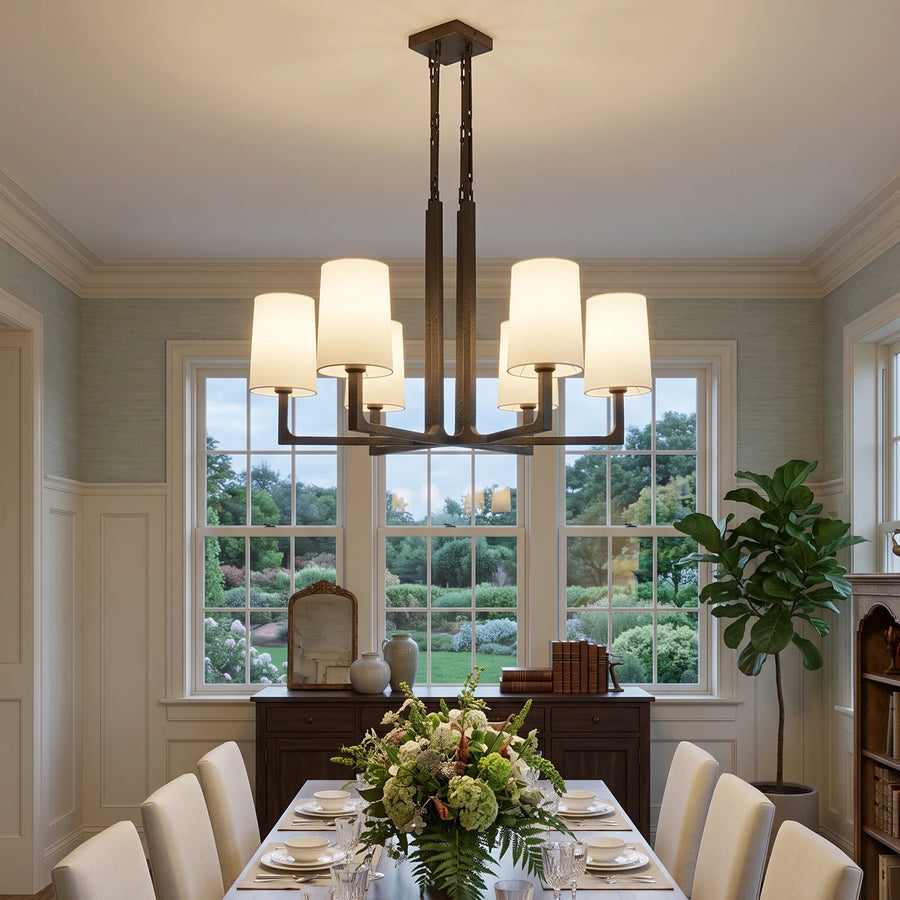
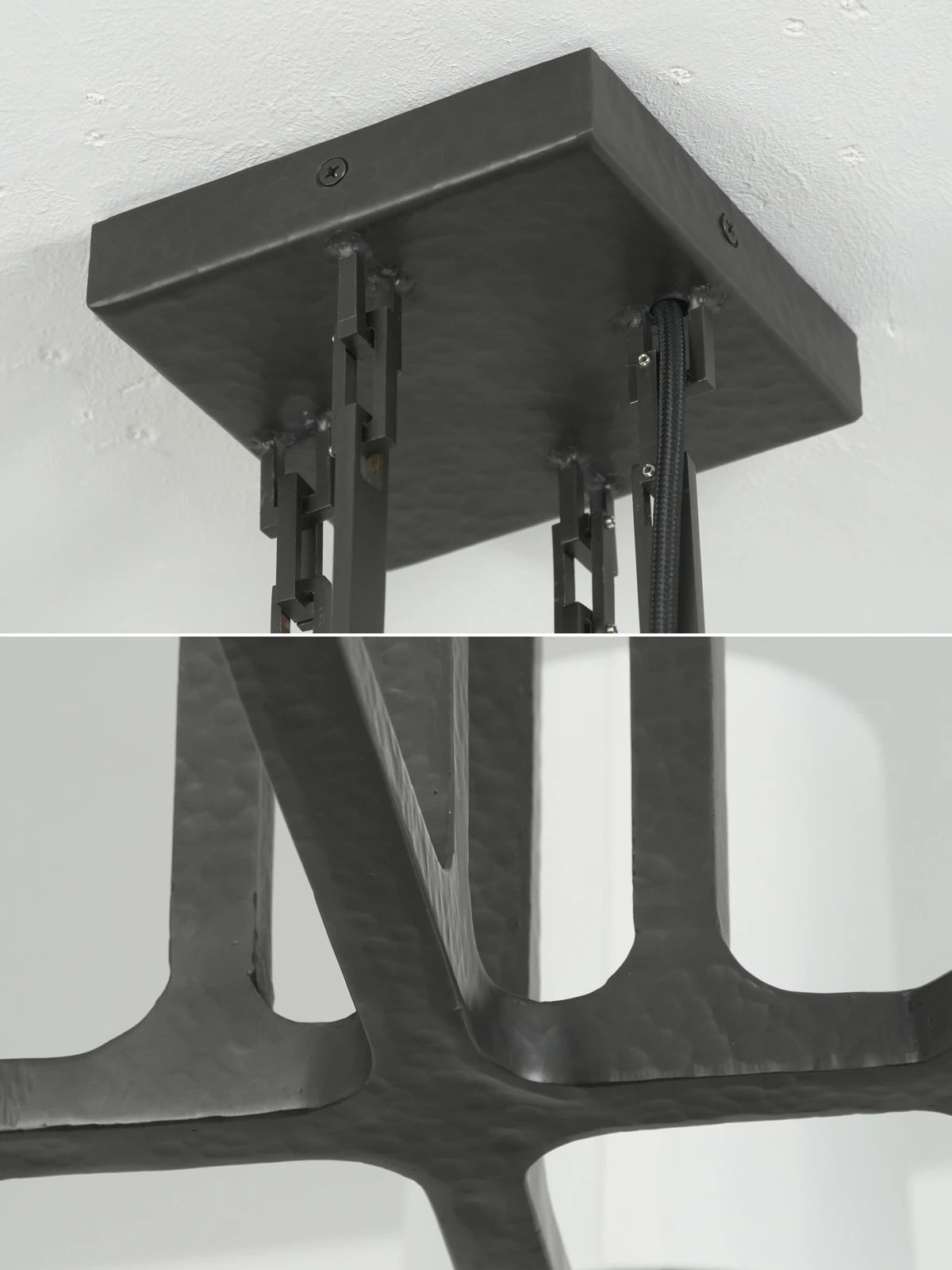
Garrick Hammered Chandelier The surface is hammered — a dimpled, faceted texture that catches light unevenly along its whole length, so the metal has depth instead of reading as a flat black line against a white ceiling.
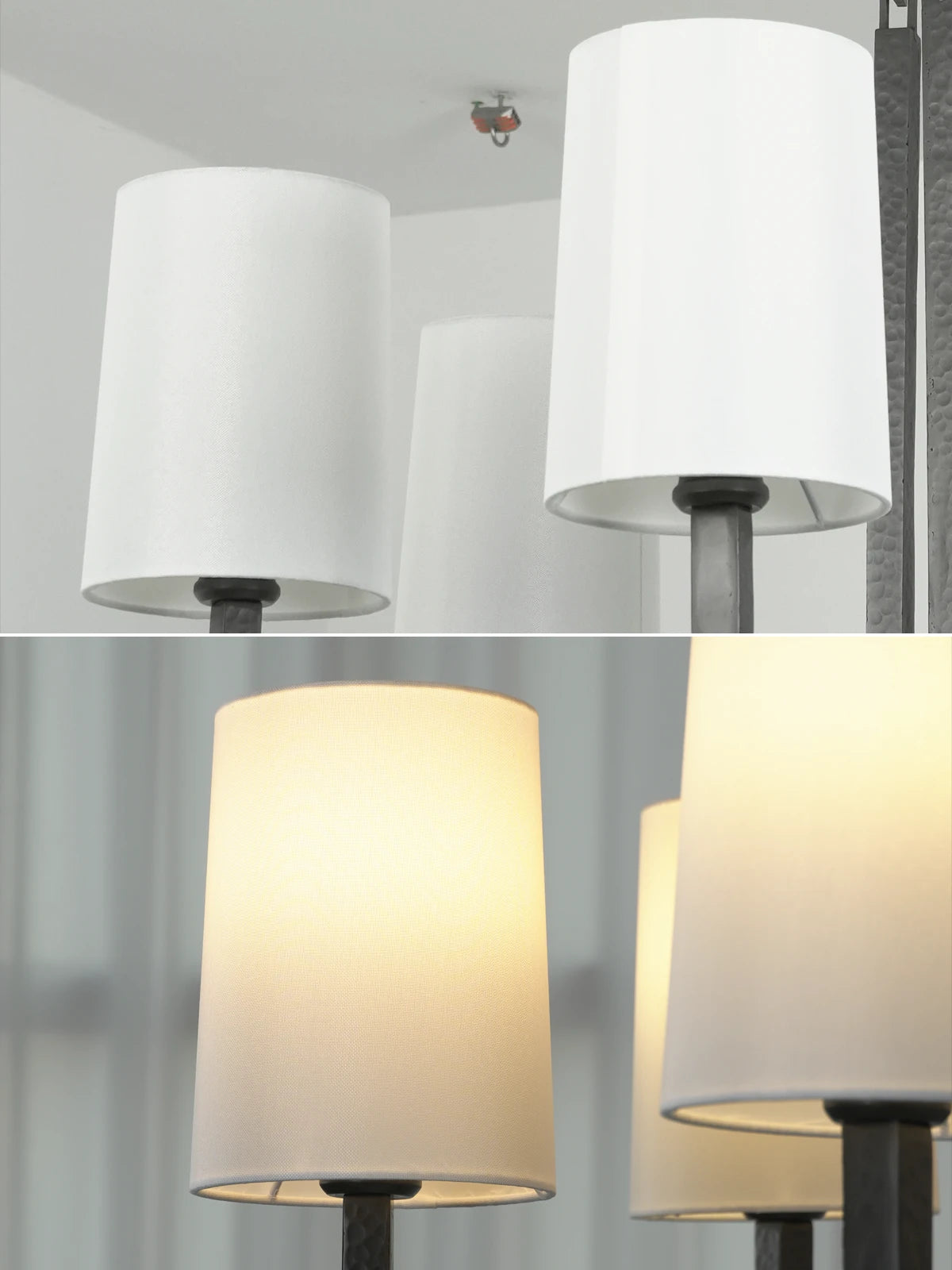
That texture is the reason a fixture this simple does not look plain. Six straight arms, six plain cylinders, and nothing decorative anywhere — the interest comes from the surface rather than from added ornament. Shades change the job entirely. Each cylinder here is open at the top and open at the bottom — light goes up to wash the ceiling and down to land on the table, and the sides stay soft.

A smooth black arm against a white ceiling reads as one flat line. This surface is dimpled and faceted along its whole length, so it never catches light evenly — every dent holds a small highlight and a small shadow, and the metal keeps its depth from across the room.
That texture is why a fixture this plain does not look plain. Straight arms, plain cylinders, no ornament anywhere. The interest comes from the surface instead of from anything added on top of it.
The fixture itself puts no limit on dimming — the bulbs decide. Fit dimmable E26 bulbs on a compatible dimmer and it dims properly. Fit standard bulbs and it will not, whatever switch is on the wall. Use dimmable bulbs in every socket rather than a mix, and add up the wattage before your electrician chooses the dimmer.
Never use water, sprays or a damp cloth on the shades — fabric marks permanently and the stain will not come out. Use a soft dry brush or a lint roller, twice a year. The metal takes a soft dry cloth.
The one that fits an ordinary dining room.

Four feet across — it becomes the room's centre.

Five feet across. Needs a room that can hold it.

Runs along the table instead of hovering over its middle.

Six feet long — measure both ends before ordering.

Not one you sit and squint at.
A bare-bulb chandelier is an object you look at. Every filament is visible, every one is a small hot point, and at dinner they sit exactly in the line between you and the person across the table. It photographs beautifully. It is harder to spend three hours beneath.
Shades change the job completely. Each cylinder here is open at the top and open at the bottom — light goes up to wash the ceiling, down to land on the table, and the sides stay quiet. What you see from your chair is a row of calm glowing shapes rather than a row of filaments. The room is bright; nothing in it is bright to look at.
Which leaves the frame with one job: to be worth looking at while doing nothing decorative. Its surface is dimpled and faceted rather than smooth, so it reads as hammered metal and catches light unevenly along every arm — depth instead of a flat dark line against the ceiling. Straight arms, plain cylinders, no ornament anywhere. In black it holds its shape against a pale ceiling; in gold it warms the whole plane; in nickel it stays cool and almost silent.
The real choice at this shape and price — and what each one is good at.
Not sure how to wire it, how high to hang it, or whether you need an electrician? Our full guide walks through every step for US homes.
Switch off at the breaker and confirm before you touch any wiring.
Make sure your junction box is standard, secure, and rated for the weight.
Black to black, white to white, ground to ground — the US standard explained.
Mounting heights and clearances for sconces, pendants, and chandeliers.
Fabric overhead, a disc and cage on the wall, paper on the floor. One idea in three materials — light you can sit with rather than stare into.


The wall version of the same idea. A 17.7″ disc shade caps the bulb and pushes the light downward, so nothing glares back at eye level, and a gooseneck arm carries it clear of door casings and cabinet fronts. Black, gold or nickel — the same three finishes as the chandelier, and a pair costs less than two singles.

Paper does what fabric does, only softer — the whole shade glows instead of the bulb inside it. A sculptural form for a corner, and the only one of the three that needs no electrician: it plugs in.
The price includes tax, and free standard shipping within the U.S. is provided.

Free Shipping on all orders
Hassle-free return within 30 days
Payment Security
Garrick Hammered Chandelier The surface is hammered — a dimpled, faceted texture that catches light unevenly along its whole length, so the metal has depth instead of reading as a flat black line against a white ceiling.
That texture is the reason a fixture this simple does not look plain. Six straight arms, six plain cylinders, and nothing decorative anywhere — the interest comes from the surface rather than from added ornament. Shades change the job entirely. Each cylinder here is open at the top and open at the bottom — light goes up to wash the ceiling and down to land on the table, and the sides stay soft.
A smooth black arm against a white ceiling reads as one flat line. This surface is dimpled and faceted along its whole length, so it never catches light evenly — every dent holds a small highlight and a small shadow, and the metal keeps its depth from across the room.
That texture is why a fixture this plain does not look plain. Straight arms, plain cylinders, no ornament anywhere. The interest comes from the surface instead of from anything added on top of it.
The fixture itself puts no limit on dimming — the bulbs decide. Fit dimmable E26 bulbs on a compatible dimmer and it dims properly. Fit standard bulbs and it will not, whatever switch is on the wall. Use dimmable bulbs in every socket rather than a mix, and add up the wattage before your electrician chooses the dimmer.
Never use water, sprays or a damp cloth on the shades — fabric marks permanently and the stain will not come out. Use a soft dry brush or a lint roller, twice a year. The metal takes a soft dry cloth.
The one that fits an ordinary dining room.
Four feet across — it becomes the room's centre.
Five feet across. Needs a room that can hold it.
Runs along the table instead of hovering over its middle.
Six feet long — measure both ends before ordering.
Not one you sit and squint at.
A bare-bulb chandelier is an object you look at. Every filament is visible, every one is a small hot point, and at dinner they sit exactly in the line between you and the person across the table. It photographs beautifully. It is harder to spend three hours beneath.
Shades change the job completely. Each cylinder here is open at the top and open at the bottom — light goes up to wash the ceiling, down to land on the table, and the sides stay quiet. What you see from your chair is a row of calm glowing shapes rather than a row of filaments. The room is bright; nothing in it is bright to look at.
Which leaves the frame with one job: to be worth looking at while doing nothing decorative. Its surface is dimpled and faceted rather than smooth, so it reads as hammered metal and catches light unevenly along every arm — depth instead of a flat dark line against the ceiling. Straight arms, plain cylinders, no ornament anywhere. In black it holds its shape against a pale ceiling; in gold it warms the whole plane; in nickel it stays cool and almost silent.
The real choice at this shape and price — and what each one is good at.
Not sure how to wire it, how high to hang it, or whether you need an electrician? Our full guide walks through every step for US homes.
Switch off at the breaker and confirm before you touch any wiring.
Make sure your junction box is standard, secure, and rated for the weight.
Black to black, white to white, ground to ground — the US standard explained.
Mounting heights and clearances for sconces, pendants, and chandeliers.
Fabric overhead, a disc and cage on the wall, paper on the floor. One idea in three materials — light you can sit with rather than stare into.
The wall version of the same idea. A 17.7″ disc shade caps the bulb and pushes the light downward, so nothing glares back at eye level, and a gooseneck arm carries it clear of door casings and cabinet fronts. Black, gold or nickel — the same three finishes as the chandelier, and a pair costs less than two singles.
Paper does what fabric does, only softer — the whole shade glows instead of the bulb inside it. A sculptural form for a corner, and the only one of the three that needs no electrician: it plugs in.
Designed for atmosphere
Statement lighting with sculptural form, considered materials, and an unmistakable presence.
Designed with intention

Designed for the moments between
Vidir Lighting
10% off all lighting on orders over $100
Every order over $100 is 10% off, applied automatically at checkout. Leave your email to see new alabaster, travertine and glass pieces from our workshop first.
We never share your email. Unsubscribe any time.
You're subscribed
Thank you for joining
We'll send new arrivals and sale news your way. Your 10% off is applied automatically at checkout on orders over $100.
Shop all lighting