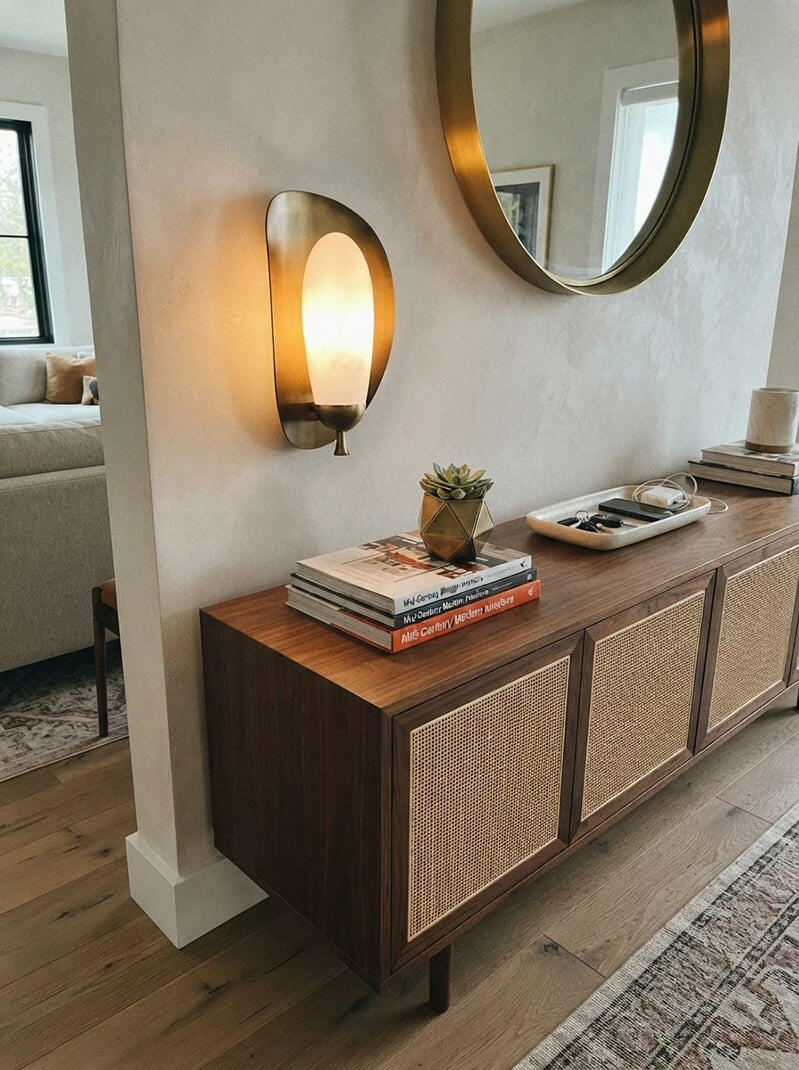
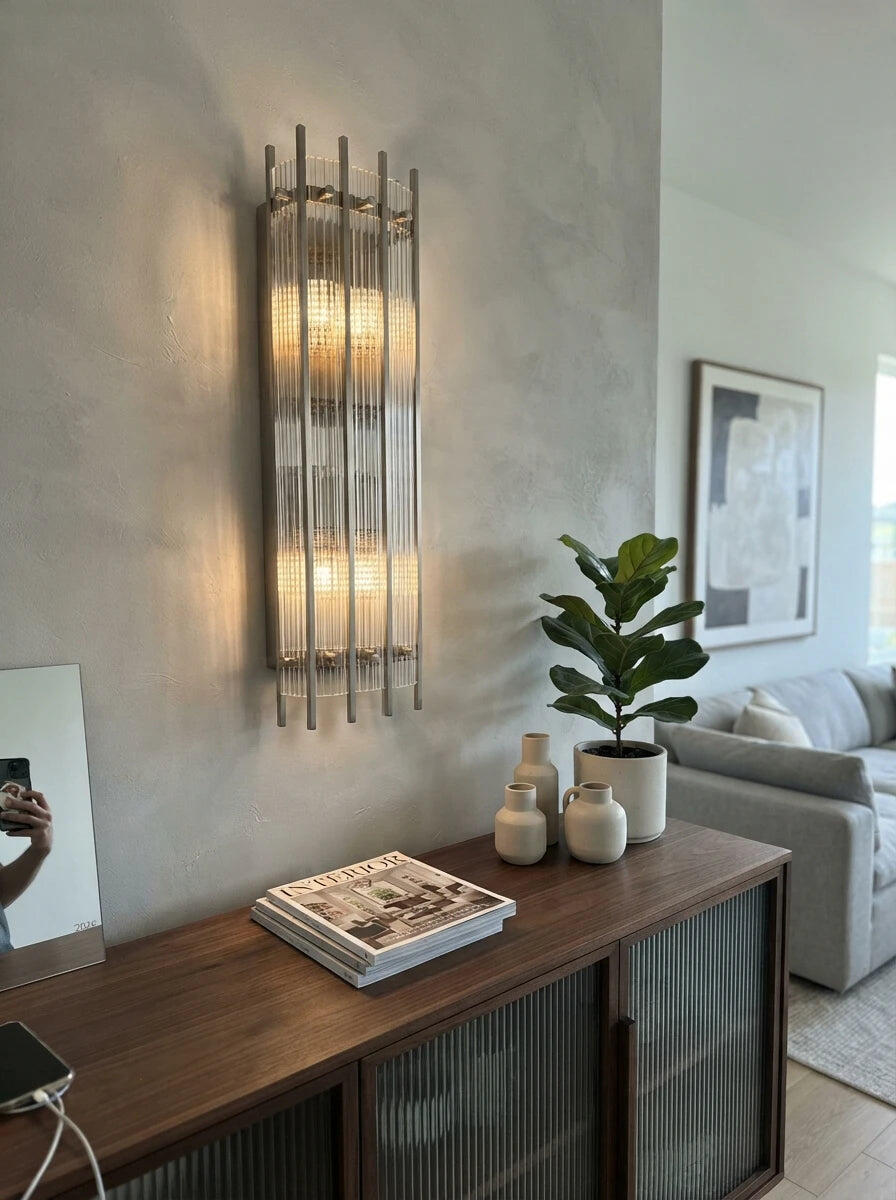
Designed for atmosphere
Light that changes the room
Statement lighting with sculptural form, considered materials, and an unmistakable presence.


See It In Motion
A still photograph freezes one angle and one moment. Lit and moving, you can see what the fixture actually does — how the light falls, and how it changes as you walk past it.
— Filmed lit, in a real room, with nothing retouched —
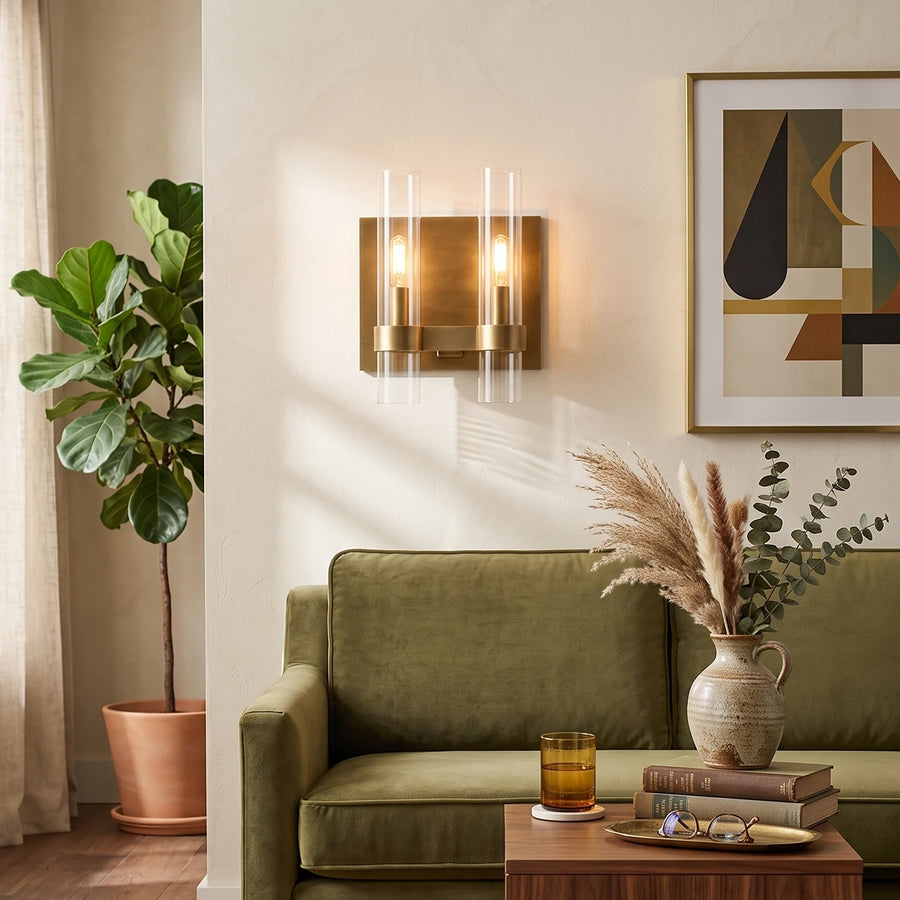
The Ellery Glass Cylinder Wall Sconce has no top. That is not a shortcut, it is the whole behaviour: heat leaves upward instead of building around the lamp, and a column of light escapes to wash the ceiling above the fixture. Closed shades push everything sideways and down. This one lights up, out, and back — three directions from one small lamp.
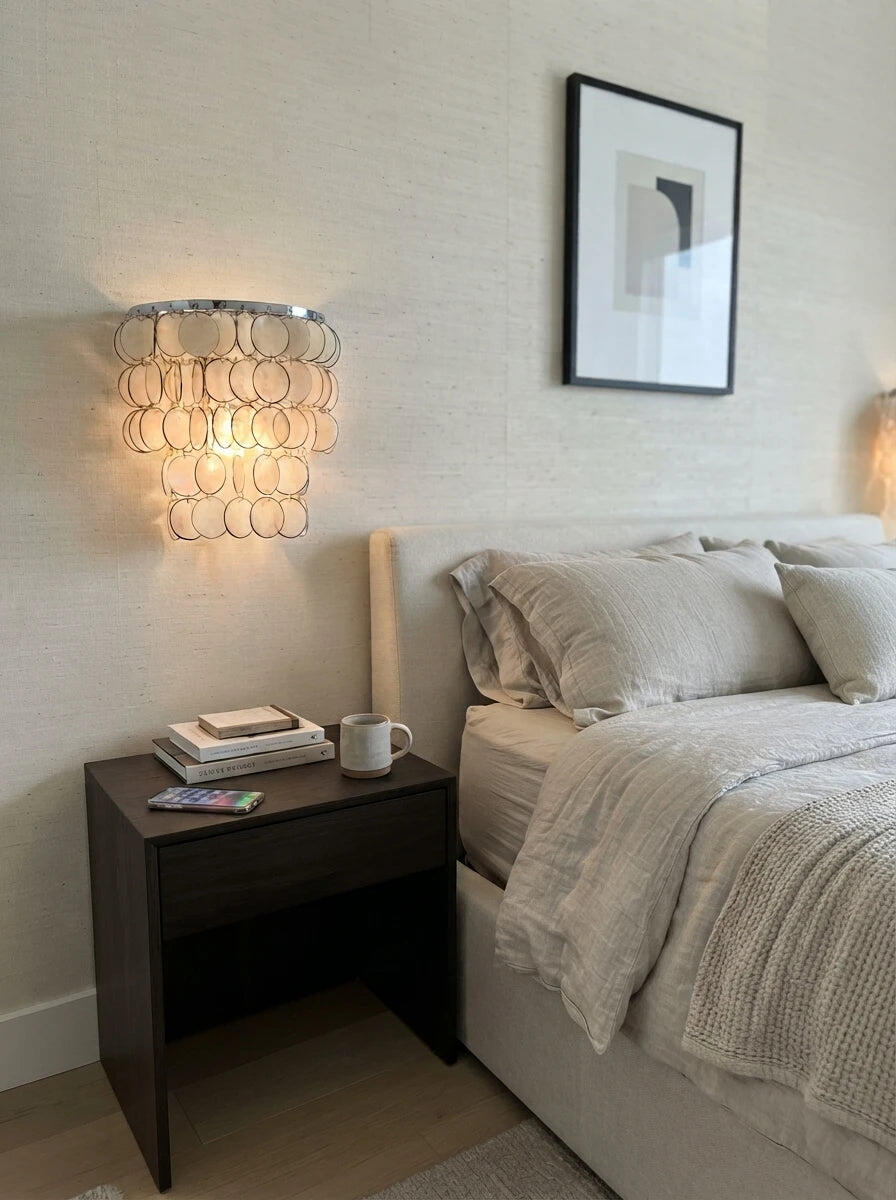
Beside a bed, either side of a mirror, down a hallway, or up a stair wall. Its footprint is shallow enough to clear a walkway, and because the light is diffuse rather than directional it does not throw the hard downward shadows that an overhead fixture puts on a face — which is exactly why a pair beside a mirror beats one light above it.
Select the size marked (*2) — two together come at a better price than buying them separately.
It depends entirely on the light bulbs. Install dimmable E12 bulbs in each socket and pair them with a compatible dimmer.
Two of these share a width and differ in height; the third is short and wide. So the question is not how big your wall is — it is what shape it is.
The one that fits a corridor. Centre at 60–66″.

Same footprint as the Compact, twice the presence.

Two cylinders side by side — roughly double the spread.

Three directions from one small flame.
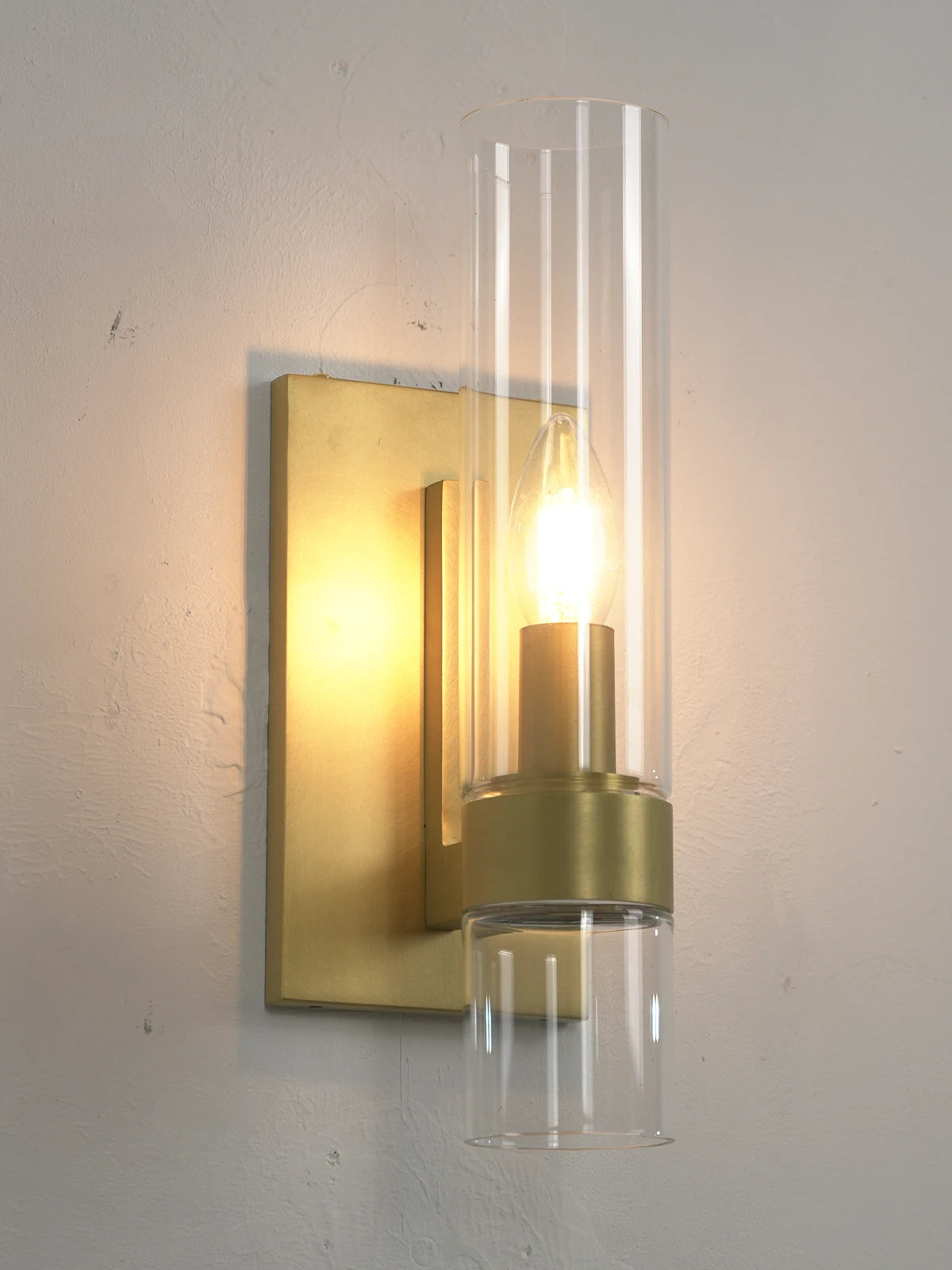
Most wall lights treat the wall as somewhere to screw into. A shade points the light away from it, and everything that travels backwards is simply lost into the plaster. This one is drawn the other way round: the flat plate stands proud of the wall, so the light that would have been wasted hits it, comes back, and spreads out into the room instead.
Look at the lit photograph and you can see the whole idea in one frame — a warm pool on the plate itself, and a much wider wash across the wall around it. That is why a single small bulb here covers more of a hallway than the same bulb behind a solid shade ever would.
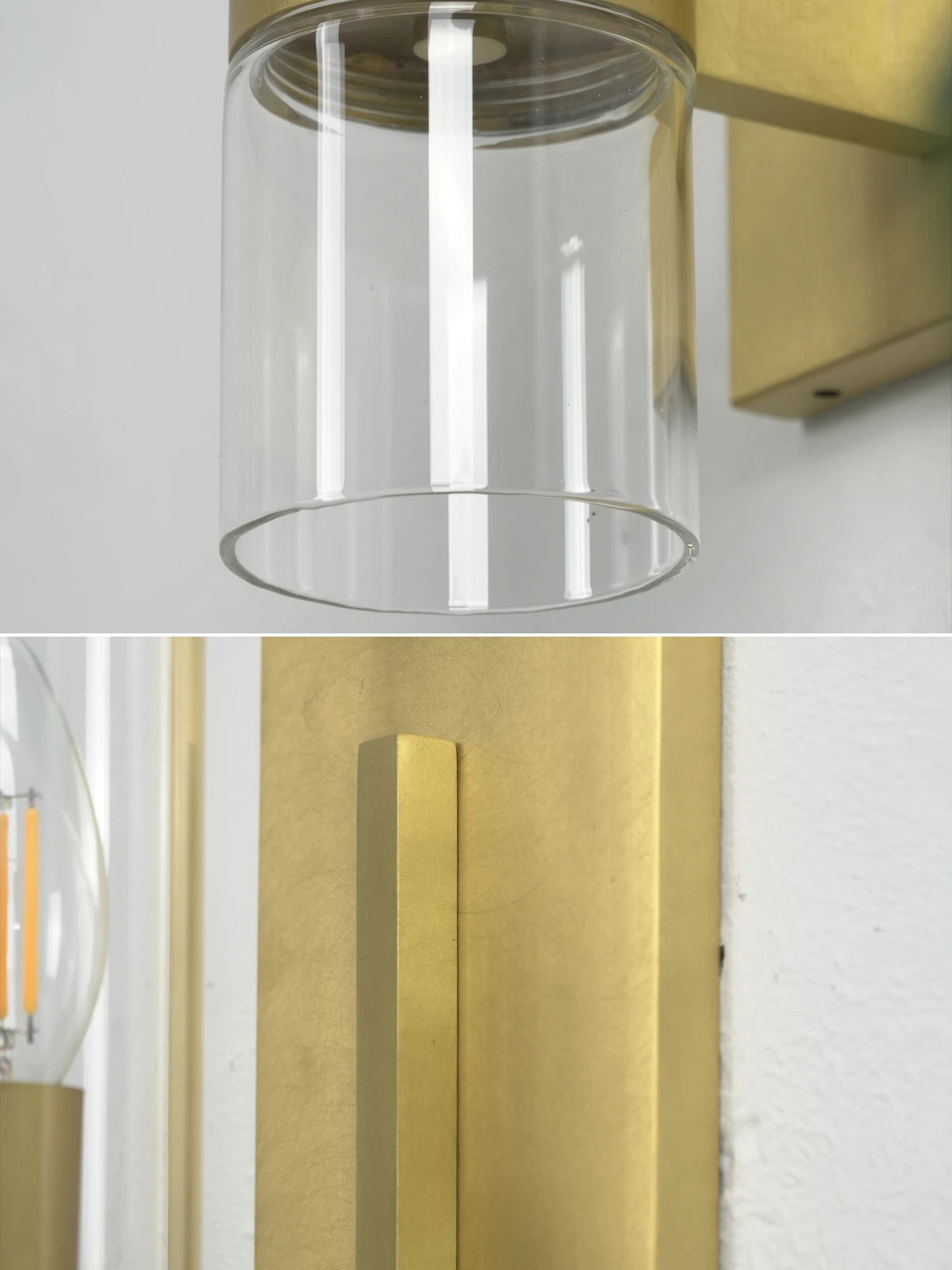
The glass does the rest. The cylinder has no top, which is not an omission but the point: heat leaves upward instead of building around the lamp, and a column of light escapes to wash the ceiling above. Up, out, and back — three directions from one small flame, where a closed shade manages one. It is the old hurricane lantern reduced to a single clean tube, with nothing left on it that does not do something.
What remains is a plate, a tube and a visible filament. In gold the plate turns the reflected light warm; in black it holds as a defined shape against a pale wall and throws the glow forward rather than around; in nickel it stays cool and almost silent. Same fixture, three different walls.
What this does that a closed shade can't.
A sconce lights the wall. One of these takes the same candle form to the ceiling; the other does the opposite thing on the floor.


The same candle idea, standing upright on an open ring with nothing beneath it — so the light goes up to the ceiling and comes back as a soft wash rather than firing down into your eyes. Four to sixteen lights, round or linear. Bulbs included. Gold, black or nickel — the same three finishes as the sconce, so a room with both agrees with itself.

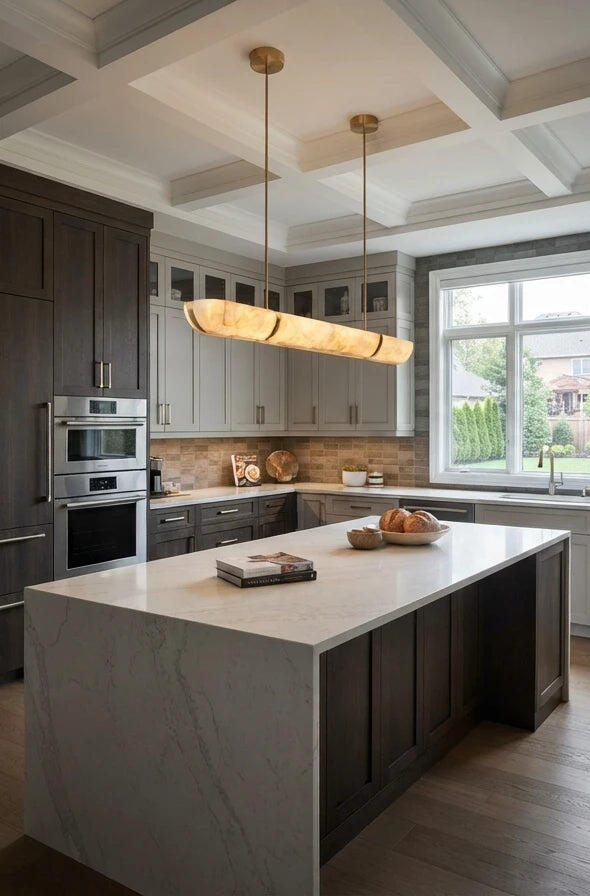
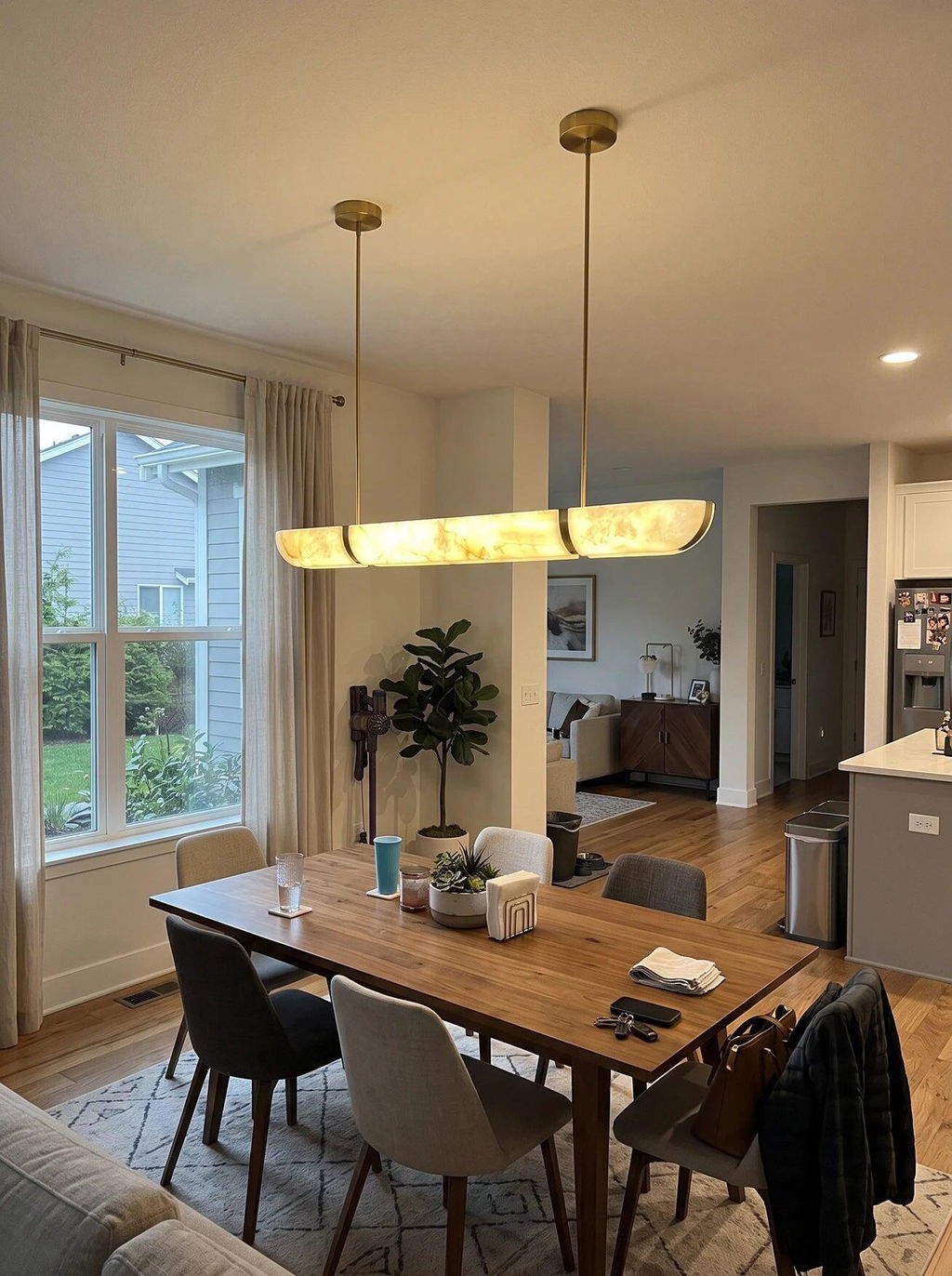
The opposite effect, on the floor. Where clear glass gives you a visible flame and a sparkle, stone gives you a glow with no source at all — light travels through the tiles and the whole shade lights up, joints and veining included. It is also the only one of the three that needs no electrician.
The price includes tax, and free standard shipping within the U.S. is provided.

Free Shipping on all orders
Hassle-free return within 30 days
Payment Security
See It In Motion
A still photograph freezes one angle and one moment. Lit and moving, you can see what the fixture actually does — how the light falls, and how it changes as you walk past it.
— Filmed lit, in a real room, with nothing retouched —
The Ellery Glass Cylinder Wall Sconce has no top. That is not a shortcut, it is the whole behaviour: heat leaves upward instead of building around the lamp, and a column of light escapes to wash the ceiling above the fixture. Closed shades push everything sideways and down. This one lights up, out, and back — three directions from one small lamp.
Beside a bed, either side of a mirror, down a hallway, or up a stair wall. Its footprint is shallow enough to clear a walkway, and because the light is diffuse rather than directional it does not throw the hard downward shadows that an overhead fixture puts on a face — which is exactly why a pair beside a mirror beats one light above it.
Select the size marked (*2) — two together come at a better price than buying them separately.
It depends entirely on the light bulbs. Install dimmable E12 bulbs in each socket and pair them with a compatible dimmer.
Two of these share a width and differ in height; the third is short and wide. So the question is not how big your wall is — it is what shape it is.
The one that fits a corridor. Centre at 60–66″.
Same footprint as the Compact, twice the presence.
Two cylinders side by side — roughly double the spread.
Three directions from one small flame.
Most wall lights treat the wall as somewhere to screw into. A shade points the light away from it, and everything that travels backwards is simply lost into the plaster. This one is drawn the other way round: the flat plate stands proud of the wall, so the light that would have been wasted hits it, comes back, and spreads out into the room instead.
Look at the lit photograph and you can see the whole idea in one frame — a warm pool on the plate itself, and a much wider wash across the wall around it. That is why a single small bulb here covers more of a hallway than the same bulb behind a solid shade ever would.
The glass does the rest. The cylinder has no top, which is not an omission but the point: heat leaves upward instead of building around the lamp, and a column of light escapes to wash the ceiling above. Up, out, and back — three directions from one small flame, where a closed shade manages one. It is the old hurricane lantern reduced to a single clean tube, with nothing left on it that does not do something.
What remains is a plate, a tube and a visible filament. In gold the plate turns the reflected light warm; in black it holds as a defined shape against a pale wall and throws the glow forward rather than around; in nickel it stays cool and almost silent. Same fixture, three different walls.
What this does that a closed shade can't.
A sconce lights the wall. One of these takes the same candle form to the ceiling; the other does the opposite thing on the floor.
The same candle idea, standing upright on an open ring with nothing beneath it — so the light goes up to the ceiling and comes back as a soft wash rather than firing down into your eyes. Four to sixteen lights, round or linear. Bulbs included. Gold, black or nickel — the same three finishes as the sconce, so a room with both agrees with itself.
The opposite effect, on the floor. Where clear glass gives you a visible flame and a sparkle, stone gives you a glow with no source at all — light travels through the tiles and the whole shade lights up, joints and veining included. It is also the only one of the three that needs no electrician.
Designed for atmosphere
Statement lighting with sculptural form, considered materials, and an unmistakable presence.
Designed with intention

Designed for the moments between
Vidir Lighting
10% off all lighting on orders over $100
Every order over $100 is 10% off, applied automatically at checkout. Leave your email to see new alabaster, travertine and glass pieces from our workshop first.
We never share your email. Unsubscribe any time.
You're subscribed
Thank you for joining
We'll send new arrivals and sale news your way. Your 10% off is applied automatically at checkout on orders over $100.
Shop all lighting