The Corin Curved Arm Candle Chandelier is drawn in a single continuous line. Slim tubes gather into a bundled column at the centre, fall away from it, sweep outward in a wide U, and turn back upward to end in a frosted glass taper — so each arm reads as one uninterrupted gesture rather than a joint bolted to a stem. There are no cups, no bobèches, no decorative collars anywhere on it.
The idea goes back to the branched candelabra, but strips away everything that was there to catch wax. What survives is the part that always did the work: a raised flame at the end of a reaching arm, repeated around a circle. The glass tapers are frosted rather than clear, so what you see is a soft column of light instead of a filament — the visual memory of a candle without the glare of a bare bulb. Because the arms curve down before they rise, the fixture reads wide and low rather than tall, which is why it suits a long dining table better than a stairwell. Available in brushed brass for warmth or polished chrome for a cooler, more graphic read.
Specifications
The Details
MaterialBrass Arms, Stem & Canopy · Frosted AcrylicTwo materials, each chosen for what it has to do — see the note below.
FinishGold · Black · Nickel
PowerMax 40W
Light sourceIntegrated LED Built in — no bulbs to buy, fit, or replace.
Colour temperature3000 K
ProcessElectroplating, Polishing, Cutting
VoltageAC 110–240V
ControlWall switch — dimmable on a compatible LED dimmer
MountingCeiling — hardwired
EnvironmentIndoor only · IP20
Preparation time5–10 days Made and inspected at our own workshop before dispatch.
Good to Know
No bulbs to buy — and none to change
The LED is built into the fixture, so there is nothing to source, nothing to match across a dozen arms, and no mismatched colour six months later when one gets replaced. The trade is that it is not a bulb change at end of life — contact us if a section ever stops working and we will advise on replacement parts.
About dimming
Due to the integrated LED design, dimming is controlled via the wall switch rather than by changing the bulb; therefore, you need to use an LED-compatible dimmer. Not all dimmers are perfectly compatible with the driver, so please contact us if you require dimming functionality.
Size Guide
Two Sizes — and the Bigger One Hangs Higher
Not a typo. The wider version has a shallower sweep, so it takes up more table and less headroom than the smaller one.
Reads asThe arms drop further before they turn up, so the silhouette is fuller and more sculptural from the side.
The right answer for most dining rooms.
∅ 50″ — Wider, Shallower
∅ 50″ × H 26.8″∅ 127 × H 68 cm · 16 LIGHTS arms
Best forLong table 72–96″ · large kitchen island · open-plan room that needs covering
Ceiling9 ft +
Reads asA wide, flat halo rather than a deep sculpture — it spreads light along a table instead of concentrating it.
Over 4 ft across. Measure the room, not just the table.
The design
Everything a Candelabra Had, Except the Wax
Take away the drip cups and see what is left.
A branched candelabra is mostly plumbing for wax. The cups, the collars, the little saucers under each flame — none of that was ever decoration. It was there to catch what melted. Remove the candles and every one of those parts becomes an ornament with no job, which is why so many electrified candelabras look fussy: they are still solving a problem that stopped existing a century ago.
Corin keeps only the part that always mattered — a light raised at the end of a reaching arm — and draws it as one continuous line. Each tube leaves the bundled column at the centre, falls away, sweeps outward, and turns back up to hold its taper. No cups, no collars, nothing capped or disguised. The shape is the structure, and you can follow any single arm from stem to flame without your eye meeting a joint.
The tapers are frosted rather than clear, and that is deliberate too: what you see is a soft column of light rather than a filament, so it reads as candlelight from the far end of a room and stays comfortable to sit under for hours. And because the arms drop before they rise, the whole thing spreads wide rather than deep — it fills a long table horizontally instead of hanging into it, which is why it works in rooms a tiered chandelier would overwhelm. In brass it warms; in chrome it sharpens. Same line, two different rooms.
— One line, from the stem to the flame —
Why this chandelier
Wide, Not Deep
Arms that sweep out instead of tiers that hang down — which is what lets a fixture this size live on a normal ceiling.
01
One Continuous Line, No Joints on Show
Each arm leaves the bundled column at the centre and runs to its taper as a single unbroken tube — no cups, no collars, nothing capped or disguised. That matters because a branched candelabra's cups were never decoration in the first place; they were there to catch wax. Take the candles away and they become ornaments with no job. Here the shape is the structure, and you can follow any arm from stem to flame without your eye meeting a joint.
02
Frosted Tapers Instead of Bare Bulbs
On a candle-style chandelier the lights sit at roughly eye level for anyone seated at the table, which is exactly where a bare filament is least welcome. Each arm here ends in a frosted column, so what you see is a soft shaft of light rather than a bulb — it reads as candlelight from the far end of a room and stays comfortable to sit under for a whole evening. The LED is built in, so there is nothing to source and no odd one out when a single bulb gets replaced.
03
Brass Where It Bears, Acrylic Where It Hangs
The decision that keeps an arm-based fixture hanging straight, and the one nobody thinks about. The tapers are frosted acrylic — and they have to be, because weight at the end of a long cantilevered arm is what pulls it out of line. Acrylic is a fraction of the weight of glass, so every arm holds its sweep, and it survives a knock during installation instead of becoming a replacement part. The arms, stem and canopy are brass, where the load and the wear actually are: it holds a long curve without flexing, and being non-ferrous it will not rust the way painted steel does once a chip exposes the base. Choose gold, black, or nickel.
— Brass arms, frosted tapers, and a light that spreads instead of drops —
Materials
Why Brass & Acrylic
Two materials doing two different jobs. On a fixture with arms this long, that choice is what keeps it hanging straight.
Brass arms + Acrylic tapersPainted steel + bare bulbs
The armsBrass holds a long curve without flexing or droopingThin steel sags at the tip, and the arms stop sitting level
Weight at the tipAcrylic is light, so the arms keep their sweepA heavy glass shade at the end pulls each arm downward
Looking at itA soft glowing column — no filament in your eyelineA bare bulb at eye level across the table
RustBrass has no iron in it — a scratch stays a scratchOne chip in the paint and rust spreads underneath
If it gets knockedAcrylic takes a knock during installation without shatteringGlass chips or breaks, and you are short a shade
CleaningDry cloth only — acrylic marks more easily than glassGlass takes rougher cleaning, but you are cleaning around a hot bulb
Questions, Answered
Common Questions
Are the tapers glass or acrylic?
Frosted acrylic — and that is on purpose, not to save money.
Each taper sits at the far end of a long curved arm, and weight out there is what makes an arm droop over time. Acrylic weighs a fraction of what glass does, so the arms hold their sweep and the fixture keeps hanging level. It also survives a knock during installation, where glass would be a replacement part and a delay.
What are the arms made of?
The arms, the central stem and the ceiling cover are brass, in your choice of gold, black, or nickel. Brass holds a long curve without flexing, and it contains no iron — so unlike painted steel, a chip will not start rusting underneath the finish.
Will I see the bulbs?
No. Each arm ends in a frosted column, so what you see is a soft shaft of light rather than a filament. That matters more than it sounds on a candle-style fixture: the lights sit at roughly eye level for anyone seated at the table, and a bare bulb in that position is uncomfortable all evening.
Are there bulbs to replace?
No — the LED is built into the fixture. Nothing to buy, nothing to match across a dozen arms, and no odd one out six months later when a single bulb gets replaced with a different brand.
The trade-off is honest: at the end of its life it is not a bulb change. Contact us if a section ever stops working and we will advise on parts.
Can I dim it?
Yes, but you need an LED-compatible dimmer at the wall — not an older rotary dimmer built for filament bulbs. Because the LED is integrated, you cannot fix a dimming problem by swapping the bulb, so it is worth getting right. Please let us know before placing your order; contact us if you require dimming functionality.
How do I clean it?
A soft dry cloth, or barely damp for fingerprints on the metal. Then dry it.
Be gentler with the tapers than you would with glass: no paper towels, no scouring pads, and no ammonia-based glass sprays. Those craze acrylic and the marks do not polish out. Twice a year is plenty.
Can I put it in a bathroom?
No. It is rated IP20 — indoor dry rooms only, with no protection against water or steam. Dining rooms, kitchens over an island, living rooms and entries are all fine.
Installation
The Complete Installation Guide
Not sure how to wire it, how high to hang it, or whether you need an electrician? Our full guide walks through every step for US homes.
01
Power Off First
Switch off at the breaker and confirm before you touch any wiring.
02
Check the Box
Make sure your junction box is standard, secure, and rated for the weight.
03
Match the Wires
Black to black, white to white, ground to ground — the US standard explained.
04
Set the Height
Mounting heights and clearances for sconces, pendants, and chandeliers.
Free guide · Written for US homes · Opens in a new tab
Excellence Crafted Series
Where the Material Does the Work
The pieces we take the most time over — natural stone, hand-formed glass, hammered metal, cut crystal. Four fixtures, four completely different things happening to the light.
Dimpled, hand-worked arms that scatter light where a smooth surface would just reflect it. Seven sizes, round or linear, from a breakfast nook to a lobby.
Clustered crystal spheres, each one splitting the light into small points of colour. The only fixture in the group that throws spectrum rather than glow.
A flat ring of natural alabaster, only 2.8″ deep — the one to choose when the ceiling is low but you still want stone. Also as two- and three-ring versions.
✦
With a brand-new lighting ambiance, let's usher in a hopeful 202610% Off All Lighting✦
Built Right, Inside and Out
The beauty of a fixture is easy to photograph. What matters just as much is what sits inside the canopy—the driver, the bracket, the wiring, the hardware in the box. Here is how we build for safety and longevity, so the fixture you order arrives ready to install and made to last.
01 · The Driver
An LED Driver Built to Last
We offer integrated LED drivers in a range of styles—dimmable, constant-current, and color-temperature-adjustable—so the fixture can be matched to how you actually light the room. It runs on 110–240V, works straight out of the box on standard US household power, and is rated for both dry and damp locations, so it fits wherever you'd like to install it.
02 · The Bracket
A Solid Mounting Bracket
Every fixture ships with a sturdy mounting bracket sized to a standard US junction box—so it hangs true and stays secure, year after year. No improvising, no trips to the hardware store.
03 · The Box
Everything You Need, in One Box
Open the carton and it's all there—canopy, mounting plate and bracket, screws and wall anchors, the driver, and a pair of clean cotton gloves for handling the glass. Nothing missing, nothing to source separately. It's the small stuff, packed with care, that makes installation day feel easy.
04 · The Wiring
Clean, Color-Coded Wiring
Clearly labeled leads and a tidy factory harness make professional installation quick and unambiguous. Hand it to your electrician and they'll have it up in minutes—standard L / N / E hardwiring, the way a considered fixture should be.
Order with confidence: what arrives at your door is a fixture built to be lived with—considered on the inside, finished on the outside. Wiring should be carried out by a qualified electrician in line with local code.
The Corin Curved Arm Candle Chandelier is drawn in a single continuous line. Slim tubes gather into a bundled column at the centre, fall away from it, sweep outward in a wide U, and turn back upward to end in a frosted glass taper — so each arm reads as one uninterrupted gesture rather than a joint bolted to a stem. There are no cups, no bobèches, no decorative collars anywhere on it.
The idea goes back to the branched candelabra, but strips away everything that was there to catch wax. What survives is the part that always did the work: a raised flame at the end of a reaching arm, repeated around a circle. The glass tapers are frosted rather than clear, so what you see is a soft column of light instead of a filament — the visual memory of a candle without the glare of a bare bulb. Because the arms curve down before they rise, the fixture reads wide and low rather than tall, which is why it suits a long dining table better than a stairwell. Available in brushed brass for warmth or polished chrome for a cooler, more graphic read.
Specifications
The Details
MaterialBrass Arms, Stem & Canopy · Frosted AcrylicTwo materials, each chosen for what it has to do — see the note below.
FinishGold · Black · Nickel
PowerMax 40W
Light sourceIntegrated LED Built in — no bulbs to buy, fit, or replace.
Colour temperature3000 K
ProcessElectroplating, Polishing, Cutting
VoltageAC 110–240V
ControlWall switch — dimmable on a compatible LED dimmer
MountingCeiling — hardwired
EnvironmentIndoor only · IP20
Preparation time5–10 days Made and inspected at our own workshop before dispatch.
Good to Know
No bulbs to buy — and none to change
The LED is built into the fixture, so there is nothing to source, nothing to match across a dozen arms, and no mismatched colour six months later when one gets replaced. The trade is that it is not a bulb change at end of life — contact us if a section ever stops working and we will advise on replacement parts.
About dimming
Due to the integrated LED design, dimming is controlled via the wall switch rather than by changing the bulb; therefore, you need to use an LED-compatible dimmer. Not all dimmers are perfectly compatible with the driver, so please contact us if you require dimming functionality.
Size Guide
Two Sizes — and the Bigger One Hangs Higher
Not a typo. The wider version has a shallower sweep, so it takes up more table and less headroom than the smaller one.
Reads asThe arms drop further before they turn up, so the silhouette is fuller and more sculptural from the side.
The right answer for most dining rooms.
∅ 50″ — Wider, Shallower
∅ 50″ × H 26.8″∅ 127 × H 68 cm · 16 LIGHTS arms
Best forLong table 72–96″ · large kitchen island · open-plan room that needs covering
Ceiling9 ft +
Reads asA wide, flat halo rather than a deep sculpture — it spreads light along a table instead of concentrating it.
Over 4 ft across. Measure the room, not just the table.
The design
Everything a Candelabra Had, Except the Wax
Take away the drip cups and see what is left.
A branched candelabra is mostly plumbing for wax. The cups, the collars, the little saucers under each flame — none of that was ever decoration. It was there to catch what melted. Remove the candles and every one of those parts becomes an ornament with no job, which is why so many electrified candelabras look fussy: they are still solving a problem that stopped existing a century ago.
Corin keeps only the part that always mattered — a light raised at the end of a reaching arm — and draws it as one continuous line. Each tube leaves the bundled column at the centre, falls away, sweeps outward, and turns back up to hold its taper. No cups, no collars, nothing capped or disguised. The shape is the structure, and you can follow any single arm from stem to flame without your eye meeting a joint.
The tapers are frosted rather than clear, and that is deliberate too: what you see is a soft column of light rather than a filament, so it reads as candlelight from the far end of a room and stays comfortable to sit under for hours. And because the arms drop before they rise, the whole thing spreads wide rather than deep — it fills a long table horizontally instead of hanging into it, which is why it works in rooms a tiered chandelier would overwhelm. In brass it warms; in chrome it sharpens. Same line, two different rooms.
— One line, from the stem to the flame —
Why this chandelier
Wide, Not Deep
Arms that sweep out instead of tiers that hang down — which is what lets a fixture this size live on a normal ceiling.
01
One Continuous Line, No Joints on Show
Each arm leaves the bundled column at the centre and runs to its taper as a single unbroken tube — no cups, no collars, nothing capped or disguised. That matters because a branched candelabra's cups were never decoration in the first place; they were there to catch wax. Take the candles away and they become ornaments with no job. Here the shape is the structure, and you can follow any arm from stem to flame without your eye meeting a joint.
02
Frosted Tapers Instead of Bare Bulbs
On a candle-style chandelier the lights sit at roughly eye level for anyone seated at the table, which is exactly where a bare filament is least welcome. Each arm here ends in a frosted column, so what you see is a soft shaft of light rather than a bulb — it reads as candlelight from the far end of a room and stays comfortable to sit under for a whole evening. The LED is built in, so there is nothing to source and no odd one out when a single bulb gets replaced.
03
Brass Where It Bears, Acrylic Where It Hangs
The decision that keeps an arm-based fixture hanging straight, and the one nobody thinks about. The tapers are frosted acrylic — and they have to be, because weight at the end of a long cantilevered arm is what pulls it out of line. Acrylic is a fraction of the weight of glass, so every arm holds its sweep, and it survives a knock during installation instead of becoming a replacement part. The arms, stem and canopy are brass, where the load and the wear actually are: it holds a long curve without flexing, and being non-ferrous it will not rust the way painted steel does once a chip exposes the base. Choose gold, black, or nickel.
— Brass arms, frosted tapers, and a light that spreads instead of drops —
Materials
Why Brass & Acrylic
Two materials doing two different jobs. On a fixture with arms this long, that choice is what keeps it hanging straight.
Brass arms + Acrylic tapersPainted steel + bare bulbs
The armsBrass holds a long curve without flexing or droopingThin steel sags at the tip, and the arms stop sitting level
Weight at the tipAcrylic is light, so the arms keep their sweepA heavy glass shade at the end pulls each arm downward
Looking at itA soft glowing column — no filament in your eyelineA bare bulb at eye level across the table
RustBrass has no iron in it — a scratch stays a scratchOne chip in the paint and rust spreads underneath
If it gets knockedAcrylic takes a knock during installation without shatteringGlass chips or breaks, and you are short a shade
CleaningDry cloth only — acrylic marks more easily than glassGlass takes rougher cleaning, but you are cleaning around a hot bulb
Questions, Answered
Common Questions
Are the tapers glass or acrylic?
Frosted acrylic — and that is on purpose, not to save money.
Each taper sits at the far end of a long curved arm, and weight out there is what makes an arm droop over time. Acrylic weighs a fraction of what glass does, so the arms hold their sweep and the fixture keeps hanging level. It also survives a knock during installation, where glass would be a replacement part and a delay.
What are the arms made of?
The arms, the central stem and the ceiling cover are brass, in your choice of gold, black, or nickel. Brass holds a long curve without flexing, and it contains no iron — so unlike painted steel, a chip will not start rusting underneath the finish.
Will I see the bulbs?
No. Each arm ends in a frosted column, so what you see is a soft shaft of light rather than a filament. That matters more than it sounds on a candle-style fixture: the lights sit at roughly eye level for anyone seated at the table, and a bare bulb in that position is uncomfortable all evening.
Are there bulbs to replace?
No — the LED is built into the fixture. Nothing to buy, nothing to match across a dozen arms, and no odd one out six months later when a single bulb gets replaced with a different brand.
The trade-off is honest: at the end of its life it is not a bulb change. Contact us if a section ever stops working and we will advise on parts.
Can I dim it?
Yes, but you need an LED-compatible dimmer at the wall — not an older rotary dimmer built for filament bulbs. Because the LED is integrated, you cannot fix a dimming problem by swapping the bulb, so it is worth getting right. Please let us know before placing your order; contact us if you require dimming functionality.
How do I clean it?
A soft dry cloth, or barely damp for fingerprints on the metal. Then dry it.
Be gentler with the tapers than you would with glass: no paper towels, no scouring pads, and no ammonia-based glass sprays. Those craze acrylic and the marks do not polish out. Twice a year is plenty.
Can I put it in a bathroom?
No. It is rated IP20 — indoor dry rooms only, with no protection against water or steam. Dining rooms, kitchens over an island, living rooms and entries are all fine.
Installation
The Complete Installation Guide
Not sure how to wire it, how high to hang it, or whether you need an electrician? Our full guide walks through every step for US homes.
01
Power Off First
Switch off at the breaker and confirm before you touch any wiring.
02
Check the Box
Make sure your junction box is standard, secure, and rated for the weight.
03
Match the Wires
Black to black, white to white, ground to ground — the US standard explained.
04
Set the Height
Mounting heights and clearances for sconces, pendants, and chandeliers.
Free guide · Written for US homes · Opens in a new tab
Excellence Crafted Series
Where the Material Does the Work
The pieces we take the most time over — natural stone, hand-formed glass, hammered metal, cut crystal. Four fixtures, four completely different things happening to the light.
Dimpled, hand-worked arms that scatter light where a smooth surface would just reflect it. Seven sizes, round or linear, from a breakfast nook to a lobby.
Clustered crystal spheres, each one splitting the light into small points of colour. The only fixture in the group that throws spectrum rather than glow.
A flat ring of natural alabaster, only 2.8″ deep — the one to choose when the ceiling is low but you still want stone. Also as two- and three-ring versions.
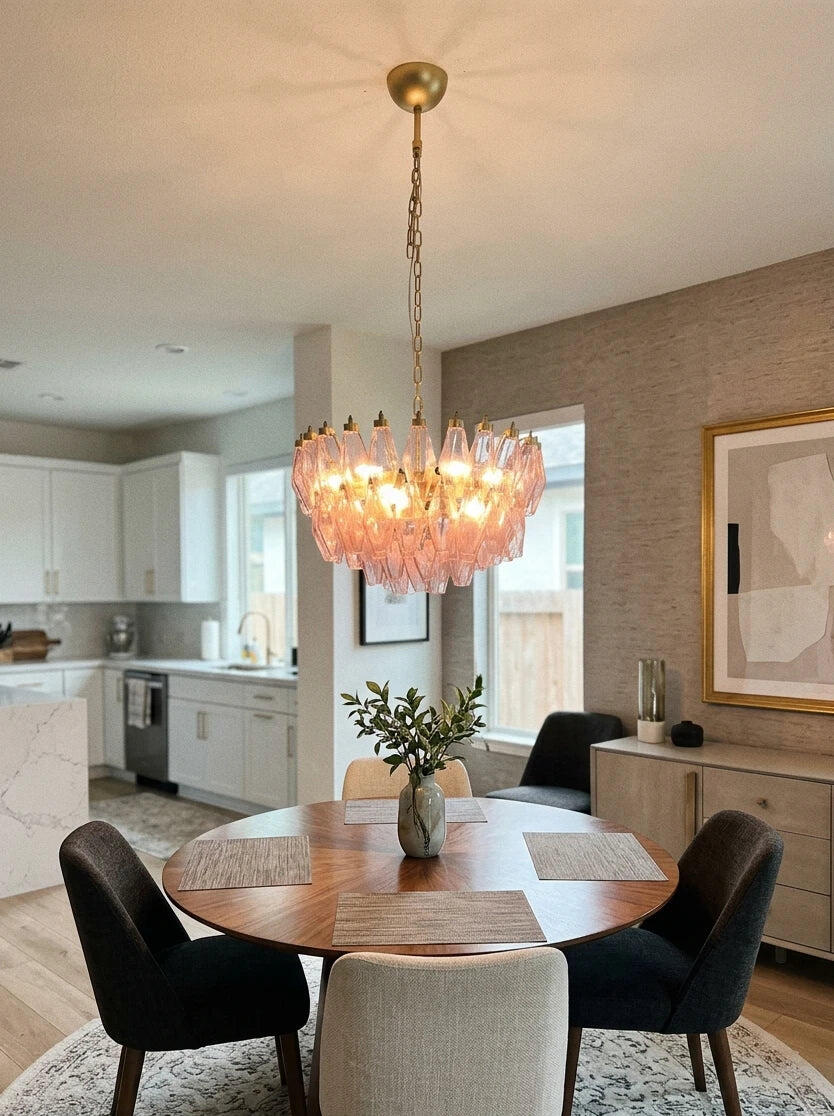
It looks more beautiful in reality than in the website photos.
Seeing the light pass through the multifaceted glass in person reveals just how exquisite it is. The glass has a very solid feel, and every facet is polished very smoothly, making it one of the most eye-catching hard decorations in the home.
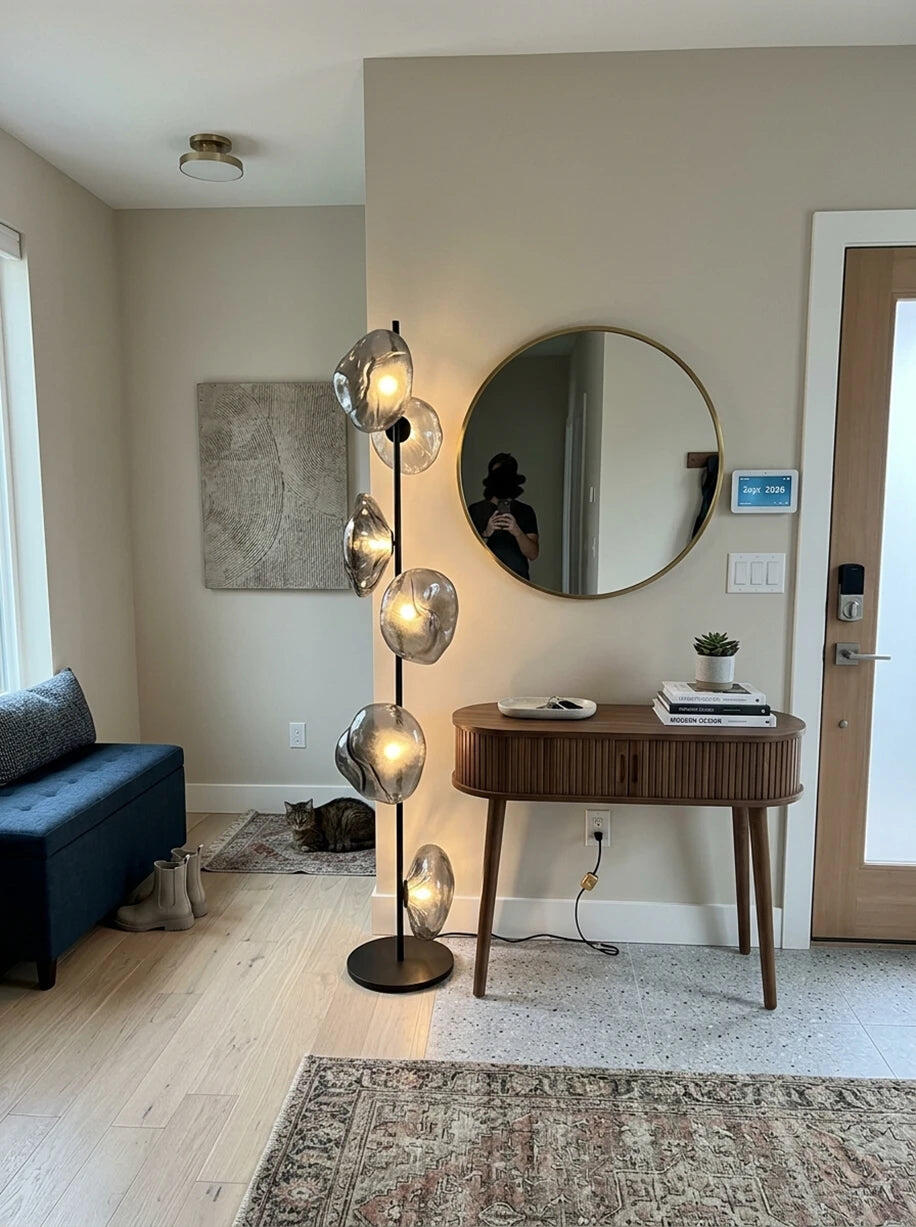
A perfect shopping experience! Installation was a breeze.
The entire experience, from ordering to delivery, was excellent. Hanging the petals was a very therapeutic process. After it was installed, I placed it in my entryway. It's the first thing I see when I walk in, and it instantly improves my mood.
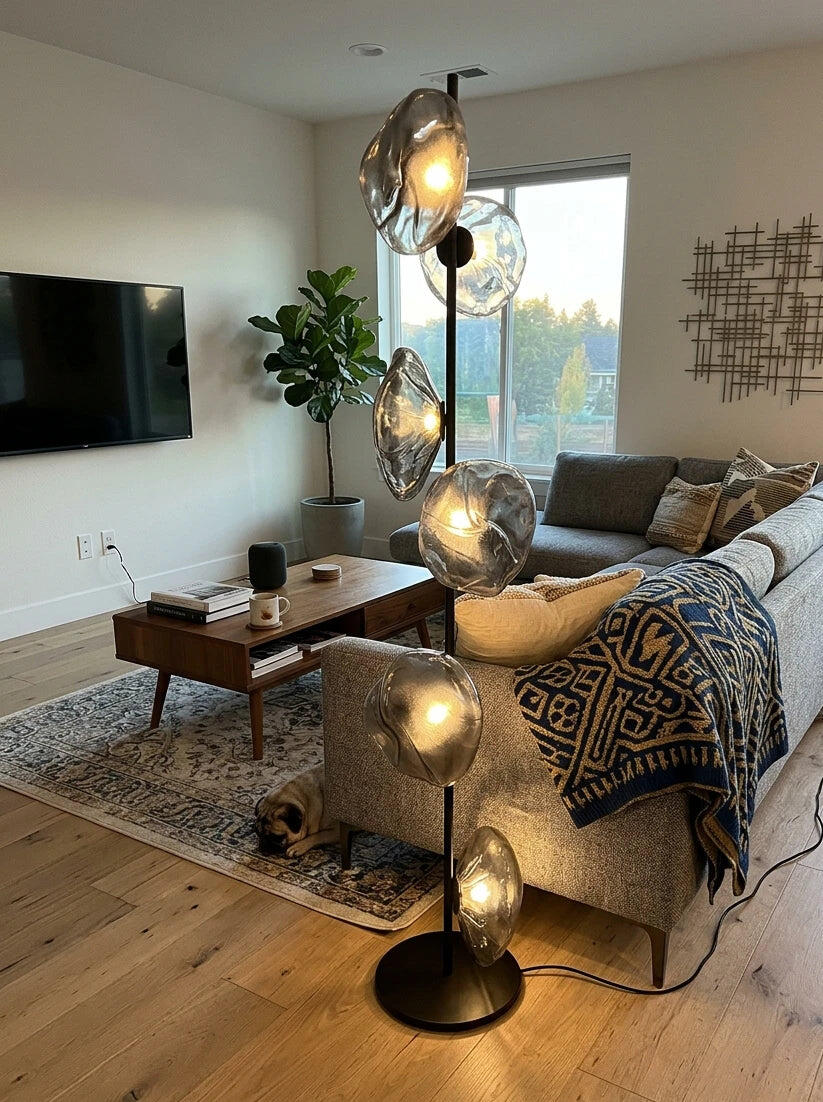
The most aesthetically pleasing feature of the living room, with top-notch quality.
Shipping was fast, and the package arrived undamaged. Upon unboxing, I found each glass piece individually secured in foam slots—very safe. Assembly wasn't complicated at all, thanks to the well-thought-out structural design. Turning it on instantly fills the room with a cozy warmth.
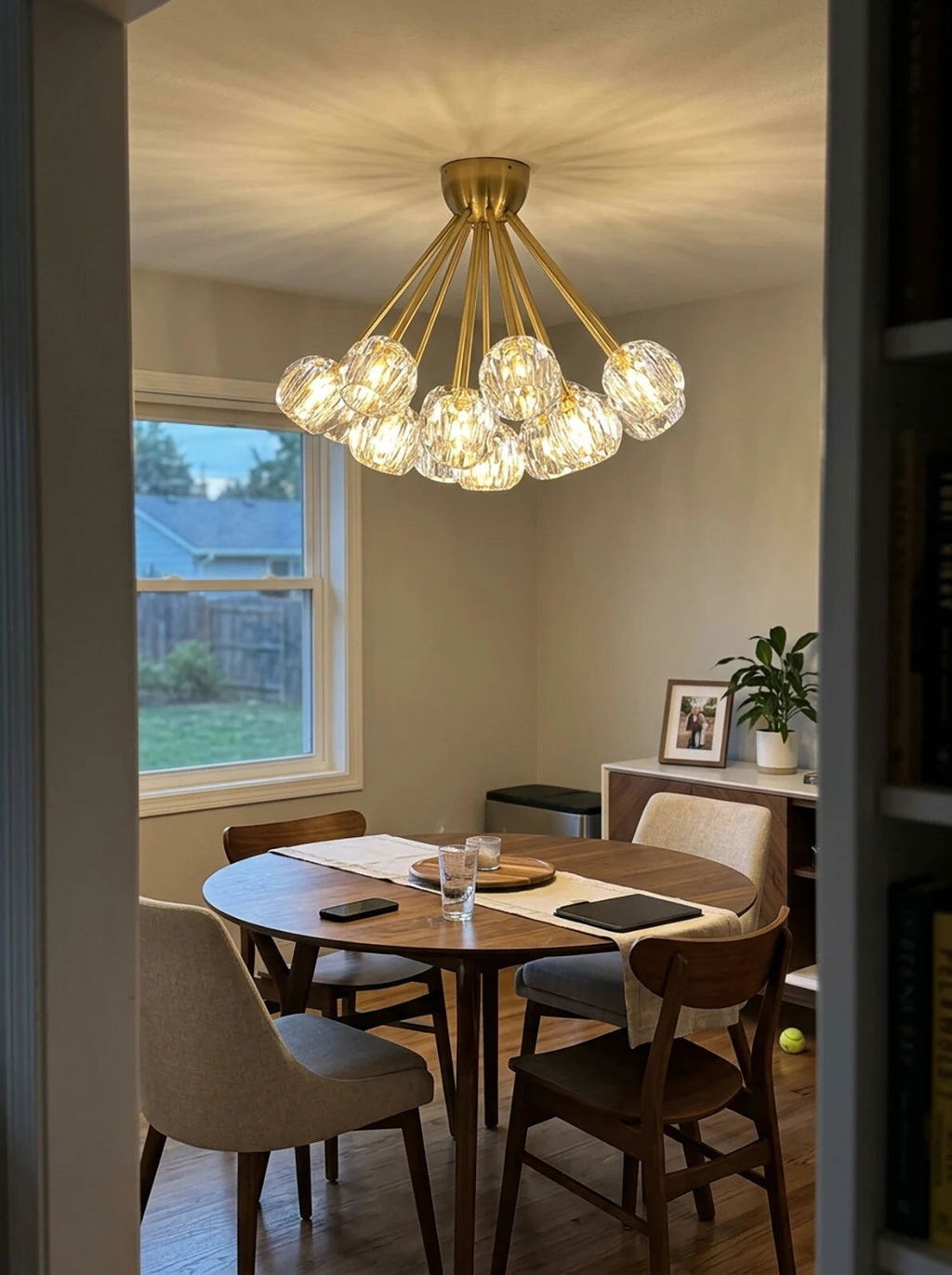
You can feel the quality just by holding it in your hand; the base is very sturdy. The metal joints and finish are meticulously crafted, with absolutely no flaws.