


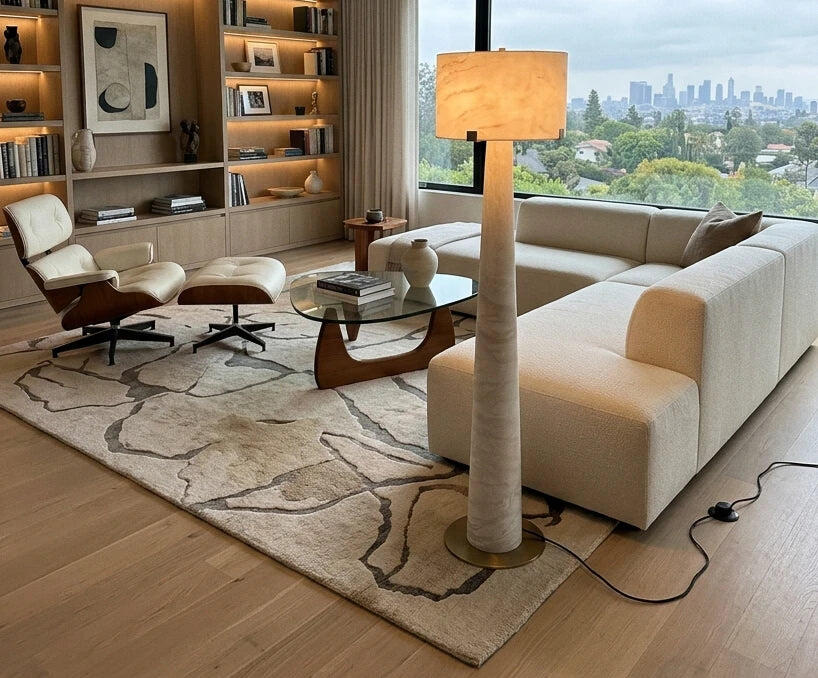
A new perspective
Light changes everything
Discover sculptural lighting designed to bring warmth, character, and atmosphere to every room.
Free standard shipping, all orders support 30-day returns
The Special Sale: a hand-picked edit for the darker months. Ends November 2


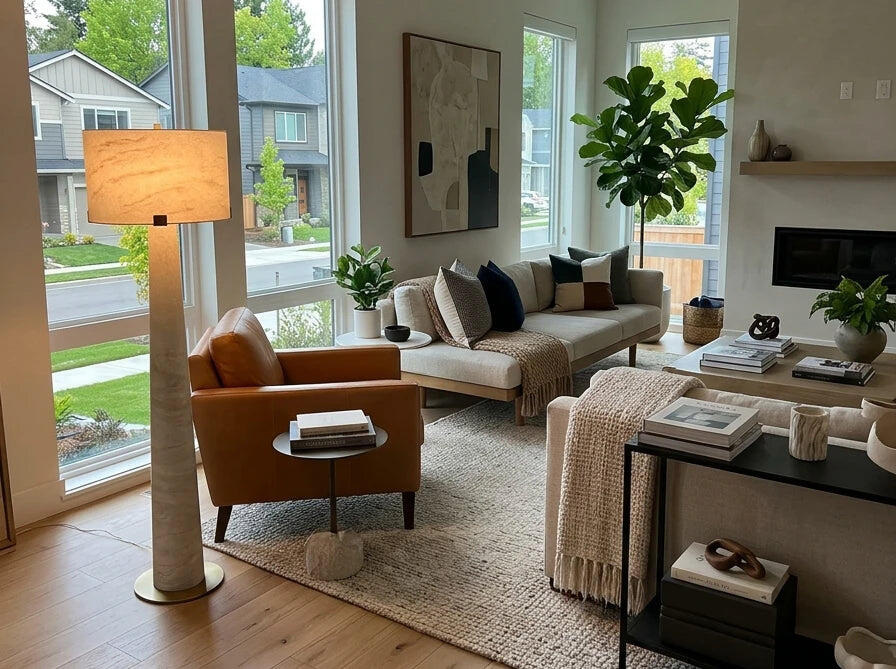
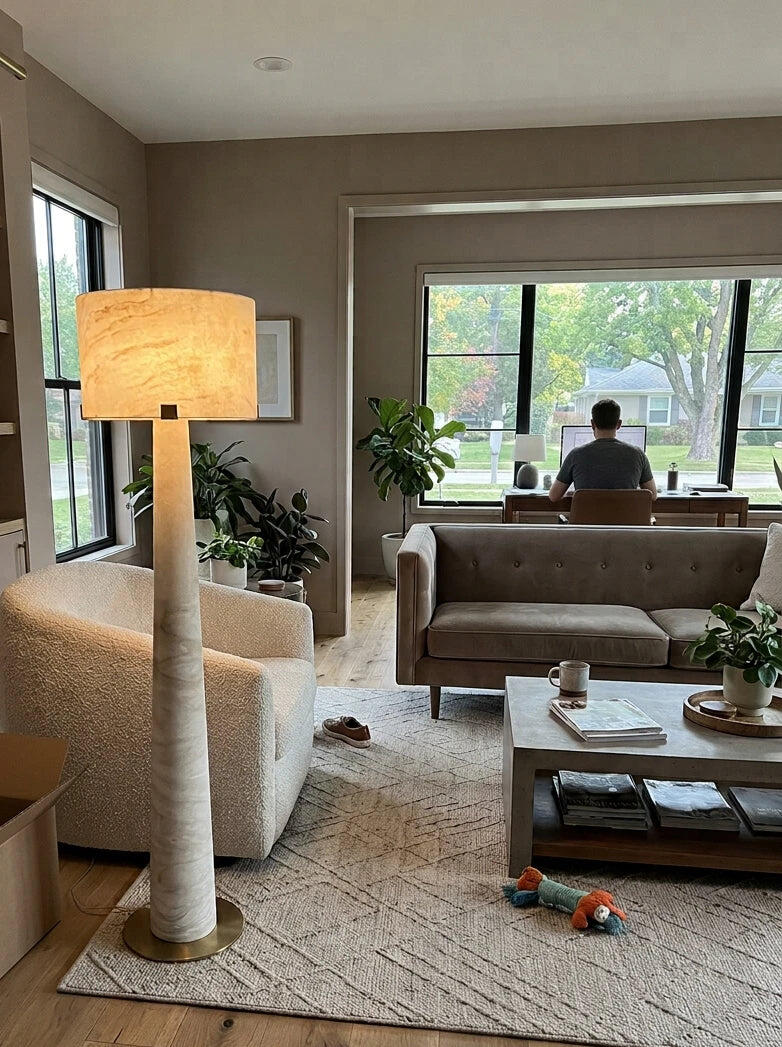
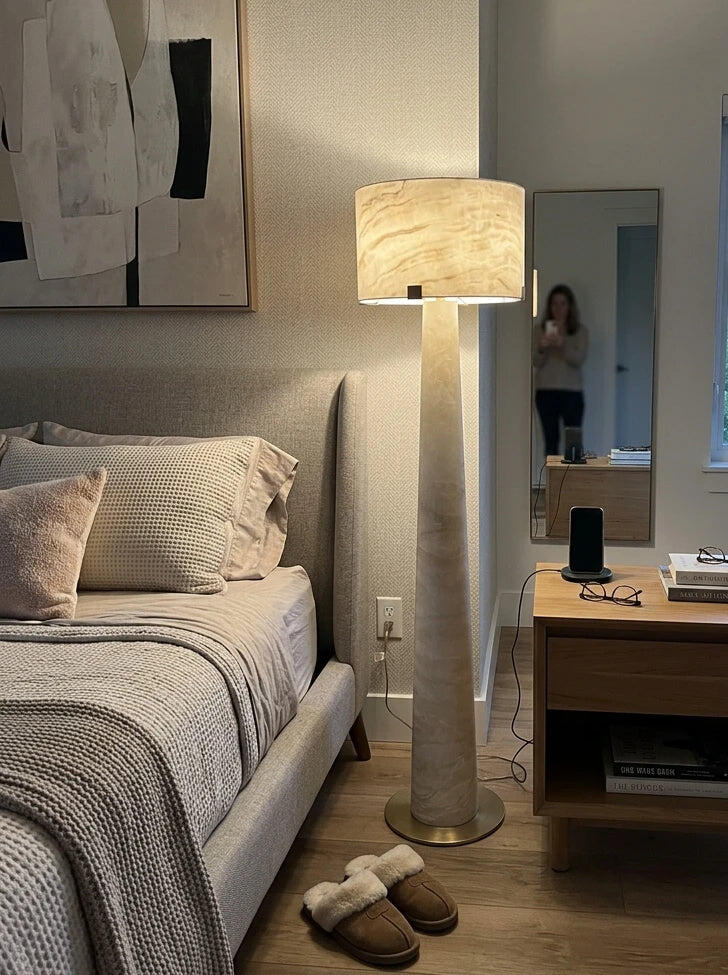
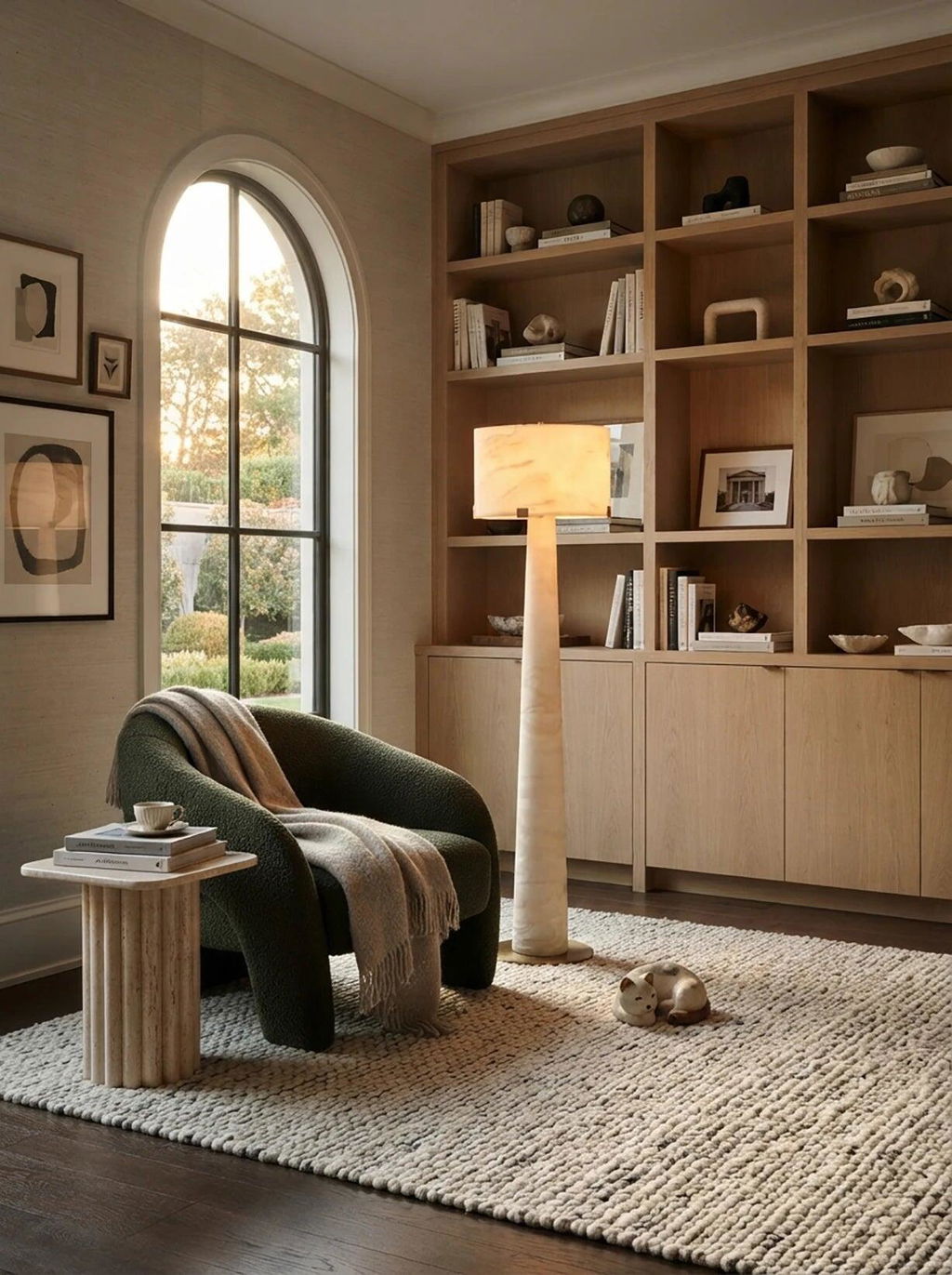
The Verity Tapered Column Alabaster Floor Lamp is one continuous column of natural alabaster, wide at the floor and narrowing as it rises, standing on a slim brass disc and carrying a rectangular alabaster shade held by four small brass brackets. There is no visible stem, no cord running up a pole, no join halfway. The stone does the standing and the shading both.
Which produces something most floor lamps cannot: the whole body glows, not just the shade. Light escapes downward into the column and travels through the stone, so the tapering shaft carries a soft internal warmth all the way to the floor while the rectangular shade sits above it like a lit panel. Switched off, the piece reads as pale sculpture rather than as a lamp waiting to be used — the veining visible in daylight, the brass disc catching a line of light at the floor. Suited to a living room corner, beside a sofa or reading chair, in an entry, or in a bedroom where a tall quiet object does more than a bright one. In natural white alabaster with a brass base.
No two pieces of stone are ever the same
Alabaster is a natural stone, so every piece carries its own veining and subtle variation in color. The fixture you receive may therefore differ slightly from the images shown.


No reaching up into a paper shade, no feeling around a wall for a plate that isn't there. The switch sits on the cord, on the floor, where your foot already is.
Which matters more than it sounds on a lamp like this. A tall paper column has nothing you would want to reach into — and because it plugs in rather than wires in, it usually stands somewhere with no wall switch anywhere near it. One tap with your toe, on your way past.
A round pedal switch you can find without looking down — no small rocker to hunt for in the dark, and no need to bend.
Turn it on carrying a cup, a book, or a laundry basket. Nothing to hold, nothing to put down first.
It plugs into any socket and brings its own switch with it — so it works in a corner no wall switch reaches.
The pedal on the cord is on/off only, and fitting a dimmable bulb changes nothing by itself because there is no dimmer for it to work with. Two things do work: plug the lamp into an in-line plug-in dimmer, or fit a smart bulb you dim from your phone. Either costs very little, and beside a sofa most people eventually want the option — worth deciding before it arrives.
The two sizes are closer than most people expect. What decides it is not the height, but how wide the shade should read beside whatever it stands next to.

The safer pick if you're unsure. Under-scaled reads as restrained; over-scaled reads as a mistake.
The version most living rooms want.
Take away the pole and the lamp has to become the structure.
Look at almost any floor lamp and you will find the same three parts: a base to stop it falling, a pole to gain height, and a shade to soften the bulb. Two of those three exist only to serve the third. The pole does nothing you would ever want to look at — it is scaffolding, tolerated because the shade has to get up to eye level somehow.
Verity was drawn by asking what happens if you delete it. The stone column is the structure and the lamp at once: it stands on its own weight, carries the shade, hides the wiring inside itself, and — because alabaster passes light — glows rather than interrupting. There is no pole because there is nothing left for a pole to do.
Which is why it tapers. A column that met the floor at the same width it meets the shade would read as a pillar — heavy, architectural, a little severe. Widening toward the ground does two things at once: it puts the mass low, where a lamp this tall needs it, and it lets the form rise and narrow the way a thing does when it is reaching rather than propping. The thin brass disc underneath is the only concession to hardware, and it exists mostly to lift the stone a few millimetres off the floor so the base catches a line of light.
The shade above is deliberately squared. A round shade on a round column would be one shape repeated; a rectangle on a taper is two ideas meeting, and the meeting is what your eye recognises from across a room. Both are the same stone, cut from the same quarried block — so the veining that runs up the column carries on through the shade, and no two lamps are marked the same way.
What actually glows, which of the two sizes to take, and how to live with solid stone.
Honestly, they are very close. The small is 15.7″ wide × 63″ tall; the large is 17.7″ wide × 65″ tall. Two inches either way — nobody walking into the room will be able to tell them apart.
So decide on the shade width against the furniture beside it, not on height. Next to a deep sofa or a wide armchair the 17.7″ keeps the proportion; in a narrow corner, an entry, or beside a slim reading chair the 15.7″ sits better. If you genuinely cannot choose, take the smaller one — an under-scaled lamp reads as restrained, an over-scaled one reads as a mistake.
No — it is an ambient lamp. Stone diffuses light in every direction instead of aiming it, so you get a warm even glow with no beam and nothing harsh anywhere.
That suits a corner, a sofa side, or a bedroom. If you read in that chair, pair it with a directional reading light. Expecting one soft stone lamp to do both jobs is how people end up disappointed with it.
Not with the foot switch — that is on/off only. And a dimmable bulb on its own does nothing, because there is no dimmer for it to work with. This catches a lot of people out.
Two things do work: an in-line plug-in dimmer between the lamp and the wall, or a smart bulb you dim from your phone. Both are inexpensive, and beside a sofa most people eventually want the option.
Heavy — it is solid stone on a brass disc, not a hollow shade on a metal pole. Ask us for the exact figure if you are carrying it upstairs or standing it on a delicate floor.
Mostly that is good news: it will not be knocked over by a child, a dog or a vacuum cleaner, and it needs no wide sprawling base to stay upright. The trade-off is simply that it is not a lamp you move on a whim — choose the spot and plan to leave it there.
A standard E26 screw bulb, not included — and choose LED. Not for fire safety; stone does not burn. It is about heat.
A filament bulb warms the stone every evening and lets it cool every night, and that repeated expansion and contraction is where hairline cracks start in any natural stone. An LED barely warms it. Pick warm white, 2700–3000K — cool white through alabaster looks grey and drains the warmth out of the brass.
Because the stone is quarried, not moulded. The veining running through your column will be its own — different pattern, different depth of colour, and it will catch the light its own way.
On a piece this large that variation is the first thing anyone notices, and it is exactly what tells you the stone is real. A column that matched the photograph precisely would have to be resin.
A soft dry cloth on both the stone and the brass. Keep water off the alabaster — it is porous, absorbs it, and leaves a mark that will not buff out.
No sprays, no polish, nothing abrasive. Switch off and let the bulb cool first. Once or twice a year is plenty.
A floor lamp fills the corner. These two take the ceiling and the wall — so one room is lit by the same material from every level rather than by three unrelated fixtures.


Ceiling · hardwired
The ceiling half of the room. Where the floor lamp warms a corner, this holds the centre — a round of natural stone above a table or an entry, glowing with the same soft light and showing the same veining.

Wall mounted · Indoor dry rooms
Eye level, and no floor at all. A tapered stone teardrop that echoes the column's silhouette on a wall — beside a bed, a mirror, or down a hallway where a floor lamp would be in the way.
The price includes tax, and free standard shipping within the U.S. is provided.

Free Shipping on all orders
Hassle-free return within 30 days
Payment Security
The Verity Tapered Column Alabaster Floor Lamp is one continuous column of natural alabaster, wide at the floor and narrowing as it rises, standing on a slim brass disc and carrying a rectangular alabaster shade held by four small brass brackets. There is no visible stem, no cord running up a pole, no join halfway. The stone does the standing and the shading both.
Which produces something most floor lamps cannot: the whole body glows, not just the shade. Light escapes downward into the column and travels through the stone, so the tapering shaft carries a soft internal warmth all the way to the floor while the rectangular shade sits above it like a lit panel. Switched off, the piece reads as pale sculpture rather than as a lamp waiting to be used — the veining visible in daylight, the brass disc catching a line of light at the floor. Suited to a living room corner, beside a sofa or reading chair, in an entry, or in a bedroom where a tall quiet object does more than a bright one. In natural white alabaster with a brass base.
No two pieces of stone are ever the same
Alabaster is a natural stone, so every piece carries its own veining and subtle variation in color. The fixture you receive may therefore differ slightly from the images shown.
No reaching up into a paper shade, no feeling around a wall for a plate that isn't there. The switch sits on the cord, on the floor, where your foot already is.
Which matters more than it sounds on a lamp like this. A tall paper column has nothing you would want to reach into — and because it plugs in rather than wires in, it usually stands somewhere with no wall switch anywhere near it. One tap with your toe, on your way past.
A round pedal switch you can find without looking down — no small rocker to hunt for in the dark, and no need to bend.
Turn it on carrying a cup, a book, or a laundry basket. Nothing to hold, nothing to put down first.
It plugs into any socket and brings its own switch with it — so it works in a corner no wall switch reaches.
The pedal on the cord is on/off only, and fitting a dimmable bulb changes nothing by itself because there is no dimmer for it to work with. Two things do work: plug the lamp into an in-line plug-in dimmer, or fit a smart bulb you dim from your phone. Either costs very little, and beside a sofa most people eventually want the option — worth deciding before it arrives.
The two sizes are closer than most people expect. What decides it is not the height, but how wide the shade should read beside whatever it stands next to.
The safer pick if you're unsure. Under-scaled reads as restrained; over-scaled reads as a mistake.
The version most living rooms want.
Take away the pole and the lamp has to become the structure.
Look at almost any floor lamp and you will find the same three parts: a base to stop it falling, a pole to gain height, and a shade to soften the bulb. Two of those three exist only to serve the third. The pole does nothing you would ever want to look at — it is scaffolding, tolerated because the shade has to get up to eye level somehow.
Verity was drawn by asking what happens if you delete it. The stone column is the structure and the lamp at once: it stands on its own weight, carries the shade, hides the wiring inside itself, and — because alabaster passes light — glows rather than interrupting. There is no pole because there is nothing left for a pole to do.
Which is why it tapers. A column that met the floor at the same width it meets the shade would read as a pillar — heavy, architectural, a little severe. Widening toward the ground does two things at once: it puts the mass low, where a lamp this tall needs it, and it lets the form rise and narrow the way a thing does when it is reaching rather than propping. The thin brass disc underneath is the only concession to hardware, and it exists mostly to lift the stone a few millimetres off the floor so the base catches a line of light.
The shade above is deliberately squared. A round shade on a round column would be one shape repeated; a rectangle on a taper is two ideas meeting, and the meeting is what your eye recognises from across a room. Both are the same stone, cut from the same quarried block — so the veining that runs up the column carries on through the shade, and no two lamps are marked the same way.
What actually glows, which of the two sizes to take, and how to live with solid stone.
Honestly, they are very close. The small is 15.7″ wide × 63″ tall; the large is 17.7″ wide × 65″ tall. Two inches either way — nobody walking into the room will be able to tell them apart.
So decide on the shade width against the furniture beside it, not on height. Next to a deep sofa or a wide armchair the 17.7″ keeps the proportion; in a narrow corner, an entry, or beside a slim reading chair the 15.7″ sits better. If you genuinely cannot choose, take the smaller one — an under-scaled lamp reads as restrained, an over-scaled one reads as a mistake.
No — it is an ambient lamp. Stone diffuses light in every direction instead of aiming it, so you get a warm even glow with no beam and nothing harsh anywhere.
That suits a corner, a sofa side, or a bedroom. If you read in that chair, pair it with a directional reading light. Expecting one soft stone lamp to do both jobs is how people end up disappointed with it.
Not with the foot switch — that is on/off only. And a dimmable bulb on its own does nothing, because there is no dimmer for it to work with. This catches a lot of people out.
Two things do work: an in-line plug-in dimmer between the lamp and the wall, or a smart bulb you dim from your phone. Both are inexpensive, and beside a sofa most people eventually want the option.
Heavy — it is solid stone on a brass disc, not a hollow shade on a metal pole. Ask us for the exact figure if you are carrying it upstairs or standing it on a delicate floor.
Mostly that is good news: it will not be knocked over by a child, a dog or a vacuum cleaner, and it needs no wide sprawling base to stay upright. The trade-off is simply that it is not a lamp you move on a whim — choose the spot and plan to leave it there.
A standard E26 screw bulb, not included — and choose LED. Not for fire safety; stone does not burn. It is about heat.
A filament bulb warms the stone every evening and lets it cool every night, and that repeated expansion and contraction is where hairline cracks start in any natural stone. An LED barely warms it. Pick warm white, 2700–3000K — cool white through alabaster looks grey and drains the warmth out of the brass.
Because the stone is quarried, not moulded. The veining running through your column will be its own — different pattern, different depth of colour, and it will catch the light its own way.
On a piece this large that variation is the first thing anyone notices, and it is exactly what tells you the stone is real. A column that matched the photograph precisely would have to be resin.
A soft dry cloth on both the stone and the brass. Keep water off the alabaster — it is porous, absorbs it, and leaves a mark that will not buff out.
No sprays, no polish, nothing abrasive. Switch off and let the bulb cool first. Once or twice a year is plenty.
A floor lamp fills the corner. These two take the ceiling and the wall — so one room is lit by the same material from every level rather than by three unrelated fixtures.
Ceiling · hardwired
The ceiling half of the room. Where the floor lamp warms a corner, this holds the centre — a round of natural stone above a table or an entry, glowing with the same soft light and showing the same veining.
Wall mounted · Indoor dry rooms
Eye level, and no floor at all. A tapered stone teardrop that echoes the column's silhouette on a wall — beside a bed, a mirror, or down a hallway where a floor lamp would be in the way.
Natural stone lighting

The Vidir lighting edit
Most shades block light and let it out at the edges. Yet, this stone-textured lampshade manages to achieve exactly that.
Alabaster is translucent. Switch it on and the whole shade lights up from within, veining and all, instead of glowing only where the bulb sits. There is no bright spot to look at, because the light source is the entire surface.
The veining was decided underground, long before anyone cut it. Every shade carries its own pattern and its own faint colour shift — so the piece that arrives is not the piece in the photograph, and that is the point.
Resin and acrylic imitations go amber and brittle within a few years of sitting next to a warm bulb. Stone does not age that way. The shade you unpack is the shade you will have in twenty years.
Designed for better living
Use warm white (2700K). The stone itself has an off-white, creamy tone; cool light passing through it makes it look grayish and dingy, whereas warm light brings out that honey-like hue seen in the photos.
Alabaster is a natural stone that absorbs water and cleaning agents, which can leave permanent stains. Disconnect the power, let the bulb cool down, and then wipe the fixture with a soft, dry cloth—do not use water or spray cleaners.
The density of the stone is far greater than that of a glass shade of the same size; ensure the ceiling's load-bearing capacity is sufficient for safety.

A new perspective
Discover sculptural lighting designed to bring warmth, character, and atmosphere to every room.
 Our product
Alabaster Cylindrical Chain Chandelier
Our product
Alabaster Cylindrical Chain Chandelier
Alabaster is translucent, so the light travels through the stone rather than escaping at the edges — the whole shade glows, veining and all. Every piece carries a pattern that was decided underground, which is why no two are alike.
Resin is cast in moulds, so the "veining" repeats from one shade to the next and the light passes through evenly with no depth to it. It also ages differently: sitting close to a warm bulb, resin tends to amber and grow brittle within a few years.
THE ART OF ALABASTER
The natural texture of alabaster brings a warm, mineral quality to the space. (Please contact us if you require a specific texture.)

A pure white texture reminiscent of fresh snow—warm, smooth, and refined.

Deep, inky patterns flow across a white base.

A dynamic pattern resembling a bolt of lightning streaking across the sky.

Fine, intricate cracks evoking the aesthetic beauty of a sheet of ice at the moment it shatters.

A pattern as light and airy as falling snowflakes, with every single flake unique.
Material · Method · Light
Every texture tells a story of natural light and patient craftsmanship.
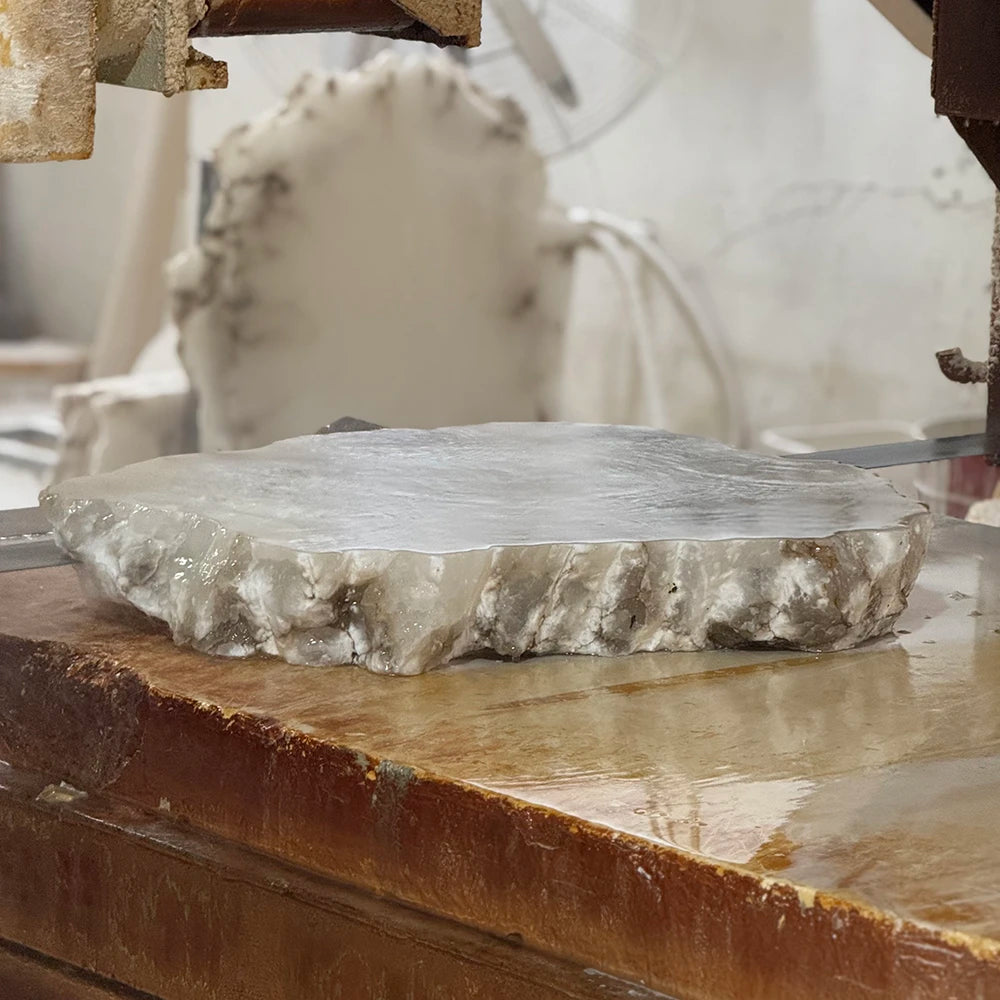
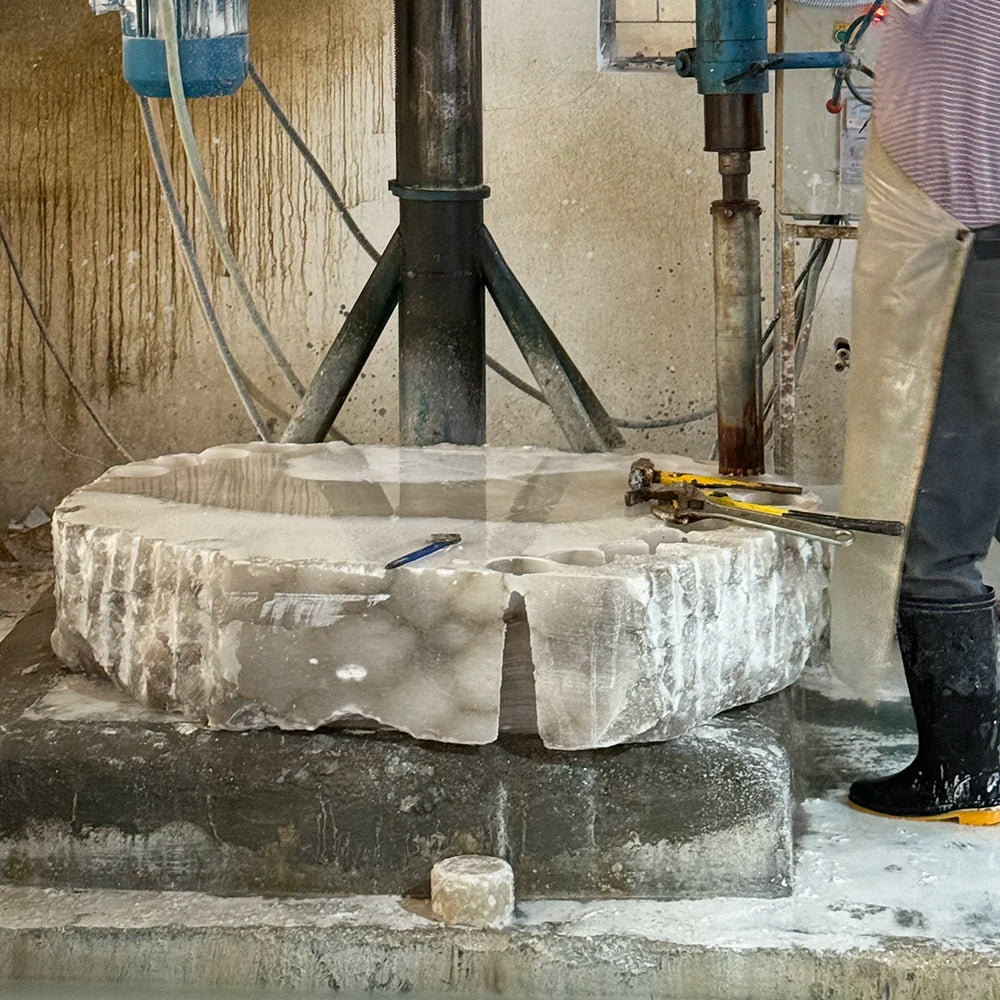
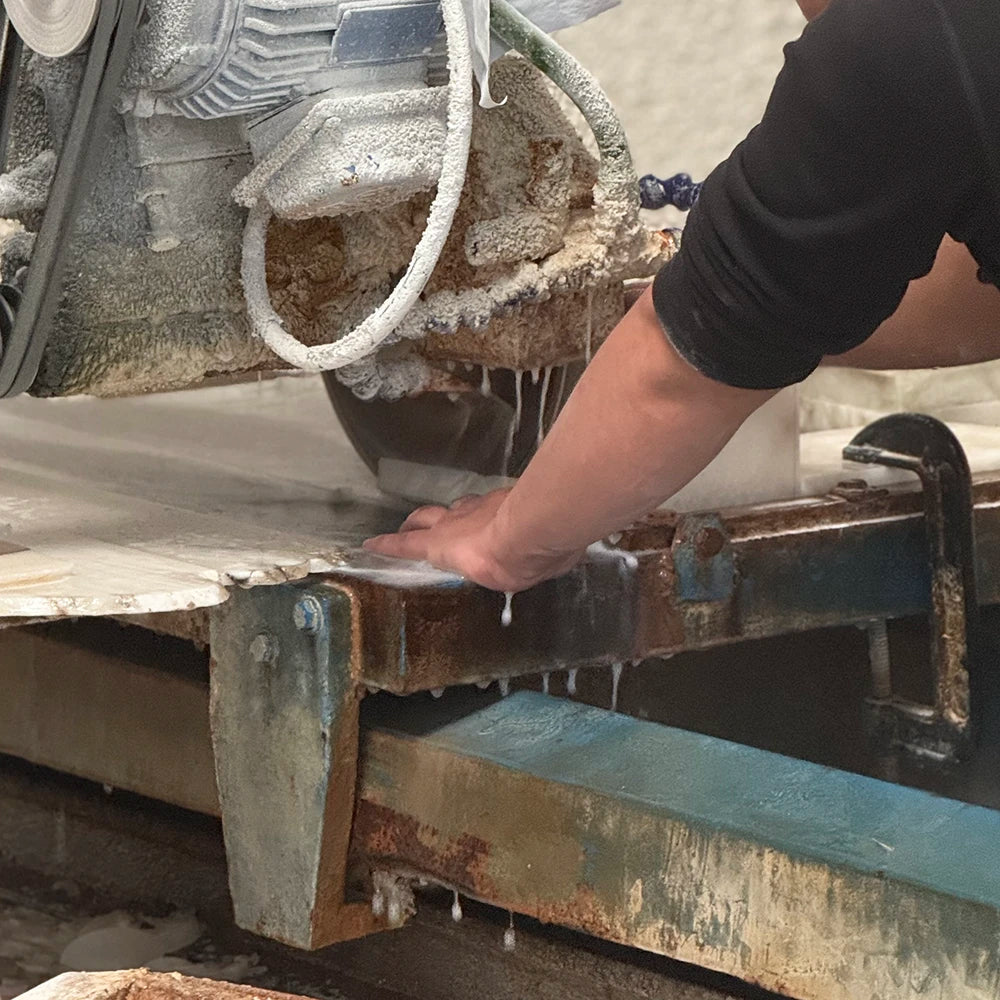
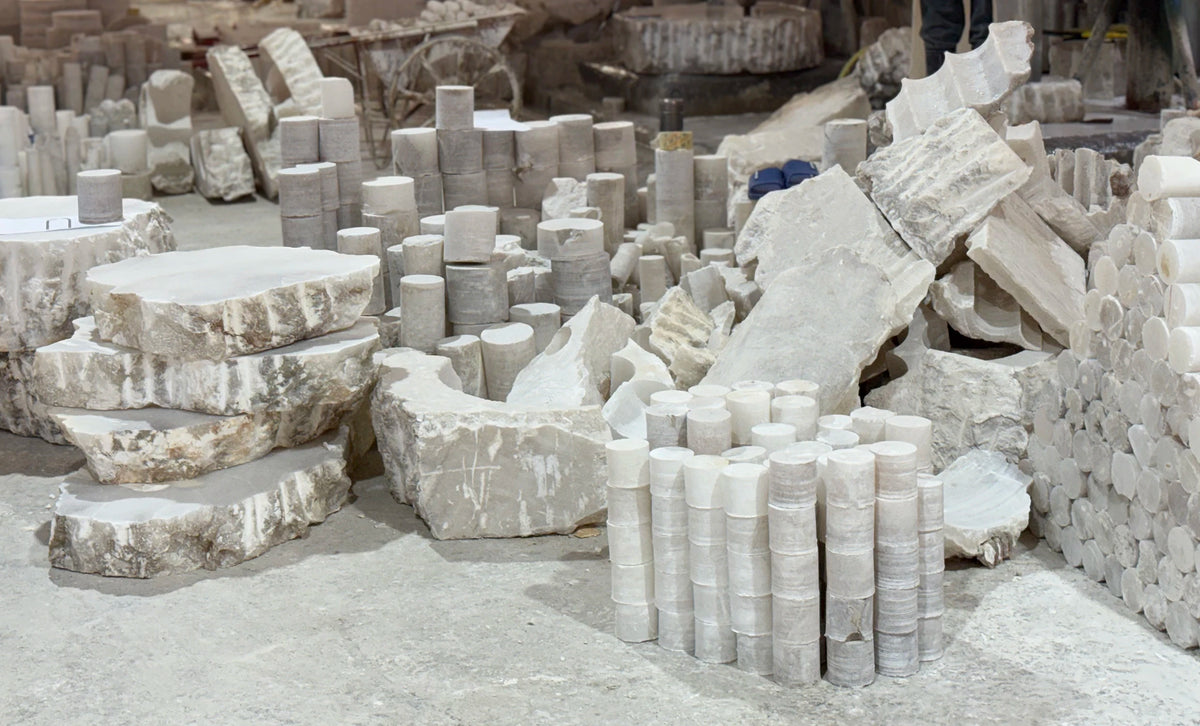
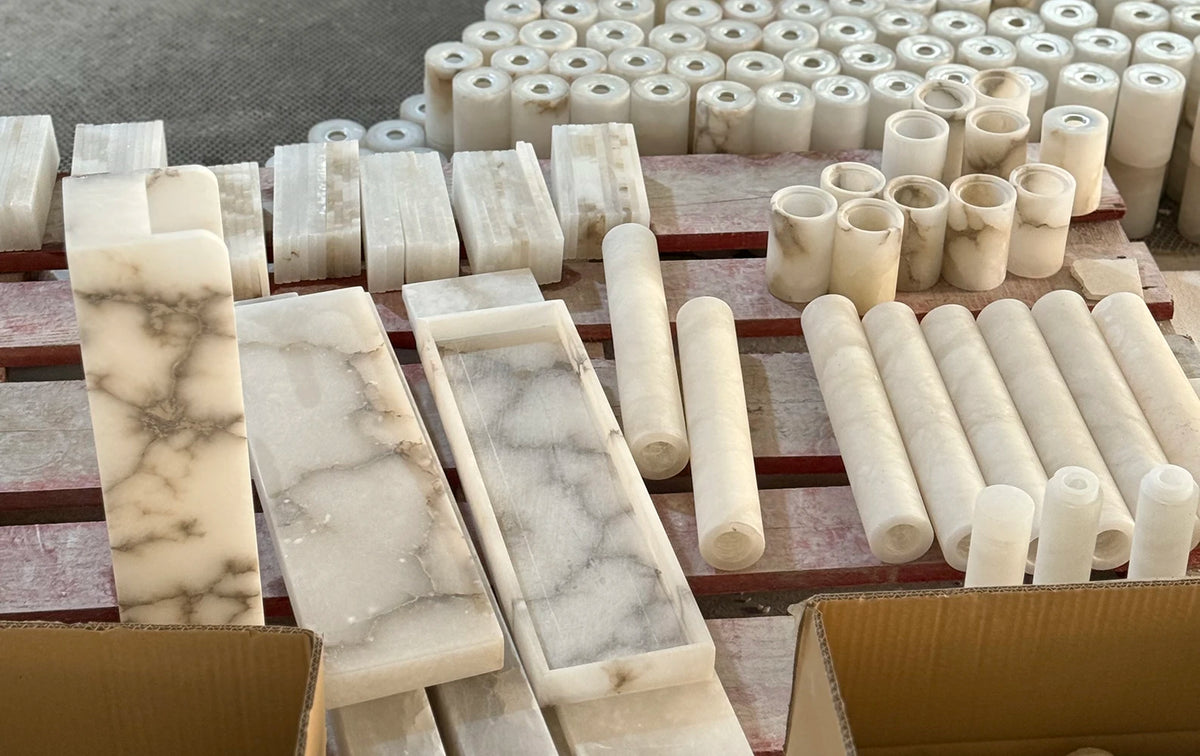
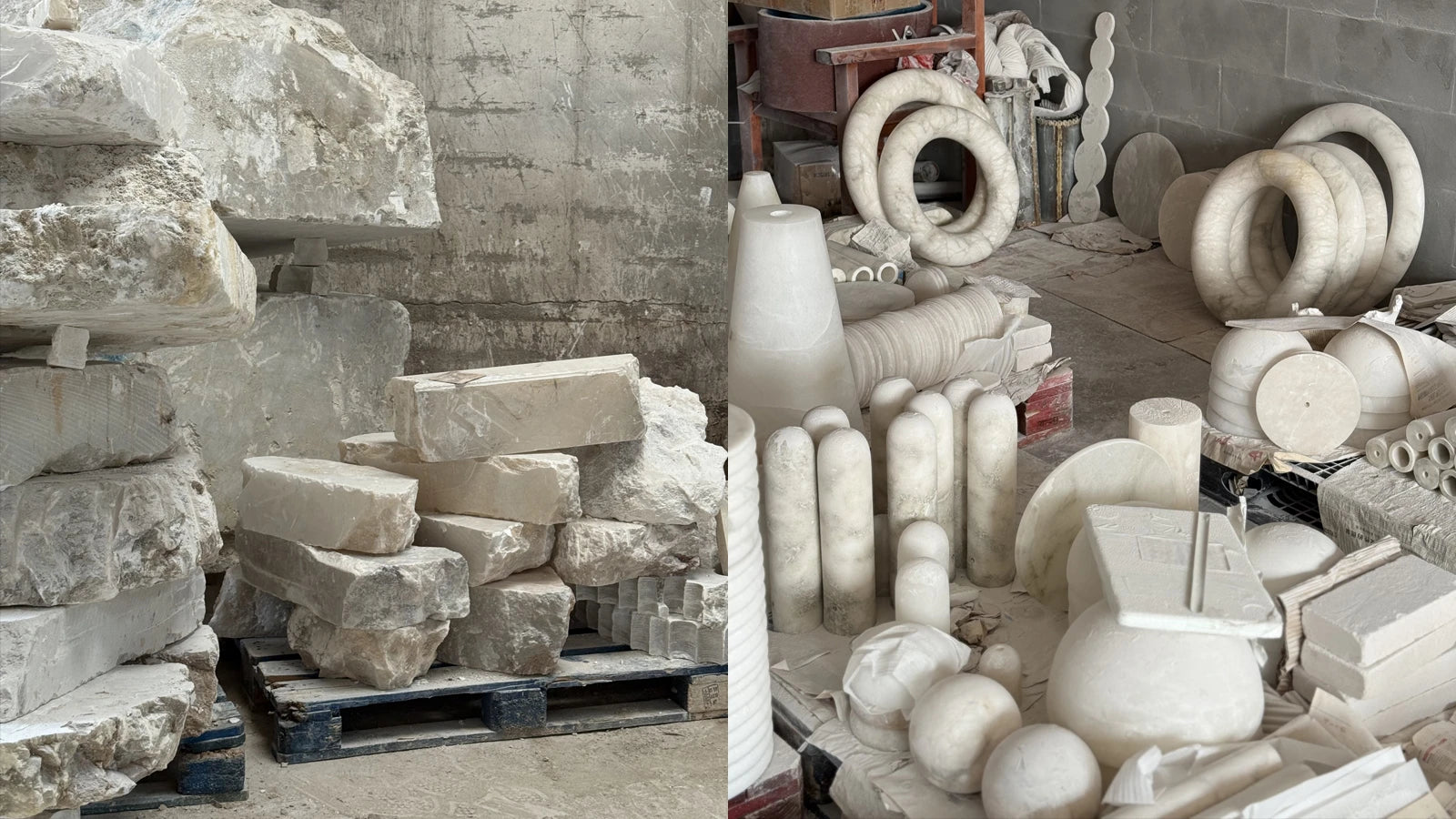
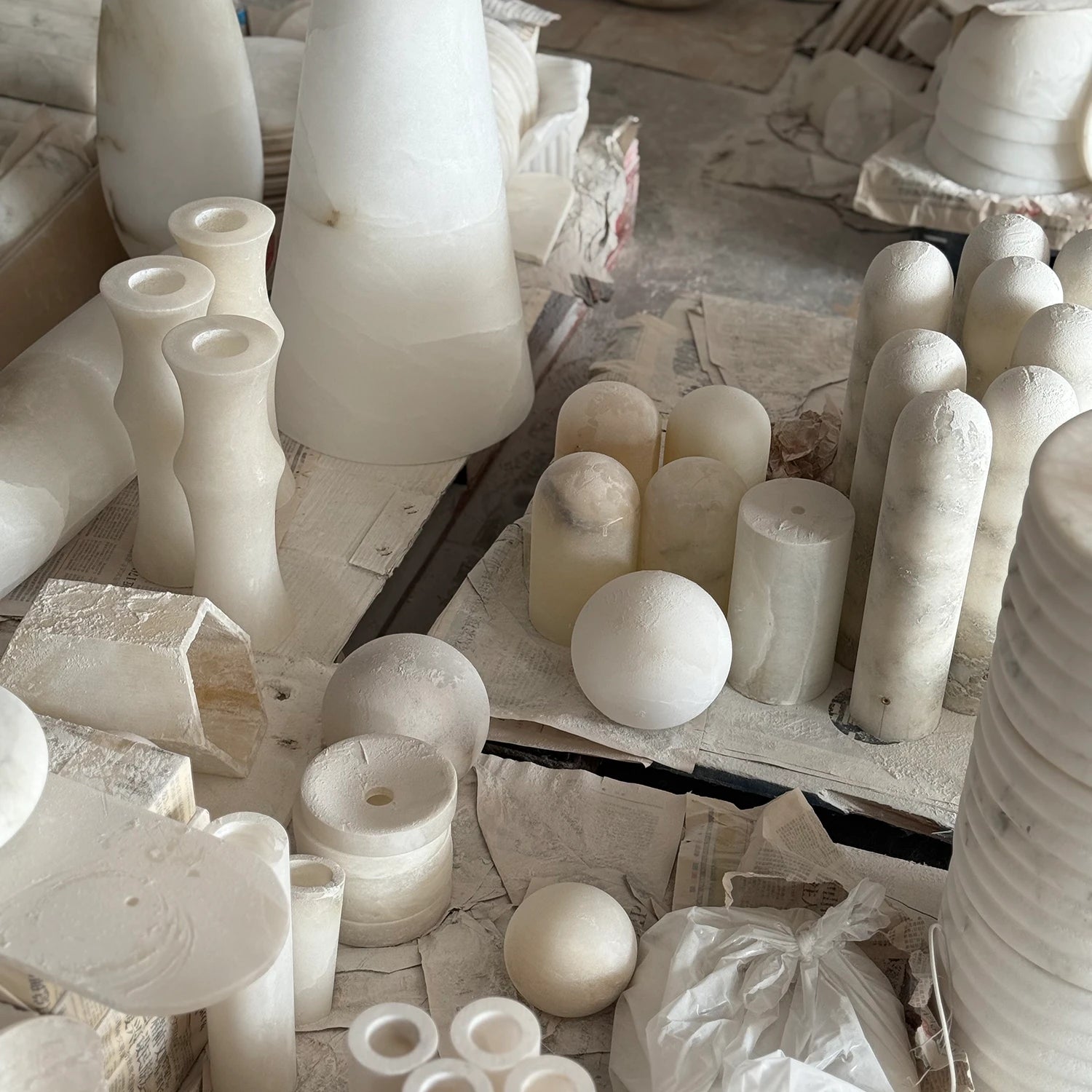
Crafted from select natural alabaster, preserving its unique veining.
Meticulously cut and shaped by artisans.
Repeatedly ground and polished for a smooth, refined texture.
Carefully assembled and quality-inspected.
Custom Stone Lighting
SHOP BY CATEGORY
Six major categories, one workshop — find the fixture that fits your room.
The Halloween sale
Applied automatically at checkout. No code needed.
Each one handles light differently once the room goes dim. Pick the glow first, then the shape.
 503 pieces
AlabasterLight passes through the stone and lifts its veining into view.Shop the series
503 pieces
AlabasterLight passes through the stone and lifts its veining into view.Shop the series
 36 pieces
Handmade glassShaped by hand, so each shade scatters light its own way.Shop the series
36 pieces
Handmade glassShaped by hand, so each shade scatters light its own way.Shop the series
 46 pieces
PaperMulberry paper shades that glow evenly, like a lantern.Shop the series
46 pieces
PaperMulberry paper shades that glow evenly, like a lantern.Shop the series
 27 pieces
ShellCapiz shell discs that catch and scatter light as they move.Shop the series
27 pieces
ShellCapiz shell discs that catch and scatter light as they move.Shop the series
 217 pieces
TravertinePorous and sculptural, it throws light down and keeps shadows deep.Shop the series
217 pieces
TravertinePorous and sculptural, it throws light down and keeps shadows deep.Shop the series
 23 pieces
MarblePolished stone whose veining softens under a warm bulb.Shop the series
23 pieces
MarblePolished stone whose veining softens under a warm bulb.Shop the series
 56 pieces
BrassSolid metal with a warm sheen that deepens in lamplight.Shop the series
56 pieces
BrassSolid metal with a warm sheen that deepens in lamplight.Shop the series
 31 pieces
CrystalCut crystal that breaks the light into small, bright sparks.Shop the series
31 pieces
CrystalCut crystal that breaks the light into small, bright sparks.Shop the series
The Halloween sale
Up to 20% off
$7,196.00$8,995.00with 20% off at checkout
Applied automatically at checkout. No code needed.


