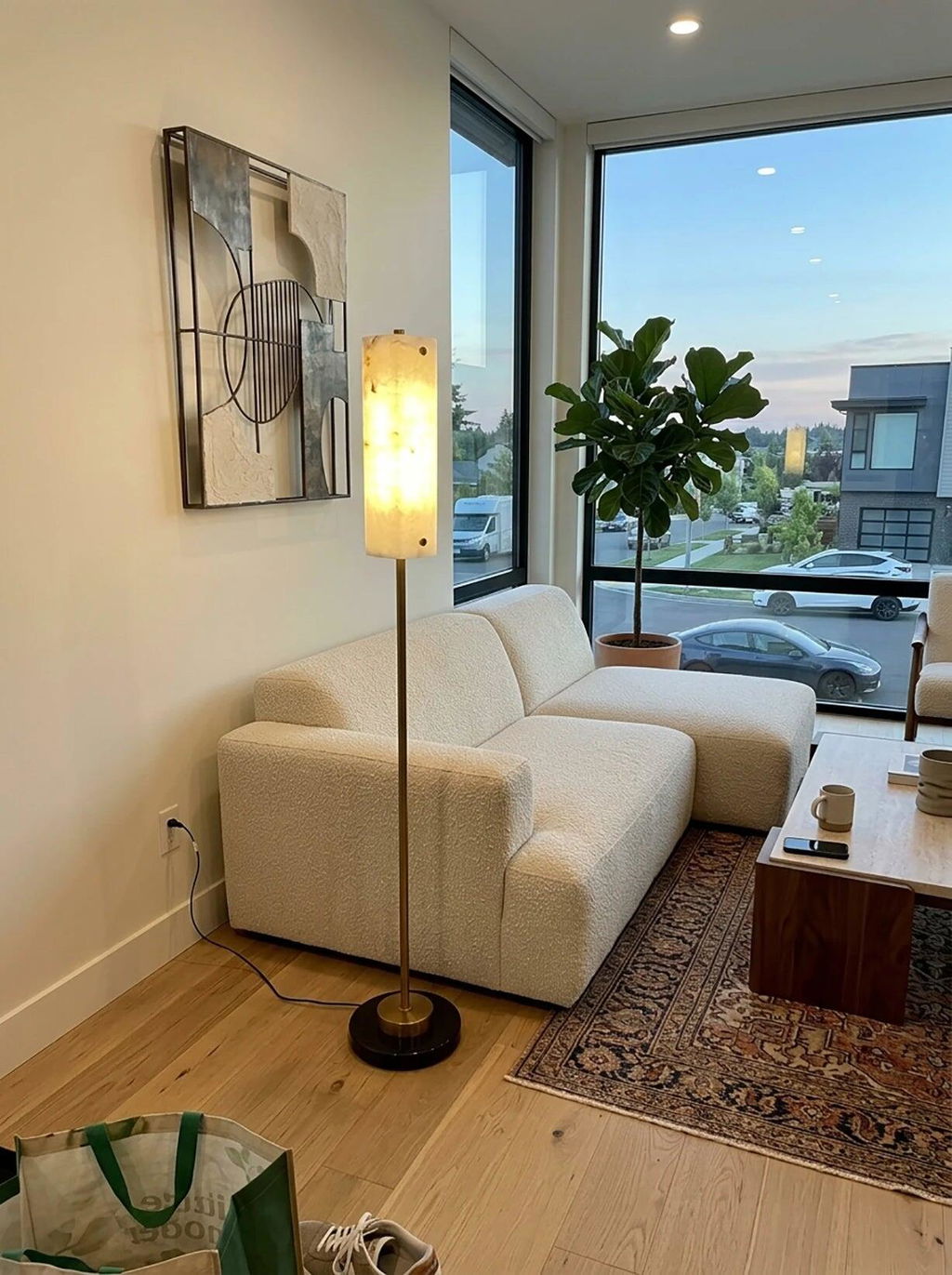
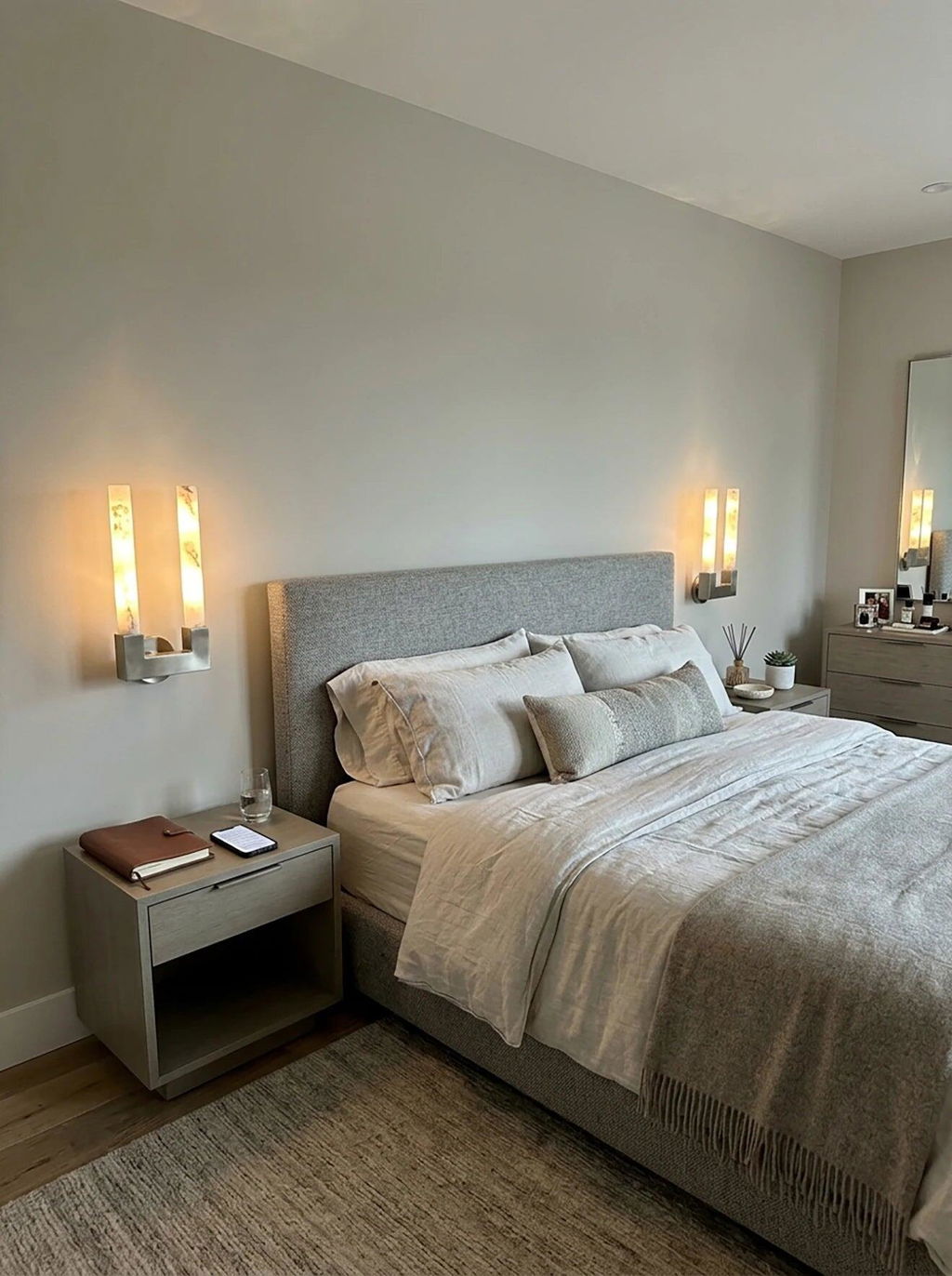
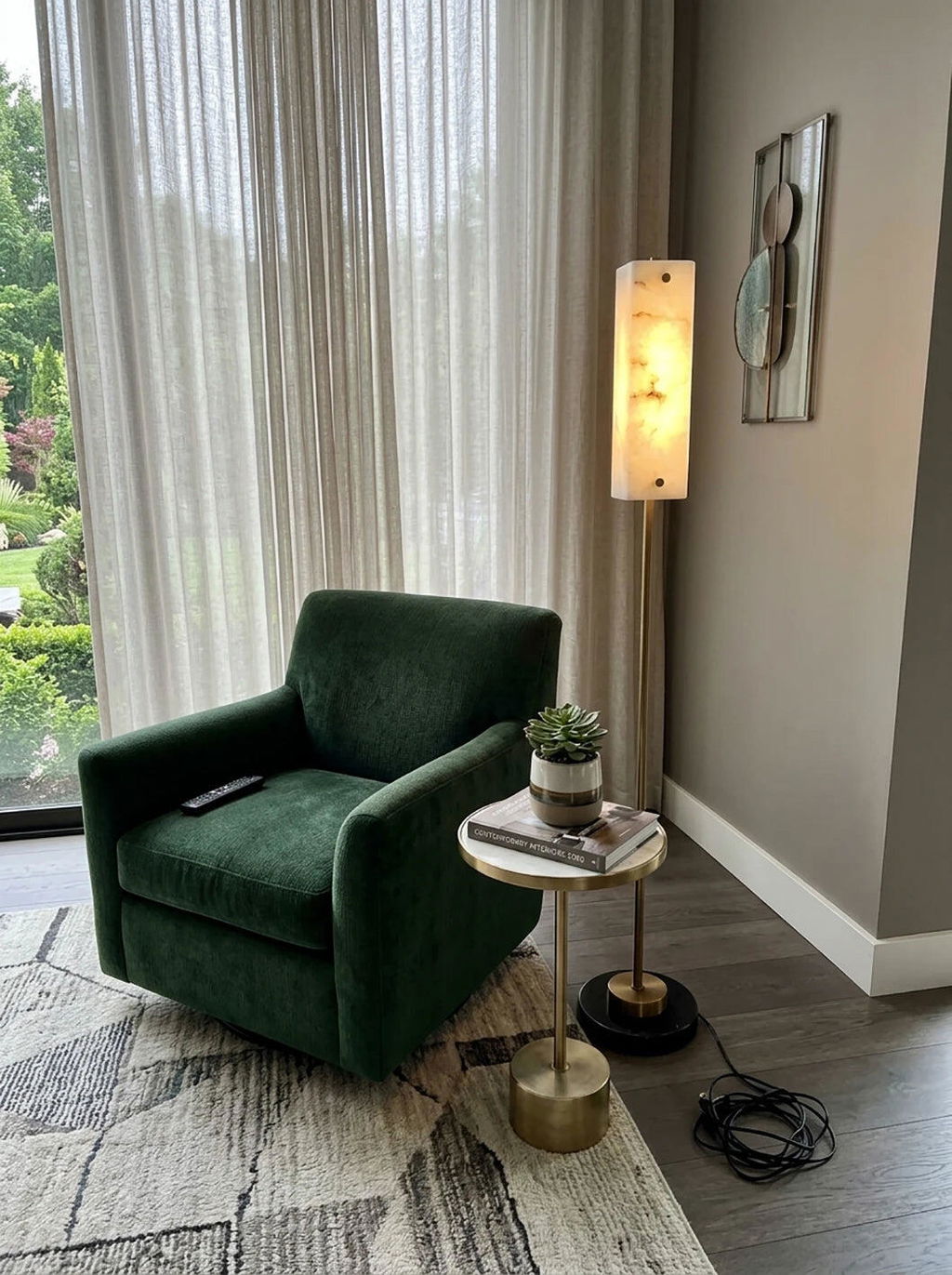
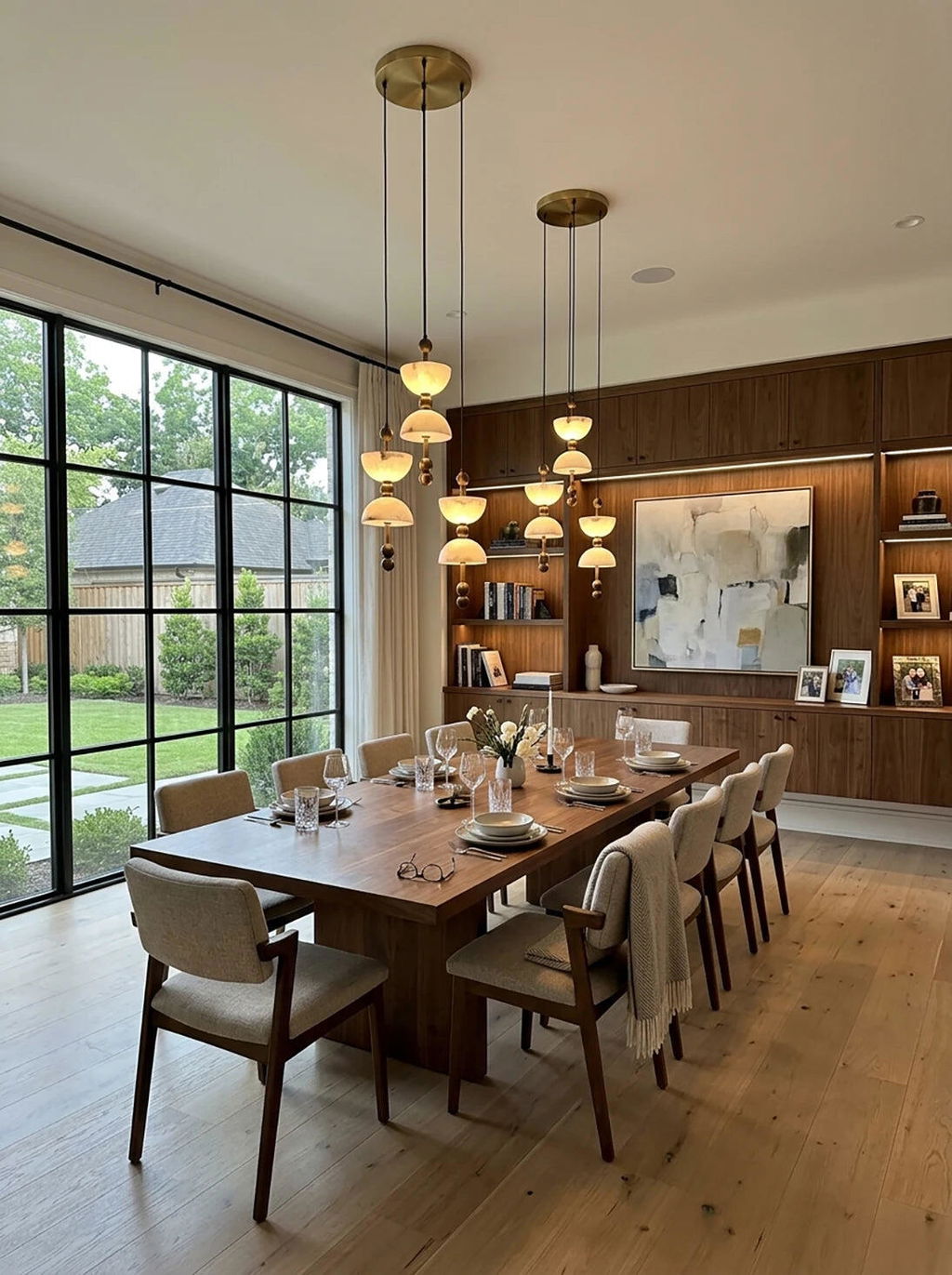
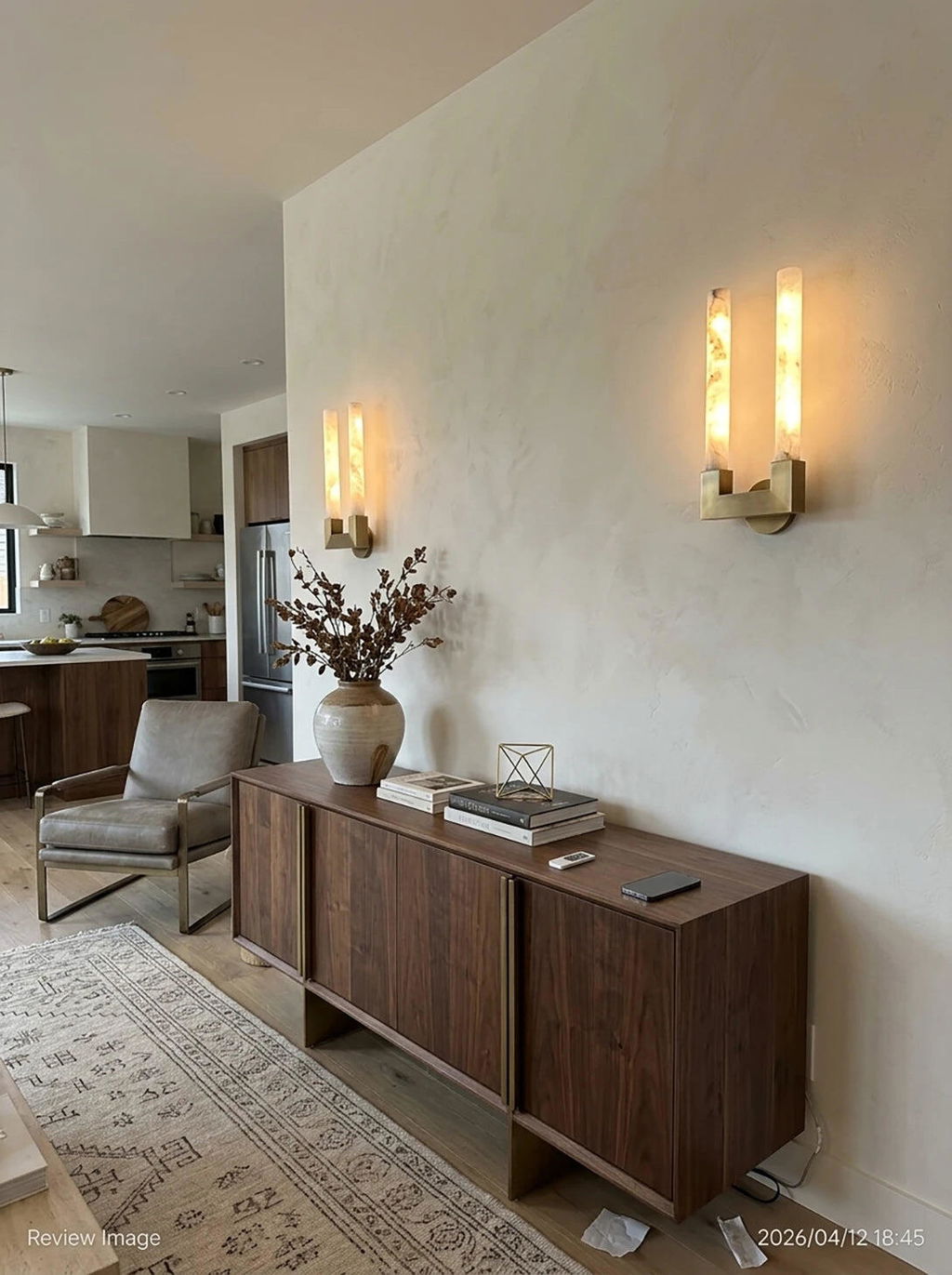
A new perspective
Light changes everything
Discover sculptural lighting designed to bring warmth, character, and atmosphere to every room.


The Perrin Crossing Arm Globe Chandelier sets two horizontal arms across a slim vertical stem at different heights, each one curving down at its ends to cradle a veined alabaster globe. Nothing radiates from a centre — the arms simply cross, the way a mobile hangs in balance.
That structure is what makes it read so light for its width. A conventional chandelier gathers its mass around a hub; this one spreads it along two lines and leaves the space between them empty, so what you see from across a room is a drawing rather than an object. The globes sit at four different heights rather than in a ring, which is why the composition looks balanced instead of arranged.
The same globe appears at eye level in the Alabaster Orb Asteria Brass Wall Sconce — one stone sphere on a slim brass arm, sized for the wall rather than the ceiling.
No two pieces of stone are ever the same
Alabaster is a natural stone, so every piece carries its own veining and subtle variation in color. The fixture you receive may therefore differ slightly from the images shown.

The 4-head at ∅ 23.6″ suits a round table around 31–35″ across, or a room of roughly 11 × 13 ft. The 6-head at ∅ 35.4″ suits a round table around 47–53″, or a room of roughly 15 × 20 ft.
Both are shallow for their width — 11.8″ and 15.7″ tall — so neither eats headroom. Because the arms spread horizontally rather than gathering at a hub, going one size up costs you width but almost nothing in visual weight. Over a table, err larger.
Rated IP20 — protected against contact, but with no protection against water at all. It belongs in dry indoor rooms: dining rooms, living rooms, bedrooms, entries, stairwells.
Do not install it in a bathroom, above a bath or shower, in a laundry, or on a covered porch, even one that stays out of direct rain. Alabaster gives you a second reason to avoid damp rooms beyond the electrical one — humidity is not good for the stone either.
The difference is not only width. The four-head is two crossing arms on two levels; the six-head adds a third arm at a third height — so stepping up adds a tier to the composition, not just diameter.
The quieter of the two — a clean cross that reads as a line rather than a cluster.

The third arm turns a cross into a composition — more depth from underneath, and half again the light.

Over a round table, take two thirds to three quarters of the table diameter — which puts the four-head over a table of 31–35 in and the six-head over one of 47–53 in. In an open room instead, add the length and width in feet and read the sum as inches: roughly 11 × 13 ft for the four-head, 15 × 20 ft for the six.
Then note what this shape does that most chandeliers don't. Both versions are shallow for their width — 11.8 in and 15.7 in tall — because the arms spread sideways rather than gathering at a hub. So going up a size costs you width and almost nothing in headroom, which is the opposite of how a tiered chandelier behaves. Over a table, err larger.
Height is set on site: the 59 in cable shortens during installation and can be extended before dispatch if you tell us your ceiling height when ordering. Hang the lowest globe 30–36 in above a tabletop, and keep 7 ft of floor clearance anywhere people walk.
The arms cross. The middle stays empty. That is the whole idea.
Almost every chandelier ever made is built around a hub. Arms radiate outward, the mass gathers in the middle, and the middle is the part you look at. This one has no hub at all. Two horizontal bars pass through a vertical stem at different heights and simply keep going — and the centre of the fixture, where a chandelier normally holds everything, is empty air.
The consequence is the reason to own it. Because the weight sits at the ends and nothing accumulates in the middle, you can see straight through it. Across a dining table that matters more than it sounds — you see the person opposite rather than a mass of glass between you. From the doorway it reads as a line drawing rather than an object, which is how a fixture nearly a metre wide can hang in a room without dominating it.
Alabaster-look glass and resin are everywhere in lighting, and they photograph well. Here is what changes once the piece is in the room — including the one thing they do better.
Yes — every globe is cut from natural stone. Three things tell you, and they are worth knowing whoever you eventually buy from.
Weight. A stone globe is heavy and cool to the touch; a moulded one feels warm and light. The cut edge. Where the globe meets its fitting you can see a cut stone edge with the veining running straight through it — on a printed imitation the pattern stops at the seam. The veining under light. Real veins sit inside the thickness of the stone, so they shift as your eye moves and the globe looks different from each side. A printed pattern stays flat and repeats from piece to piece.
Dust only — never use water on the stone. Alabaster is a gypsum mineral and is slowly soluble in water, so a damp cloth used regularly will dull the surface and eventually etch it. Use a soft dry cloth or a dry brush on the globes, and keep solvents, glass sprays and all-purpose cleaners well away.
The metal arms can take a barely damp cloth as long as you keep it off the stone. Switch off and let the bulbs cool completely first.
Plan it as the warm ambient layer rather than the only light in the room. Stone absorbs more light than opal glass does — that absorption is exactly what produces the soft internal glow — so four or six globes give a gentle, even wash rather than a bright one.
Over a dining table or in a bedroom it carries the room comfortably. In a kitchen or anywhere you need to see detail, pair it with downlights or task lighting.
G4 LED bulbs — four or six depending on the version, warm white recommended, not included. A small capsule lamp is used deliberately: it disappears entirely inside the globe, which is part of why no bulb is ever visible.
One thing to watch when you buy replacements. G4 comes in two voltages that look completely identical — mains voltage and 12V — with the same two pins and the same capsule. They are not interchangeable. This fixture takes [__ CONFIRM VOLTAGE] G4 LEDs; check the packet, and send us a photo if you are unsure.
The difference is not only width. The four-head is two crossing arms on two levels; the six-head adds a third arm at a third height, so stepping up adds a tier to the composition.
By size: the four-head suits a round table around 31–35″ or a room of roughly 11 × 13 ft; the six-head suits a table of 47–53″ or a room of about 15 × 20 ft. Because the arms spread sideways rather than stacking, going larger costs width and almost nothing in headroom — so over a table, err larger.
No — and here there are two separate reasons. Electrically it is rated IP20, which means no protection against water at all. And alabaster is a porous stone that does not want sustained humidity either.
Install it in dry indoor rooms: dining rooms, living rooms, bedrooms, entries, stairwells. Not in a bathroom, above a bath or shower, in a laundry, or on a covered porch, even one that stays out of direct rain.
The price includes tax, and free standard shipping within the U.S. is provided.

Free Shipping on all orders
Hassle-free return within 30 days
Payment Security
The Perrin Crossing Arm Globe Chandelier sets two horizontal arms across a slim vertical stem at different heights, each one curving down at its ends to cradle a veined alabaster globe. Nothing radiates from a centre — the arms simply cross, the way a mobile hangs in balance.
That structure is what makes it read so light for its width. A conventional chandelier gathers its mass around a hub; this one spreads it along two lines and leaves the space between them empty, so what you see from across a room is a drawing rather than an object. The globes sit at four different heights rather than in a ring, which is why the composition looks balanced instead of arranged.
The same globe appears at eye level in the Alabaster Orb Asteria Brass Wall Sconce — one stone sphere on a slim brass arm, sized for the wall rather than the ceiling.
No two pieces of stone are ever the same
Alabaster is a natural stone, so every piece carries its own veining and subtle variation in color. The fixture you receive may therefore differ slightly from the images shown.
The 4-head at ∅ 23.6″ suits a round table around 31–35″ across, or a room of roughly 11 × 13 ft. The 6-head at ∅ 35.4″ suits a round table around 47–53″, or a room of roughly 15 × 20 ft.
Both are shallow for their width — 11.8″ and 15.7″ tall — so neither eats headroom. Because the arms spread horizontally rather than gathering at a hub, going one size up costs you width but almost nothing in visual weight. Over a table, err larger.
Rated IP20 — protected against contact, but with no protection against water at all. It belongs in dry indoor rooms: dining rooms, living rooms, bedrooms, entries, stairwells.
Do not install it in a bathroom, above a bath or shower, in a laundry, or on a covered porch, even one that stays out of direct rain. Alabaster gives you a second reason to avoid damp rooms beyond the electrical one — humidity is not good for the stone either.
The difference is not only width. The four-head is two crossing arms on two levels; the six-head adds a third arm at a third height — so stepping up adds a tier to the composition, not just diameter.
The quieter of the two — a clean cross that reads as a line rather than a cluster.
The third arm turns a cross into a composition — more depth from underneath, and half again the light.
Over a round table, take two thirds to three quarters of the table diameter — which puts the four-head over a table of 31–35 in and the six-head over one of 47–53 in. In an open room instead, add the length and width in feet and read the sum as inches: roughly 11 × 13 ft for the four-head, 15 × 20 ft for the six.
Then note what this shape does that most chandeliers don't. Both versions are shallow for their width — 11.8 in and 15.7 in tall — because the arms spread sideways rather than gathering at a hub. So going up a size costs you width and almost nothing in headroom, which is the opposite of how a tiered chandelier behaves. Over a table, err larger.
Height is set on site: the 59 in cable shortens during installation and can be extended before dispatch if you tell us your ceiling height when ordering. Hang the lowest globe 30–36 in above a tabletop, and keep 7 ft of floor clearance anywhere people walk.
The arms cross. The middle stays empty. That is the whole idea.
Almost every chandelier ever made is built around a hub. Arms radiate outward, the mass gathers in the middle, and the middle is the part you look at. This one has no hub at all. Two horizontal bars pass through a vertical stem at different heights and simply keep going — and the centre of the fixture, where a chandelier normally holds everything, is empty air.
The consequence is the reason to own it. Because the weight sits at the ends and nothing accumulates in the middle, you can see straight through it. Across a dining table that matters more than it sounds — you see the person opposite rather than a mass of glass between you. From the doorway it reads as a line drawing rather than an object, which is how a fixture nearly a metre wide can hang in a room without dominating it.
Alabaster-look glass and resin are everywhere in lighting, and they photograph well. Here is what changes once the piece is in the room — including the one thing they do better.
Yes — every globe is cut from natural stone. Three things tell you, and they are worth knowing whoever you eventually buy from.
Weight. A stone globe is heavy and cool to the touch; a moulded one feels warm and light. The cut edge. Where the globe meets its fitting you can see a cut stone edge with the veining running straight through it — on a printed imitation the pattern stops at the seam. The veining under light. Real veins sit inside the thickness of the stone, so they shift as your eye moves and the globe looks different from each side. A printed pattern stays flat and repeats from piece to piece.
Dust only — never use water on the stone. Alabaster is a gypsum mineral and is slowly soluble in water, so a damp cloth used regularly will dull the surface and eventually etch it. Use a soft dry cloth or a dry brush on the globes, and keep solvents, glass sprays and all-purpose cleaners well away.
The metal arms can take a barely damp cloth as long as you keep it off the stone. Switch off and let the bulbs cool completely first.
Plan it as the warm ambient layer rather than the only light in the room. Stone absorbs more light than opal glass does — that absorption is exactly what produces the soft internal glow — so four or six globes give a gentle, even wash rather than a bright one.
Over a dining table or in a bedroom it carries the room comfortably. In a kitchen or anywhere you need to see detail, pair it with downlights or task lighting.
G4 LED bulbs — four or six depending on the version, warm white recommended, not included. A small capsule lamp is used deliberately: it disappears entirely inside the globe, which is part of why no bulb is ever visible.
One thing to watch when you buy replacements. G4 comes in two voltages that look completely identical — mains voltage and 12V — with the same two pins and the same capsule. They are not interchangeable. This fixture takes [__ CONFIRM VOLTAGE] G4 LEDs; check the packet, and send us a photo if you are unsure.
The difference is not only width. The four-head is two crossing arms on two levels; the six-head adds a third arm at a third height, so stepping up adds a tier to the composition.
By size: the four-head suits a round table around 31–35″ or a room of roughly 11 × 13 ft; the six-head suits a table of 47–53″ or a room of about 15 × 20 ft. Because the arms spread sideways rather than stacking, going larger costs width and almost nothing in headroom — so over a table, err larger.
No — and here there are two separate reasons. Electrically it is rated IP20, which means no protection against water at all. And alabaster is a porous stone that does not want sustained humidity either.
Install it in dry indoor rooms: dining rooms, living rooms, bedrooms, entries, stairwells. Not in a bathroom, above a bath or shower, in a laundry, or on a covered porch, even one that stays out of direct rain.
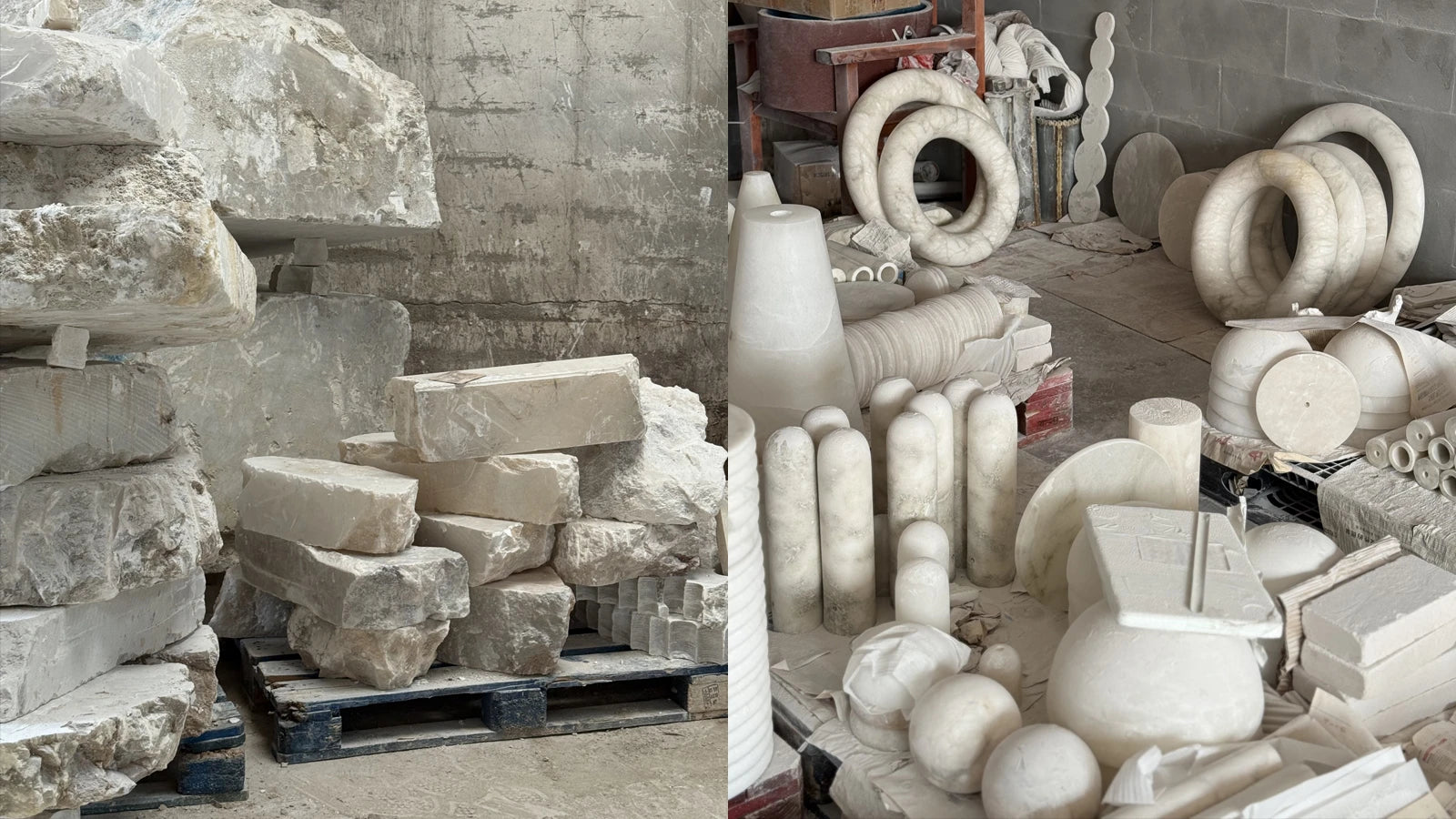
Natural stone lighting

The Vidir lighting edit
Most shades block light and let it out at the edges. Yet, this stone-textured lampshade manages to achieve exactly that.
Alabaster is translucent. Switch it on and the whole shade lights up from within, veining and all, instead of glowing only where the bulb sits. There is no bright spot to look at, because the light source is the entire surface.
The veining was decided underground, long before anyone cut it. Every shade carries its own pattern and its own faint colour shift — so the piece that arrives is not the piece in the photograph, and that is the point.
Resin and acrylic imitations go amber and brittle within a few years of sitting next to a warm bulb. Stone does not age that way. The shade you unpack is the shade you will have in twenty years.
Designed for better living
Use warm white (2700K). The stone itself has an off-white, creamy tone; cool light passing through it makes it look grayish and dingy, whereas warm light brings out that honey-like hue seen in the photos.
Alabaster is a natural stone that absorbs water and cleaning agents, which can leave permanent stains. Disconnect the power, let the bulb cool down, and then wipe the fixture with a soft, dry cloth—do not use water or spray cleaners.
The density of the stone is far greater than that of a glass shade of the same size; ensure the ceiling's load-bearing capacity is sufficient for safety.

A new perspective
Discover sculptural lighting designed to bring warmth, character, and atmosphere to every room.
 Our product
Alabaster Cylindrical Chain Chandelier
Our product
Alabaster Cylindrical Chain Chandelier
Alabaster is translucent, so the light travels through the stone rather than escaping at the edges — the whole shade glows, veining and all. Every piece carries a pattern that was decided underground, which is why no two are alike.
Resin is cast in moulds, so the "veining" repeats from one shade to the next and the light passes through evenly with no depth to it. It also ages differently: sitting close to a warm bulb, resin tends to amber and grow brittle within a few years.
THE ART OF ALABASTER
The natural texture of alabaster brings a warm, mineral quality to the space. (Please contact us if you require a specific texture.)

A pure white texture reminiscent of fresh snow—warm, smooth, and refined.

Deep, inky patterns flow across a white base.

A dynamic pattern resembling a bolt of lightning streaking across the sky.

Fine, intricate cracks evoking the aesthetic beauty of a sheet of ice at the moment it shatters.

A pattern as light and airy as falling snowflakes, with every single flake unique.
Material · Method · Light
Every texture tells a story of natural light and patient craftsmanship.
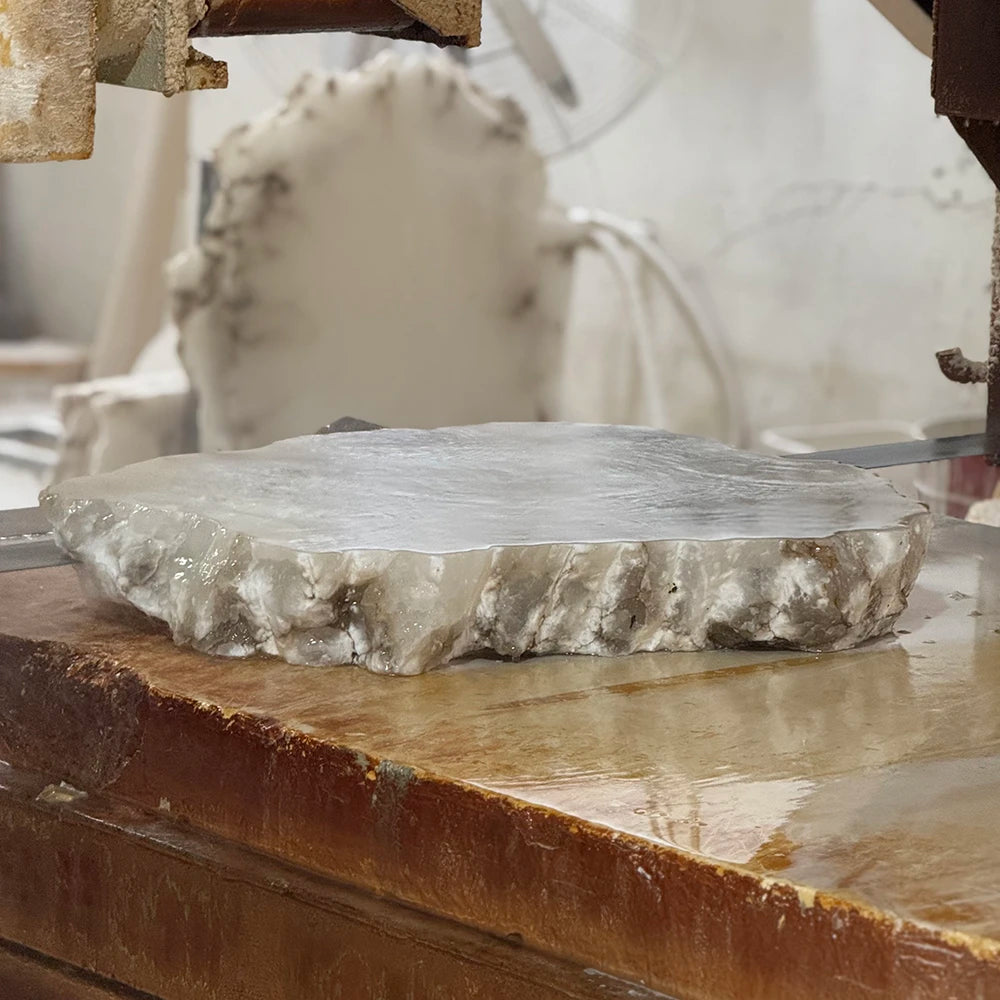
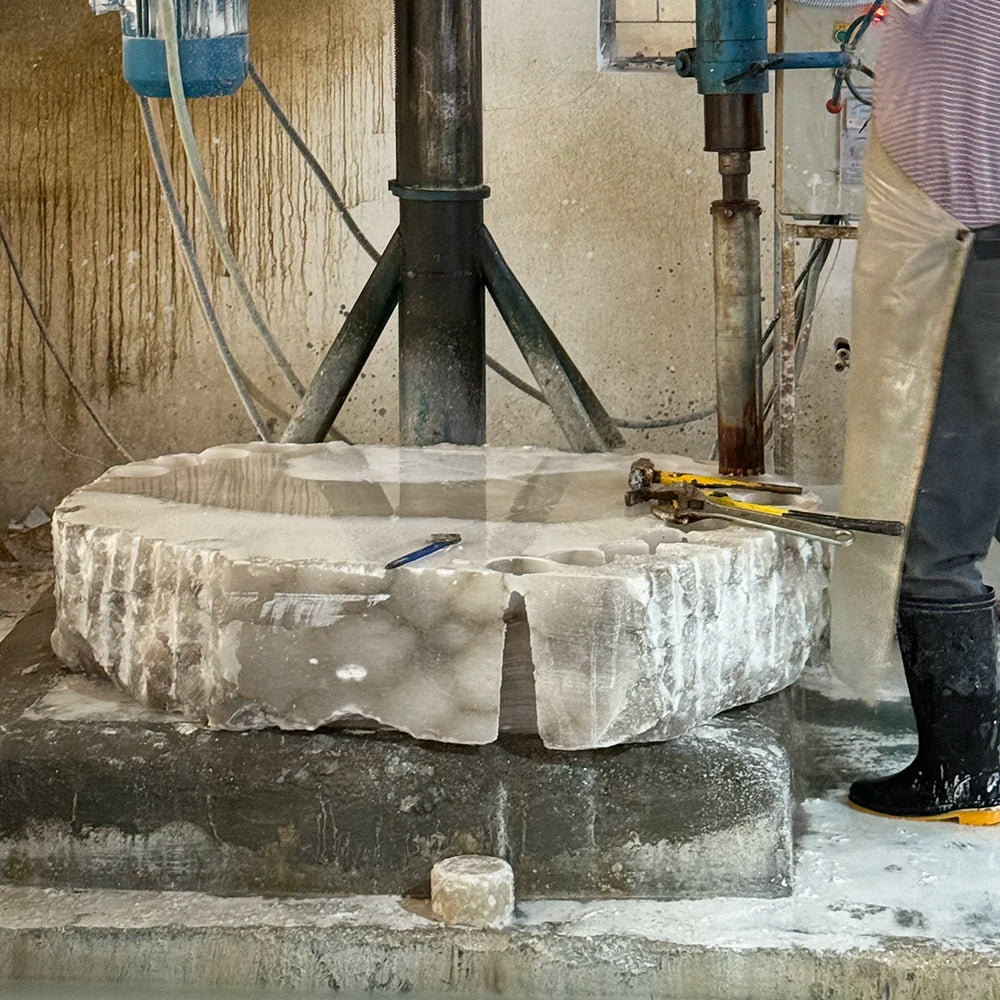

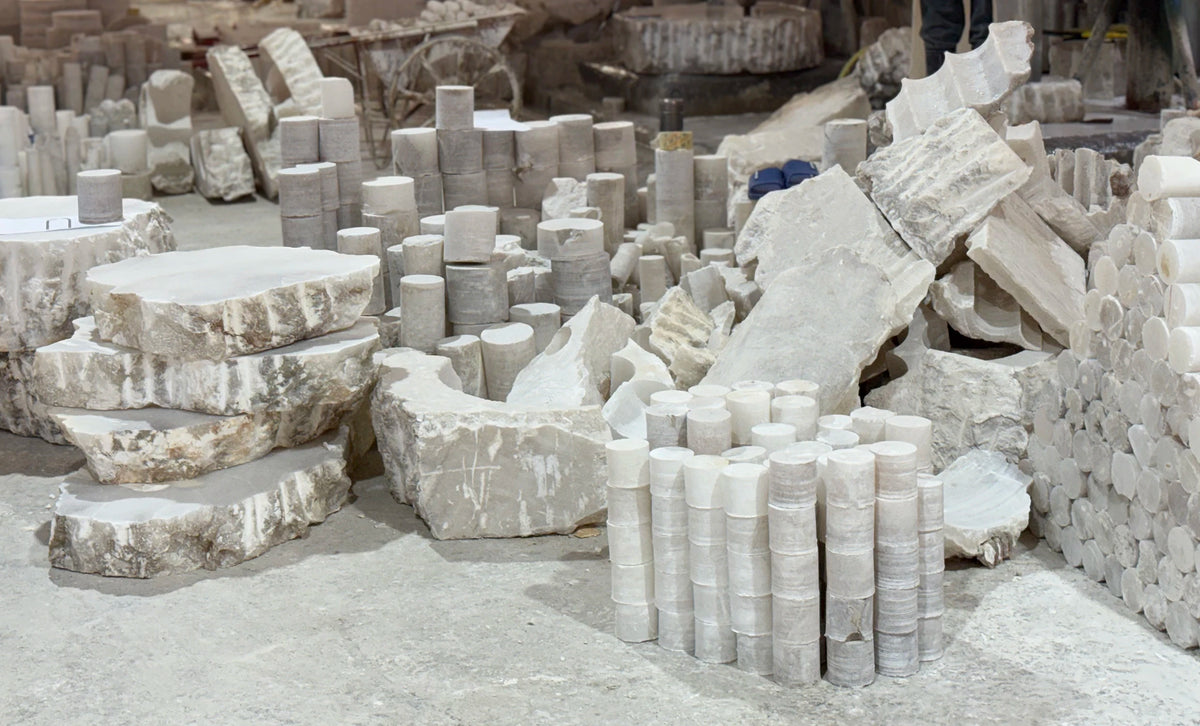
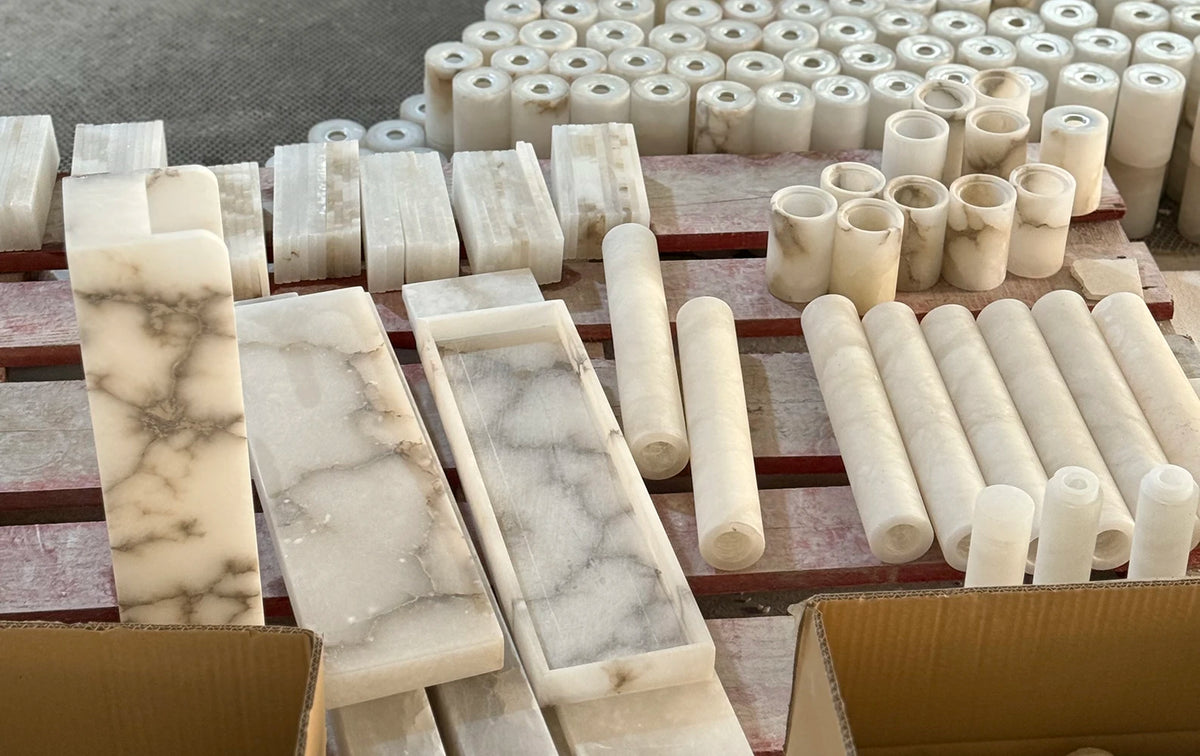
Crafted from select natural alabaster, preserving its unique veining.
Meticulously cut and shaped by artisans.
Repeatedly ground and polished for a smooth, refined texture.
Carefully assembled and quality-inspected.
Custom Stone Lighting

SHOP BY CATEGORY
Six major categories, one workshop — find the fixture that fits your room.